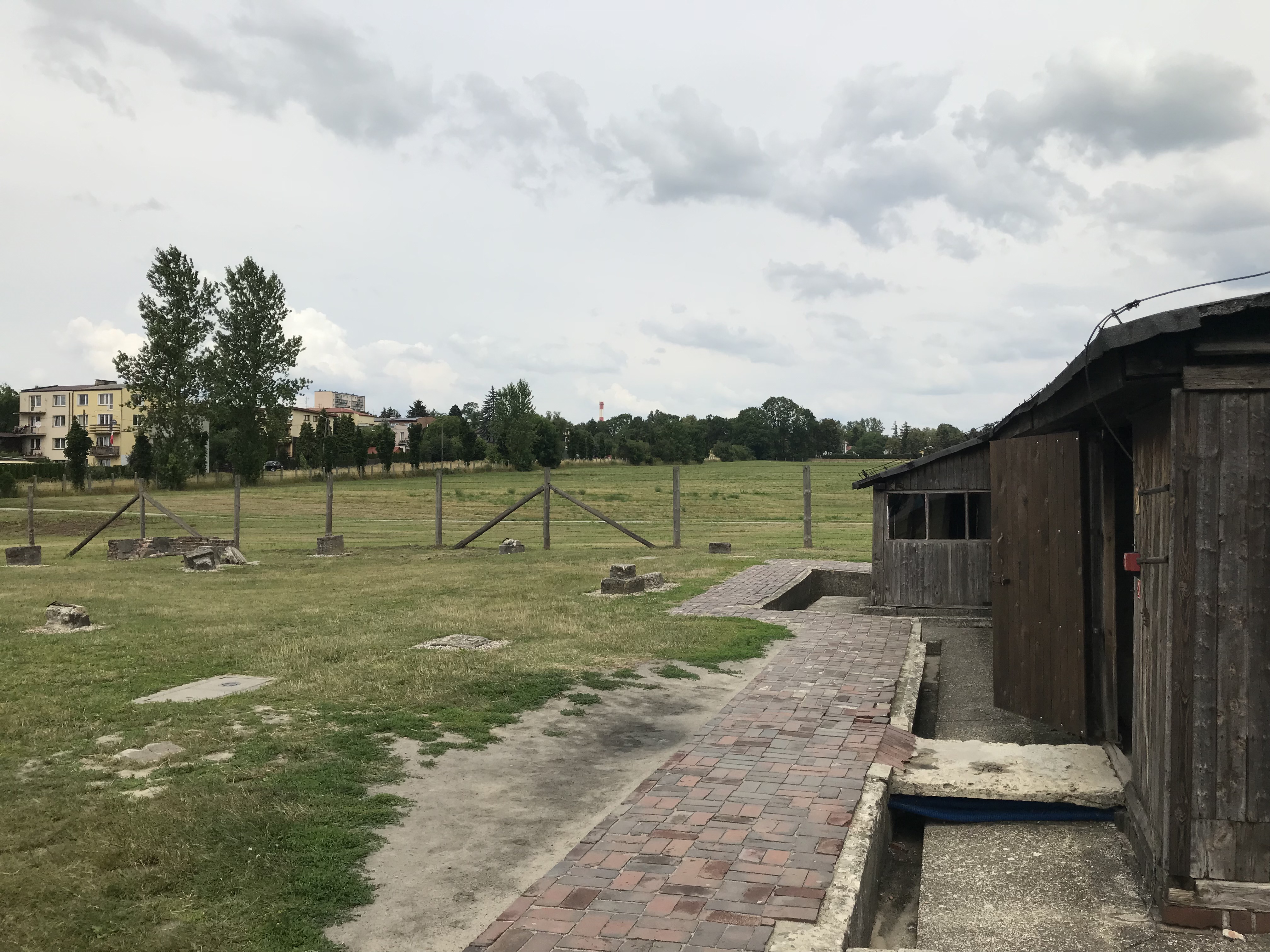
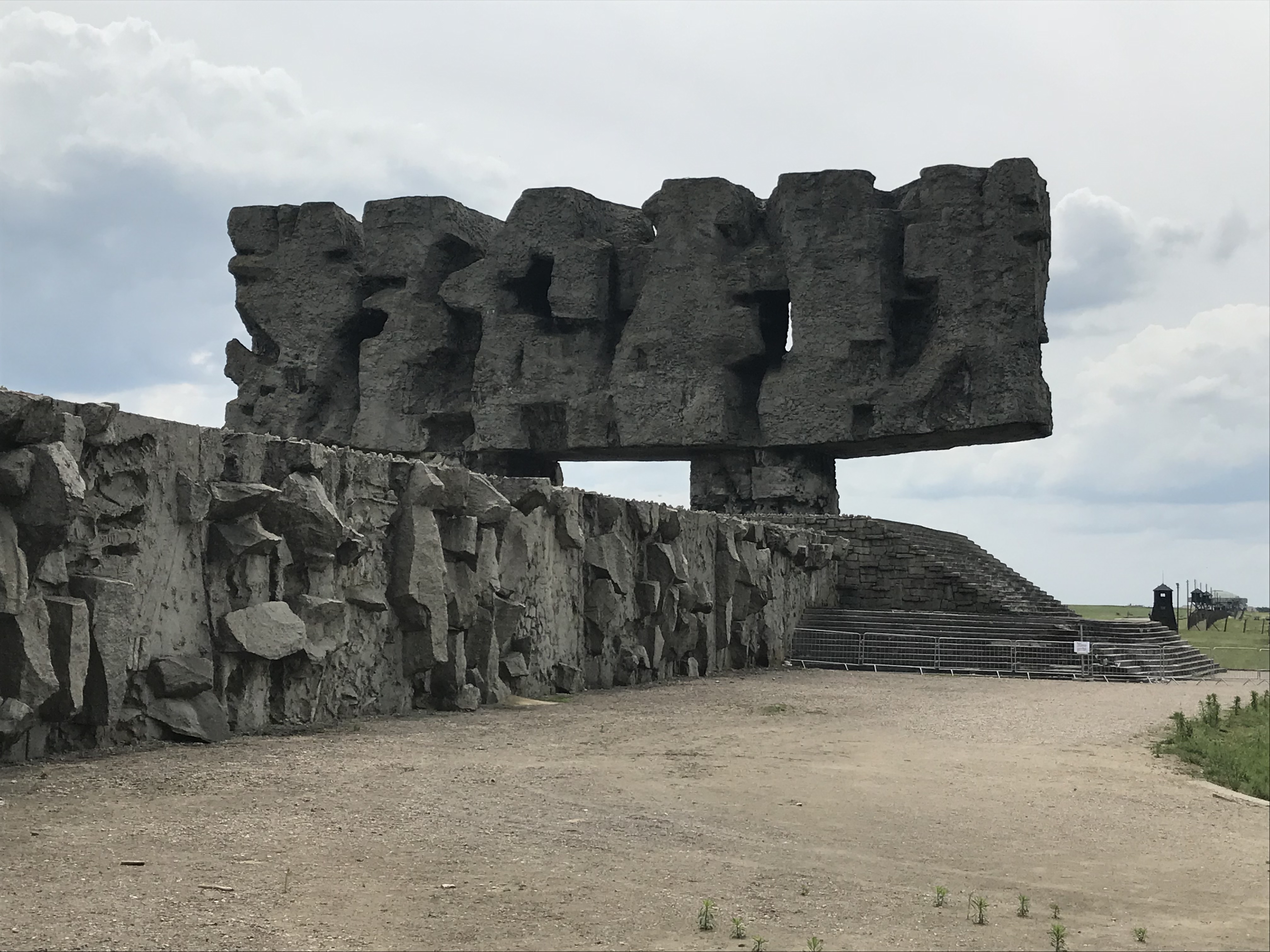
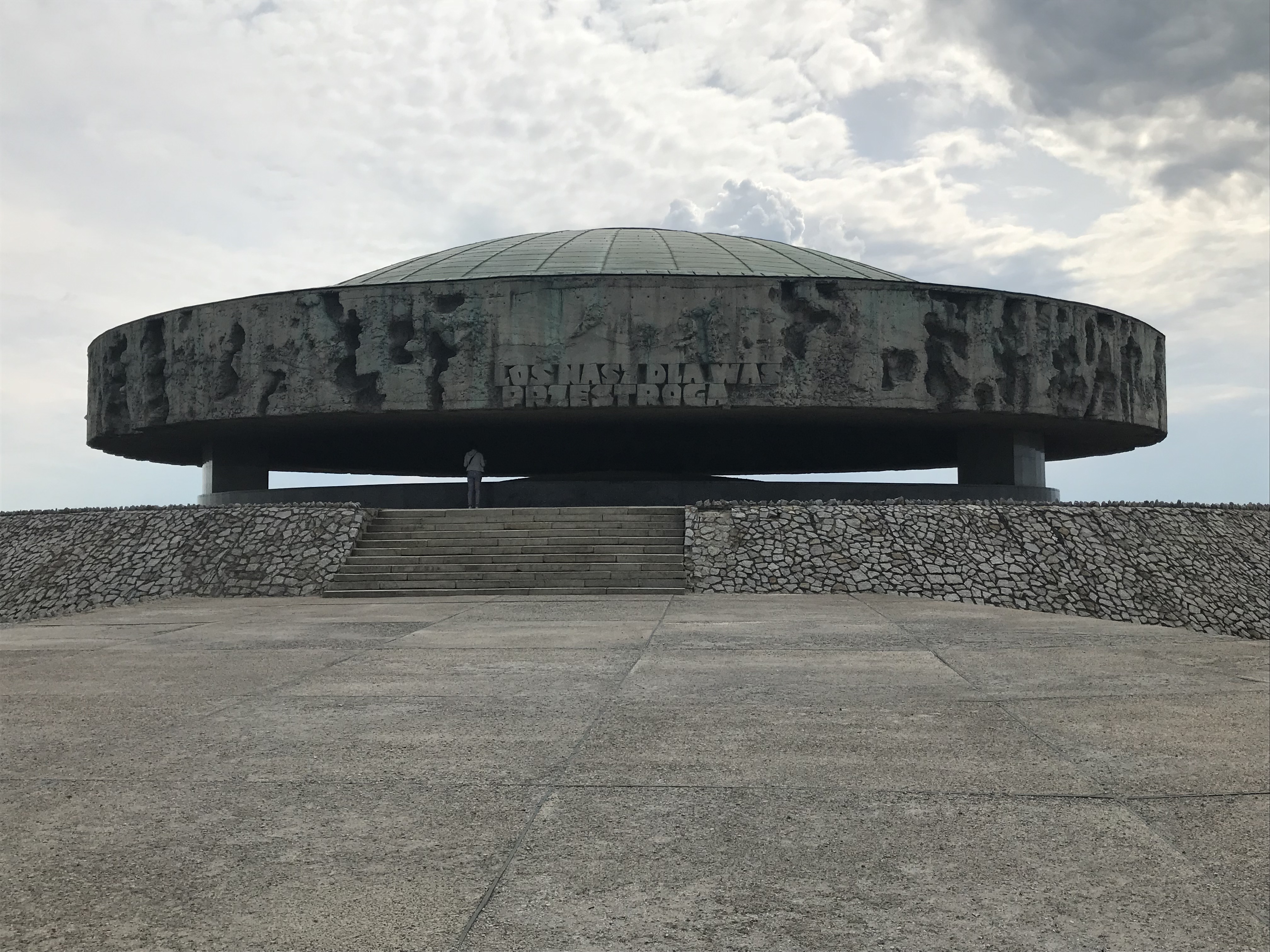
#16 – BEŁŻEC

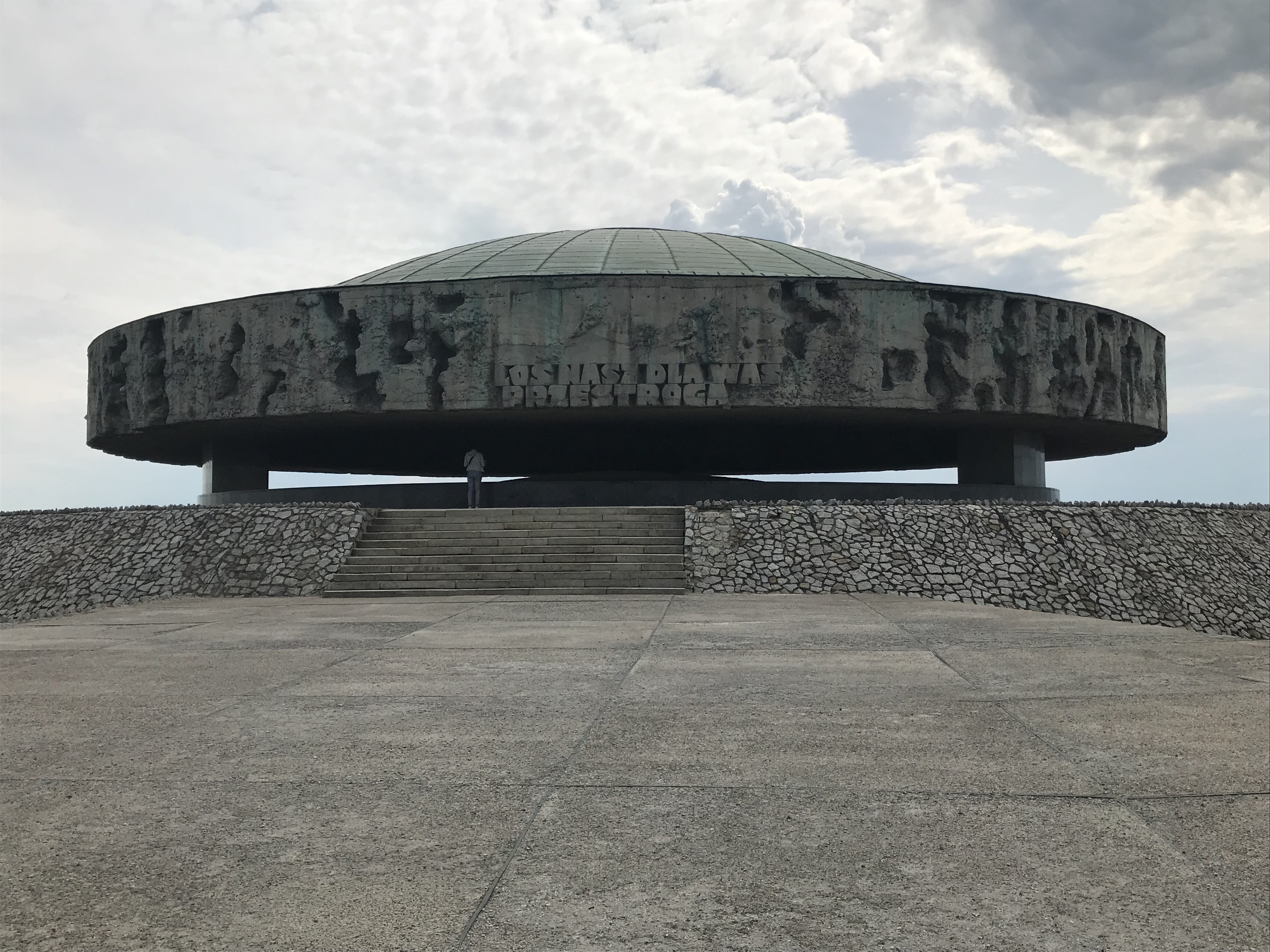
Memorial at the site of the Bełżec extermination camp

I spent my last full day in Poland on an excursion from Lublin to the former site of the Bełżec extermination camp, eighty-five miles southeast near the Ukrainian border. The journey began with a cab ride from Jacek’s apartment to Wieniawa, Lublin’s university neighborhood, where I picked up a rental car at a local hotel. After winding past leafy city parks and students idling at bus stops, I merged onto a beltway and headed out of town. Lublin’s suburbs still flickered in the rearview mirror when I exited onto a two-lane road that I would follow for another seventy miles to the camp memorial and museum. Along the way, I cut across vast, rolling farmland while passing trucks and tractors crawling between small, roadside towns. Although this bucolic route is the main link between Lublin and Lviv, I had the sense of embarking into an obscure corner of Poland to visit a lesser-known Holocaust site.

Bełżec, however, had never been marginal to the Nazi regime.

Prior to Germany’s invasion of the Soviet Union in June 1941 (“Operation Barbarossa”), the town of Bełżec stood at the frontier of the Nazi-Soviet partitioning of Poland imposed in September 1939. As an outpost of the General Government zone of Nazi-occupied Poland, Bełżec initially became the site of a labor camp where groups of mainly Jewish prisoners constructed borderland fortifications and infrastructure in 1940. The launch of “Operation Barbarossa” brought Soviet-occupied Poland under Nazi control, including the formation of the Galicia District of the General Government, which encompassed the cities of Lviv, Tarnopol, and Stanisławów and the lives of more than 600,000 Jews.[1]

The ensuing mass murder of 1.6 to 1.735 million Jews in the General Government from 1942 to 1943 (“Operation Reinhard”) had deep roots in Bełżec.[2] While SS leaders coordinated the genocide from their administrative headquarters in Lublin, they developed a death camp in Bełżec that would become the template for the other “Reinhard” extermination facilities at Treblinka and Sobibór. More than half a million Jews perished at Bełżec, primarily from Galicia, during its nine months of principal operation from March to December 1942.[3] Bełżec’s proximity to railway connections spanning the Lublin, Kraków, and Galicia Districts of the General Government—a calculation not remiss to the perpetrators—was instrumental to the camp’s staggering lethality.

Despite its foundational role in the Holocaust, Bełżec is probably the least known of the major Nazi camps. Its relative obscurity has at least three main roots. First, there is an overdetermined association of the Holocaust with places like Auschwitz and Dachau, which have accrued voluminous popular and scholarly attention while overshadowing less familiar sites like Bełżec. As household names, they have made an impression on popular memory and forged well-worn paths of Holocaust engagement that nevertheless can be limited in scope and episodic in nature. Under such conditions, Bełżec remains the purview of the specialist.

Museum at the site of the Bełżec extermination camp

Bełżec’s obscurity also derives in part from an extreme scarcity of known survivors who left behind testimonial accounts. Rudolf Reder and Chaim Hirszman are the only two known Jewish prisoner-workers at the camp who survived the war. Reder gave a short account of his experiences to the Jewish Historical Commission in Kraków, which they published in 1946. He also provided deposition in the lead-up to the trial of eight former SS camp personnel held in Munich in the mid-1960s. Meanwhile, Hirszman was murdered by members of an anticommunist underground in Poland just hours after his first meeting with the Jewish Historical Commission in Lublin in March 1946. As a result, Reder’s account remains the only complete survivor testimony about the camp and a little known one at that—an English translation first appeared in an academic journal in 2000.[4] One of the most insidious legacies of Bełżec has been the absence of a critical mass of survivors to speak out, bear witness, hold perpetrators accountable, and provoke sustained historical inquiry.

By contrast, the “Reinhard” camps of Treblinka and Sobibór are much more established in Holocaust history and memory. In 1943, successful uprisings at each camp allowed several hundred prisoners to escape, some of whom would survive the war, share their accounts, and testify at war crimes trials. Treblinka is also embedded in the wider history of the Warsaw Ghetto while Sobibór is often showcased as a pinnacle of Jewish resistance. Historical accounts of Bełżec are narrower in scope and usually emphasize its development and operation by the Nazi perpetrators since their records and courtroom testimonies are often the only archival materials available. Indeed, the most frequently discussed inside account of Bełżec comes from Kurt Gerstein, an SS officer who once visited the camp and witnessed an especially brutal gassing of Jews that took close to three hours due to breakdowns with the tank engine used for carbon monoxide.[5] Afterwards, Gerstein attempted to raise alarms with Swedish authorities and the Vatican while still working for the SS bureau charged with supplying Auschwitz-Birkenau and other camps with Zyklon B. 

The overlooking of Bełżec and the preponderance of perpetrator vantage points when discussing the camp have traces in Lanzmann’s Shoah. The former site of the camp and the present-day town railway station make a fleeting, two-minute appearance in Shoah’s eighth hour. It occurs in the middle of a longer sequence about the Warsaw Ghetto that counterposes Raul Hilberg’s close reading of Adam Czerniakow’s diary with the calculated amnesia and pointed evasions of Franz Grassler, a former Nazi administrator of the Ghetto.

Raul Hilberg had been working on Adam Czerniakow’s diary at the time of his interview with Claude Lanzmann.

Czerniakow was a vocational teacher and Jewish community leader whom the Nazis appointed as the head of the Warsaw Ghetto’s Judenrat—a puppet Jewish council used to enforce Nazi decrees. Czerniakow’s daily diary, which he kept from the early days of the Nazi invasion of Poland in September 1939 until his suicide on the eve of the “Great Deportation” of over a quarter-million Jews from the Warsaw Ghetto to the gas chambers of Treblinka in the summer of 1942, provides unparalleled insights into the Ghetto’s history and his own untenable position as a guardian of Warsaw’s Jewish community and an implementer of Nazi decrees.

In the months leading up to the “Great Deportation,” Lanzmann and Hilberg consider how much Czerniakow might have known about the “Final Solution” and the deportation of Jews from other parts of Poland to Bełżec and Sobibór, which opened several months before Treblinka, starting with Bełżec on March 17, 1942. Hilberg indicates that Czerniakow had a keen sense of foreboding but might not have spelled everything out in his diary. Instead, Lanzmann uses his movie camera to fill in such gaps. First, he pairs a voiceover of Hilberg discussing Czerniakow’s distress over a sudden trip to Berlin made by the Ghetto Commissar Heinz Auerswald (Grassler’s superior) in January 1942 with present-day footage of the Wansee villa where the “Final Solution” conference was held. Even though he wouldn’t have had direct knowledge of this event, Czerniakow’s trepidation appears well-founded if not prophetic.

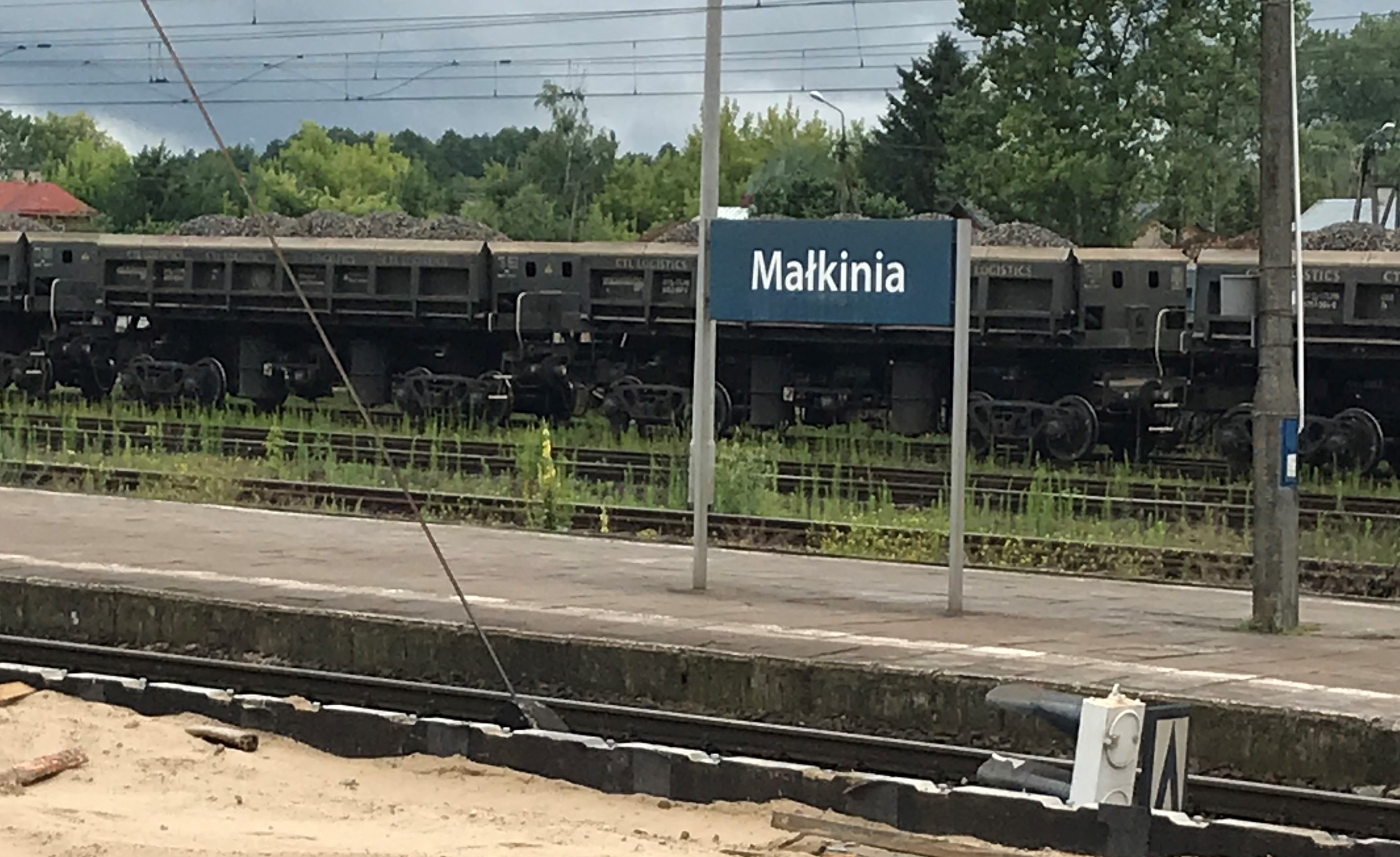
When Hilberg observes that Czerniakow made note of the deportation of Jews from ghettos in Lublin, Kraków, and Lviv in March 1942, Lanzmann cuts from Wansee to Bełżec. A slow pan reveals a disheveled, sandy hillside bordered by pine trees—the empty remains of the extermination camp. It is followed by a static shot of the same torn landscape but from a different angle, between stacks of tree trunks felled by loggers. The site appears to have been repurposed by the local timber industry rather than turned into a memorial. Lanzmann inquires if Czerniakow knew that the deportees had been sent to Bełżec. As the screen fills with clanking freight cars and the humdrum buzz of the town train station, Hilberg intones that Czerniakow didn’t specify destinations in his diary but he still might have been aware of the existence of death camps several months before the “Great Deportation” began in Warsaw. Czerniakow’s knowledge of Bełżec, in the final analysis, remains elusive.

The same might be said of the viewer’s grasp of Bełżec, albeit for a different reason.

While Lanzmann took an allusive approach to the Holocaust in Shoah, one that underlined the impossibility of direct representation and the distortions of “realism,” his tack with Bełżec is cursory at best. It’s a surprising move given his deep interest in the technical development of the “Final Solution” and the centrality of Bełżec to that process. Even in the vast archive of Shoah outtakes, there is only an additional twenty-two minutes of location footage from Bełżec and no evidence that he attempted to engage the locals as he often did at other “camp adjacent” sites in Poland. Indeed, he might have already had his sights set on Chełmno, the perennially overlooked first death camp, which, in a pathbreaking move, he made afocal point of Shoah’s first half. While Bełżec is not absent from the film, its passing treatment is a lacuna and missed opportunity.

Several decades later, the French filmmaker Guillaume Moscovitz would attempt to tie up some of the loose ends. His 2005 film, Bełżec, follows in Lanzmann’s stylistic footsteps and acts in part as an unofficial supplement and satellite of Shoah. Like Lanzmann, Moscovitz takes a nonlinear approach rooted in present-tense footage of the former site of the extermination camp and its environs. He interviews local residents of Bełżec, some of whom witnessed the genocide and had varying interactions with it. An elderly man recalls being placed on a labor squad by the Nazis to work on the camp’s construction, whose purpose he surmised in the process. An elderly woman continues rolling dough in a bakery that once supplied the camp with its daily rations of bread. An aging couple remembers the pleading for water that emanated from the trains waiting outside the camp and the pervasive stench of the pyres that burned for months. One man’s father created a series of paintings depicting scenes from inside the camp caught by his own surreptitious glances from a hillside.

Guillaume Moscovitz’s film Bełżec (2005) is an unofficial satellite of Claude Lanzmann’s Shoah

And then there is the testimony of Braha Rauffmann—a Jewish woman deported from Lviv to Bełżec when she was seven years-old. After escaping the train, a local family hid her for two years inside a massive woodpile just steps away from the camp. Her young age coupled with the fact that her mother was originally from the town of Bełżec likely influenced her rescuers. When it was finally safe to pull her out, she had forgotten how to walk. Speaking before the camera, Rauffmann looks haunted and disembodied, her words rising like the shallow breaths of a still petrified child.

As in Shoah, the site of the extermination camp remains in a state of upheaval in Moscovitz’s film. A professor speaks of ongoing archaeological excavations to delineate the mass graves and uncover traces of former buildings. Local teenagers roam the grounds as if it were a park. Although Moscovitz is not an active, on-screen presence like Lanzmann, his translator does correct a young man who claims that 150,000 Poles died at the camp—the actual number was 150—an intervention that echoes Lanzmann correcting a former German schoolteacher that the number of victims at Chełmno (where she worked nearby) was 400,000, not 40,000. “I knew it had a four in it,” went her infamous reply.

When I arrived at the Bełżec Memorial and Museum after two hours of driving from Lublin, I only recognized the slope of the camp from Lanzmann’s film. The surface of that landscape, however, had undergone major transformations.  

The entrance gate and parking area at the Bełżec Memorial and Museum

Before driving through a metal security gate that encircles the entire site and parking my car, I noticed a sign posted just outside the camp. It contained a map of the town highlighting points of interest and listed a municipal website with information about the town’s history and recommendations for tourists, all of which tended to dilute the proverbial elephant in the room. In addition to protecting and conserving the site, the security gate might inadvertently separate the camp’s history from that of the town, a de facto quarantine further underlined by the sign’s bid for tourists to linger in the area after paying their respects at the memorial. On the verge of entering a physical compartment, I felt signaled to compartmentalize.

Local tourism map just outside the camp entrance

 After parking my car, I passed through another gate and walked onto the grounds. The former site of the camp is now dominated by an enormous, immersive memorial designed by Andrzej Sołyga, Marcin Roszczyk, and Zdisław Pidek. When it opened in 2004, two years after Moscovitz conducted his filming for Bełżec, it marked the culmination of almost two decades of collaboration between the Polish government and the United States Holocaust Memorial Museum in Washington, DC to conserve and update the site. The resulting installation is massive in scale and post-apocalyptic in appearance. The edges of the ragged hillside visible in Shoah have been reinforced with concrete retaining walls topped with jagged strands of rebarb. The slope itself has been filled with piles of slag, like the charred remains of a volcanic eruption. The walkway around the perimeter is inscribed with the names of cities, towns, and villages whose Jewish residents had been deported to the camp. Arranged chronologically, each name is written in Polish and Hebrew in oxidized metal along with the month and year of deportation. Collectively, they form a flat headstone around the remains of mass graves and long-effaced camp structures.

A long corridor lined with cobblestone cuts through the middle of the memorial with walls that gradually rise from a few inches at the entrance to upwards of thirty feet at the back. As one traverses the passageway, which traces the route to the gas chambers, the movement of air and sound evaporates as the memorial towers to even greater heights. An open-roofed mausoleum lies at the end. A stone wall has the words of Job carved into in Hebrew, Polish, and English: “Earth, do not cover my blood; let there be no resting place for my outcry.” The Hebrew version of the quote is written in the largest type at the bottom of the panel. Immediately below it, deep vertical gashes tear into the stone and encroach upon the Hebrew letters. Are these the frenzied scratches of victims crying forth for justice and remembrance? The erasing hand of the perpetrator? The amnesiac ravages of time? Perhaps all three. The memorial at Bełżec seeks to maintain tension rather than dispel it. It amplifies disorder to uncanny effect. It is at once unsettled and unsettling.
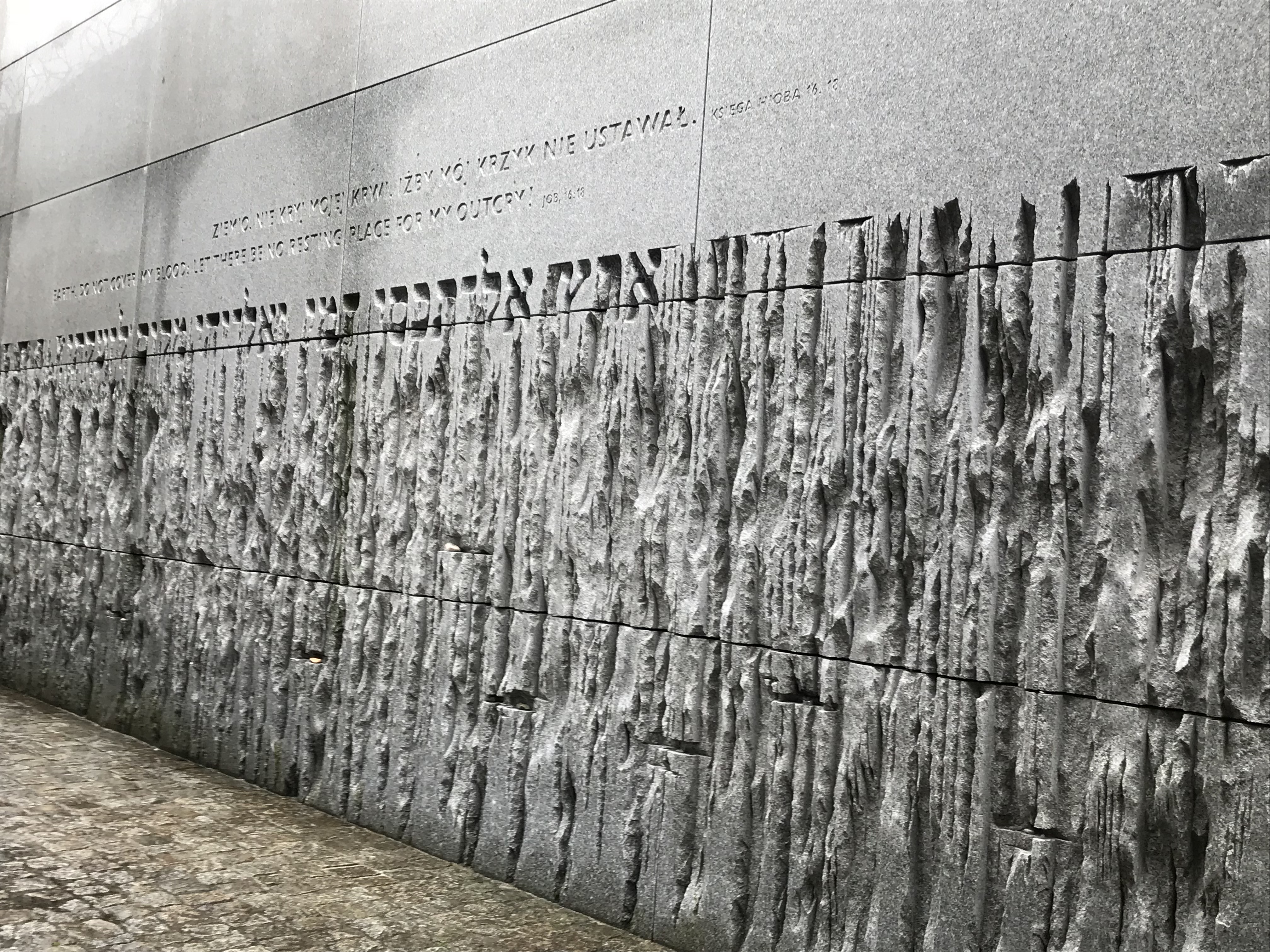
From the memorial on the former site of the Bełżec extermination camp

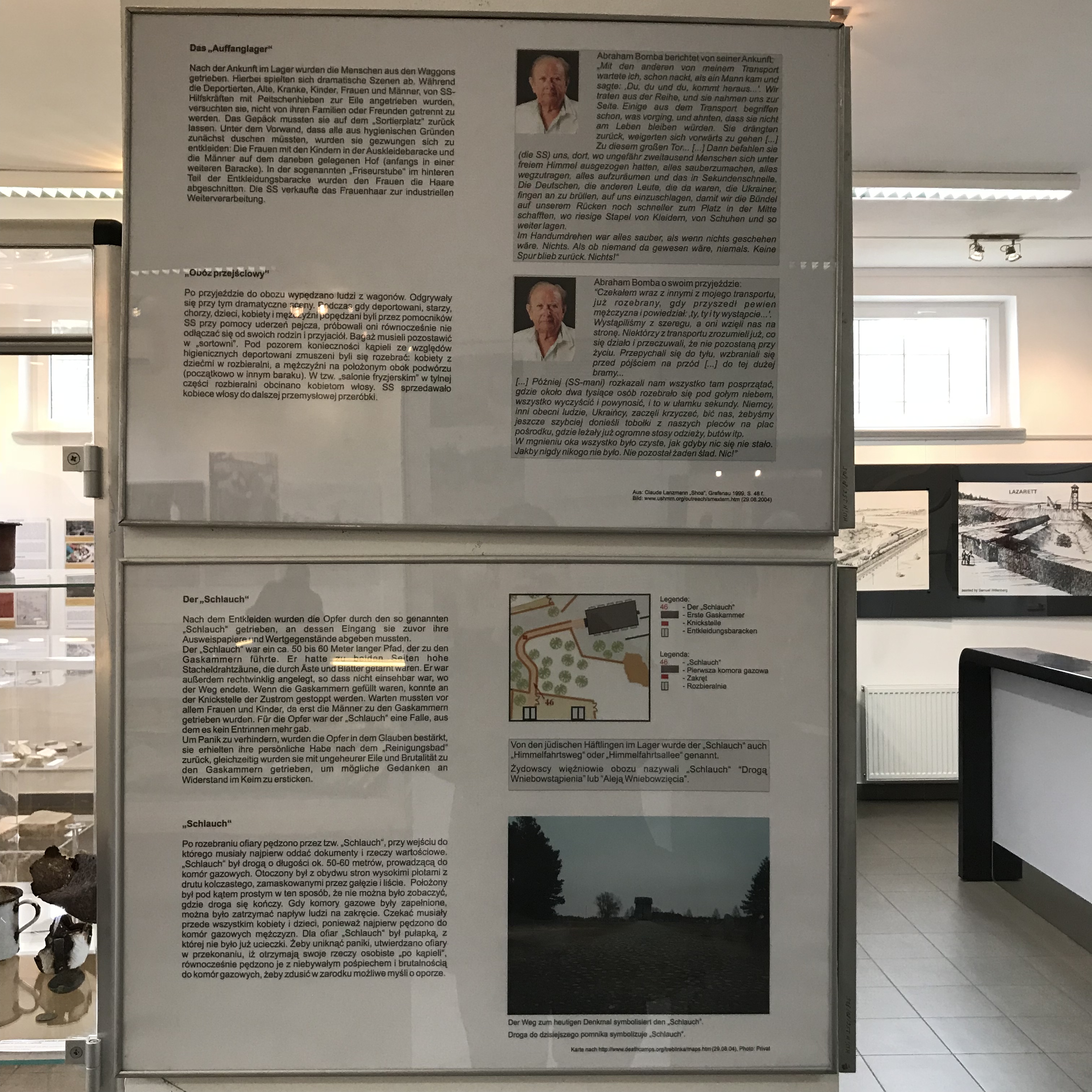
Another focal point of my visit was the camp museum, a rectangular, concrete slab that sunk into the landscape like a half-submerged bunker. The historical exhibition inside, largely organized by the United States Holocaust Memorial Museum, detailed the history of the camp and Operation Reinhard in English, Polish, and Hebrew. Based on the extant archival material, the display often emphasized the role of Nazi perpetrators. Photographs that the SS took of themselves were frequent. A plexiglass case contained a model of the camp building that held the gas chambers, a reconstruction based on evidence from the Bełżec trials and the written testimony of Rudolf Reder. An interactive, light-up map charted the Jewish communities deported to the camp during each month of its operation.

One panel in the exhibition caught my attention in particular. Among the documents and models was a small television screen whose frame had been fashioned to look rusty and metallic. A familiar figure seemed to flutter on an endless video loop, trapped in celluloid amber and displayed in perpetuity from a miniature prison cell inside the museum.

The clip came from Shoah.

Clip from Shoah on view in the museum at Bełżec

One of the most striking scenes in Claude Lanzmann’s Shoah unfolds in a Bavarian pub in Munich’s medieval quarter. It surfaces almost two hours and forty minutes into the film and lasts just over four minutes. Like the segments I analyzed in my previous blog entry, part of its meaning is interwoven with the scenes that immediately precede and follow it. This sequence, however, also has a dramatic, standalone quality, like a miniature film within a film. Here, Lanzmann seems to venture into “caught-on-camera” investigative reporting, albeit in an artful flourish rather than in methodical accordance with TV news magazines like 60 Minutes and Frontline. Although it’s been overlooked in scholarly appraisals of Shoah and in Lanzmann’s own discussions of the film, it’s a scene that leaves a lasting impression on many viewers. When I fished out a copy of Lanzmann’s memoir, The Patagonian Hare, from a Hollywood record store several years ago, the cashier recalled the sequence with awe and I quipped that, “Michael Moore might owe his entire career to that scene.”

The sequence begins with the camera tracking forward at eye level through a backend staging area for the waitstaff of the Franziskaner Restaurant—a beer hall that sits in the shadow of Munich’s Residenz, a former palace of the Wittelsbach dynasts. The right side of the room is enclosed by a rectangular stainless-steel counter with a beer tap and a few wine bottles. A lighting box hovers above the counter, glowing with the slogan for a local Bavarian brewery like an icy halo: “Dein Bier Löwenbräu” [Your Beer, Löwenbräu]. The company’s regal insignia—a lion rearing on its hindlegs with tongue extended—is stenciled in white on blue wall tiles. Behind the counter sits a man pushing retirement age although his presence is obscured by the accoutrements of the barroom. His receding hair is slicked back and the collar of his white dress shirt is tucked into the edges of a gray cardigan. He gives the camera an apprehensive look while perching a cigarette in his right hand. Smoldering in the background, he is an easy-to-miss figure who seems to hide in plain sight. The camera lens is not aimed at him but rather fixes its gaze straight ahead toward the diners in the next room. The resulting exchange is one of mutual side-eyeing.

The camera passes beneath a rounded arch into the dining room, its double doors ornamented with diamond lattice windows. Chandeliers constructed from the tops of oaken beer barrels dangle from the ceiling while autumnal coats hang on racks at the foot of each table. Light blue tablecloths with white embroidery soften the wooden booths running in a parallel line. A few curious patrons turn toward the camera as it floats down the aisle. One man can be seen from behind wearing suspenders and a Tyrolean hat. As the camera approaches the end of the dining room, this long, wandering take is finally cut.

After a quick edit, a moment of disorientation ensues as the next shot is briefly obstructed by a passing waitress. As the camera pans from right to left (rather than tracking forward like the previous shot), the staging area of the restaurant returns to view. This time, the camera faces the counter and beer tap instead of moving past them at a perpendicular angle. Another waitress enters the shot and the camera pans back to the right slightly to observe her filling an ice bucket, which produces an asymmetrical frame filled by the waitress on the right and part of the beer tap on the left. The older man in the cardigan then steps into the left edge of the frame as he fills Weizen glasses with draft beer. Although the rear panel of the tap obscures his face, his eyes glance up at the camera each time he places a foamy, brimming glass on the counter. As if drifting towards a new figure of interest, the camera slowly pans back to the left in order to center the shot on the man and the beer tap. When he steps aside to retrieve a beer bottle from a nearby refrigerator, the camera turns again to keep him in view. It remains trained on him as he circulates about his workspace, even as waitresses enter the frame to whisk away glasses of beer to the dining room. He looks up periodically to see if the camera is still pointed in his direction. Indeed, he can’t seem to shake its attention. 

In the subsequent shot, the camera’s dance of dissemblance around the bartender intensifies as Lanzmann enters the scene. At first, the camera follows a waitress walking over to the counter to rinse some glasses in the sink. Then it pans to the right as she places them under the beer tap in front of the man in the cardigan, who begins filling them. “Excuse me, how many quarts of beer a day do you sell?” asks Lanzmann in tentative German. Lanzmann’s right hand briefly enters the frame, pointing toward the beer tap, and the camera moves a few steps closer to capture the man’s response. He shakes his head, declines to look up, and waves off the question, mouthing the word nein. “You can’t tell me?” Lanzmann persists. The man steps to the right side of the counter and gestures for Lanzmann, whose head is now visible, to lean in: “I’d rather not. I have my reasons.” Resuming his post behind the beer tap, he ignores Lanzmann’s follow-up: “But why not?”

A waiter is now standing by to pick up an order. Lanzmann repeats his question about the amount of beer sold each day. The man exchanges a glance with the waiter and shakes his head. “Go on, tell him,” his coworker enjoins, vexed by the bartender’s refusal to answer a harmless, banal question. The peer pressure proves effective. He steps off to the side again and reports to Lanzmann, who now appears from the waist up, that it’s four hundred to five hundred quarts a day. “That’s a lot,” Lanzmann offers glibly. The man retrieves a bottle of beer from a refrigerator for the waiter, who pops the cap with a bottle opener tucked into his hand before carrying off a tray of drinks.

Lanzmann attempts to further break the ice: “Have you worked here long?”

“Around twenty years,” the bartender replies while inspecting his queue of order slips with the aid of thick glasses he has just put on. 

“Why are you hiding your face?” probes Lanzmann.

He continues to tally the orders. “I have my reasons.”

“What reasons?” Lanzmann volleys.

With a slight shake of his head, he hangs the order slips on the wall, removes his glasses, and flashes Lanzmann a cold look: “Never mind.” Moving to the opposite end of the counter, he begins smoking a cigarette in a corner with his back to the camera.

His withdrawal is followed by a brief close-up of Lanzmann taking a black-and-white photograph out of his jacket pocket. He holds it up and asks, “Do you know this man?” The bartender turns toward Lanzmann, leans forward, and squints at the print. A close-up of the photo is edited in for the viewer’s benefit. It depicts a uniformed SS officer with glasses and a moustache. “Christian Wirth?” Lanzmann suggests to nudge the bartender’s memory. When he does not respond, Lanzmann identifies the bartender himself, adopting a similar tone of incredulity as the waiter: “Mr. Oberhauser!”

Oberhauser pulls back, his face and body tightening into a shrug at the unwelcome exposure. Turning away again, he continues smoking his cigarette and avoids the camera by standing behind a wall column.

Just a moment ago, Lanzmann requested inside information about the restaurant’s beer sales as a member of a French film crew presumably working on a production about Bavaria or beer or the like. Now, by dropping the pretense of naïve foreigner and resuming his identity as Holocaust filmmaker, he simultaneously breaches Oberhauser’s bartender façade. Oberhauser appears to have anticipated as much once he noticed the movie camera roving about the restaurant and drawing ever closer to him. Lanzmann’s ruse is a means of circling in with the camera lens even as he harbors few illusions that Oberhauser will discuss the actual subject that interests him. Still, he tugs at the veil of silence.

“No memories of Belzec? No? Of the overflowing graves?”  

Not only does Lanzmann expose Oberhauser as a Nazi perpetrator from the Bełżec extermination camp, he also reveals his possession of camp secrets reserved to the SS. In a dramatic reversal of his earlier tack about beer sales, he now divulges inside knowledge of Bełżec’s horrors back to one of its main perpetrators. Yet the overflowing mass graves at Bełżec are more than a reference to a hidden history. They surge forth—unruly, repugnant, menacing—as memories that Oberhauser might avoid but cannot ultimately repress. Lanzmann’s words are a conduit of their return, calibrated with a “J’accuse!” on behalf of the victims.

Still, there is broader historical context worth developing beyond the inferences that Lanzmann expects the viewer to draw. Christian Wirth was the first commandant of Bełżec and a key figure in Operation Reinhard who brought a long resumé from the T-4 euthanasia program, where he pioneered the gassing of asylum patients with carbon monoxide. At Bełżec, he developed extermination protocols that became the model for other death camps, in particular the use of deception to lure arriving deportees into the gas chambers. Later, he worked from Lublin as an inspector for all three Reinhard camps.

Christian Wirth’s main assistant during Operation Reinhard was Josef Oberhauser. He also had a background in the T-4 program as a cremator of victims. At Bełżec, he supervised the camp’s construction and worked under Commandant Wirth, often serving as his liaison to Odilo Globocnik, the head of Operation Reinhard in Lublin. When Wirth became an inspector and relocated to Lublin in August 1942, Oberhauser followed with him. One of their first duties was restoring “order” to Treblinka after Globocnik removed its commandant, Imfried Eberl, for accepting more transports than the facilities could handle, which led to overflowing mass graves and piles of corpses around the camp. These events are described in Shoah by Franz Suchomel, a former SS officer at Treblinka whom Lanzmann filmed with a hidden camera, and Alfred Spiess, a prosecutor at the Treblinka trial in 1960. It is Suchomel who mentions that Wirth and Oberhauser already had experience dealing with over-capacitated mass graves at Bełżec, a discussion that appears in Shoah right before the restaurant scene.

Odilo Globocnik, the SS and Police Leader who coordinated “Operation Reinhard” from Lublin, on display at the Bełżec museum

After the dismantling and coverup of Bełżec, Treblinka, and Sobibór in 1943, Wirth, Oberhauser, and other Reinhard personnel were transferred to Trieste, Italy for anti-partisan activities, including the operation of the Risiera de San Sabba concentration camp. Wirth died in partisan warfare in May 1944 although some accounts allege that he had been killed by his own men. In the final days of the war, the British captured Oberhauser and in 1948 he received a fifteen-year sentence in Magdeburg for his role in the euthanasia program, which he served until 1956 when East German authorities released him as part of an amnesty for certain war criminals.[6]

Oberhauser soon faced charges from West German authorities for his role at Bełżec. Seven other indicted SS officers from the camp argued that they had acted under duress and emphasized fear of retribution from Wirth.[7] Since prosecutors lacked survivor witnesses and other evidence to challenge such defenses, the court dismissed the charges.[8] In Oberhauser’s case, he initially petitioned to have the charges dismissed by falsely claiming that Bełżec had already been covered in the Magdeburg trial.[9] When that effort proved unsuccessful, he sought to minimize his role at the camp by contending that he had only been at Bełżec to gather war materials and was only present for “experimental killings” in the camp’s early days.[10] Like his colleagues, he also pleaded duress.[11] His track record of promotion and preferential treatment from Wirth, however, undermined this line of defense. In 1965, the court convicted Oberhauser on five counts of complicity in the murder of at least 150 Jews, when he supervised the unloading of transports, and one count of complicity in the murder of at least 300,000 Jews for procuring building materials for the gas chambers.[12] He was the only Nazi official from Bełżec to receive a criminal conviction. After serving half of a 4.5 year sentence, he returned home to Munich.

“You don’t remember,” Lanzmann concludes, a pitch knuckled with disbelief. The camera focuses on the back of Oberhauser’s head, his profile hidden by the wall column he leans against with his left forearm. A shot of the restaurant’s exterior follows, capping the scene. This brief but memorable encounter now plays on a loop inside a museum gallery on the former grounds of the Bełżec extermination camp. Building on Lanzmann’s exposé, the curators have bound a key perpetrator to the very history, place, and culpability he sought to avoid.

To acquire perpetrator testimonies for Shoah, Lanzmann deployed an array of sting tactics including hidden cameras, false identities, uninvited visits, and, in the case of Oberhauser, a public waylay. He also made a point of disclosing key methods to the viewer alongside the snatched words and grainy visages of ex-Nazis. While his efforts might appear transgressive to some and questionable to others, Lanzmann has argued their necessity for giving an account of the Final Solution. After his initial tack of “frankness and honesty” with perpetrators “had been repaid with resounding failure,” he had to “learn to deceive the deceivers” as a “bounden duty.”[13] In his memoir, he underlined the physical and moral perils that such double-dealing entailed lest he be perceived as a zealous vigilante.

Viewing the Oberhauser scene was an arresting experience the first time I saw it almost a decade ago. Its appearance almost three hours into Shoah felt like a swell of adrenaline that paralleled the scene’s mounting tension. Amid the testimonial detailing of the Final Solution, here was an unstated cry for justice made in “real time.” Unable to provoke Oberhauser to speak of Bełżec, Lanzmann nevertheless captured his testimony of silence and evasion.

By rattling the bartender and the audience, Lanzmann exposes the past as far from settled even as the clink and chatter of everyday life carries on in the next room. Indeed, our relationship to the past might often be akin to dining room formalities: mannered, temperate, comfortable, limited in duration, and expectant of being both appetized and satisfied. Such politesse is more inclined to wave off the Holocaust than turn towards it, much less recognize its presence in the drinks arriving from the kitchen. And so Lanzmann must subvert it. His methods are more subtle than is often recognized, beginning with the long take that outlines the two rooms and establishes their connection.

When I first experimented with showing the Oberhauser scene in the college classroom, some students reacted to it as an affront to their sense of propriety: Lanzmann was being rude. One student even gave a hyperbolic “reenactment” of Lanzmann, making the filmmaker’s voice shrill and hysterical. Others asserted a proprietary notion of self that Lanzmann and his crew appeared to violate by pestering the nonreceptive Oberhauser on camera. In the eyes of the young, conflict-averse, and digitally saturated, what stood out was not the Holocaust, Bełżec, or postwar justice but decorum, personal privacy, and an unlikeable director.

At first, I interpreted such reactions as a call to provide more background information and historical context before screening the segment. They needed deeper academic foundations to better comprehend what they were seeing. Otherwise, they might be limited to emotional responses and knee-jerk reactions to a scene with palpable heat but no raised voices. I would have to provide them with new footing if they were to see beyond themselves and their customary viewpoints. And yet there seemed to be something about their resistance that went beyond straightforward pedagogical solutions and echoed the rawness of the scene.

The Oberhauser sequence in Shoah suggests that the Holocaust is not a settled past but a sutured present. The endless fractures and irrevocable voids produced by the Holocaust are constitutive of the present even if they are unrecognized. Indeed, they are often stitched over by partial, abbreviated narratives and the sense of finality implied by “moving on,” a call that hearkens to order and forgetting more readily than justice and reckoning. Oberhauser as bartender is less a clean break than a nondescript persona sutured over an SS leader. The stitchwork is tenuous and the guise depends on the complicit nonrecognition of others. After loosening its threads, Lanzmann begins to pull at the underlying reality. It’s not only an unwelcome gesture for a perpetrator seeking anonymity but also a direct challenge to the assumption that history is past and its study a pastime. Or, in the case of many of my students, an elective.  

The deliberately fractured memorial at Bełżec might offer a new direction, one that underlines that void rather than attempting to fill it in with ready-made slogans, familiar narratives, or claims of national martyrdom (see #14 – From Warsaw to Lublin & Majdanek). Attending to Bełżec as an overlooked major site of the Holocaust entails much more than affording it a more prominent place in Holocaust literature. It means probing the roots of its marginalization and critically examining the habits that have held it—and much of the Holocaust itself—at bay. While some students cried foul at Lanzmann, others remained quiet, sitting with discomfort and uncertainty but also curiosity.

Epilogue

This blog essay is the final installment about my trip to Poland in 2018 in which I followed in the footsteps of Claude Lanzmann’s Shoah to Auschwitz, Oswieçim, Łódź, Chełmno, Warsaw, Treblinka, Lublin, and Bełżec.

I recently returned from another trip to Europe that included visits to Holocaust sites, memorials, monuments, and museums in Poland, Latvia, Austria, Germany, and France. The material I gathered from this trip will be incorporated into my book instead of forming the basis for future blog essays. I still might share a few photos and insights from this trip as my project grows beyond a focus on Lanzmann’s Shoah and engages a wider set of issues in Holocaust memory and education.

It is worth mentioning that when I was in Munich a few weeks ago, I stopped by the Franziskaner restaurant where the encounter between Oberhauser and Lanzmann occurred many decades ago. The interior had been remodeled but the style was the same. The staging area and beer tap appear to have been relocated. The restaurant clientele was mostly tourists who sat outdoors and ordered Bavarian food. With ambivalence tempered by a sense of coming full circle, I sat down and ordered a beer.

The Franziskaner Restaurant in Munich (June 2023)
The memorial at the Bełżec extermination camp (June 2018)

[1] Yitzak Arad, The Holocaust in the Soviet Union (Lincoln, NE and Jerusalem: University of Nebraska Press and Yad Vashem, 2009), 274.

[2] Yitzak Arad, The Operation Reinhard Death Camps: Belzec, Sobibor, Treblinka, 2nd ed. (Bloomington, IN: University of Indiana Press, 2018), 440.

[3] Arad, The Operation Reinhard Death Camp, 440 and Arad, The Holocaust in the Soviet Union, 284.

[4] See Rudolf Reder, “Bełżec,” trans. M.M. Rubel in Polin: Studies in Polish Jewry, Vol. 13, ed. Antony Polonsky (London: Littman Library of Jewish Civilization, 2000), 268-289.

[5] The most extensive analysis of the Gerstein case is Saul Friedländer, Kurt Gerstein: The Ambiguity of Good (New York: Alfred A. Knopf, 1969).

[6] Michael S. Bryant, Eyewitness to Genocide: The Operation Reinhard Death Camp Trials, 1955-1966 (Knoxville, TN: University of Tennessee Press, 2014), 63.

[7] Bryant, 57.

[8] Bryant, 62.

[9] Bryant, 63-64.

[10] Christopher R. Browning, The Origins of the Final Solution: The Evolution of Nazi Jewish Policy, September 1939-March 1942 (Lincoln, NE and Jerusalem: University of Nebraska Press and Yad Vashem, 2004), 543.

[11] Bryant, 65.

[12] Bryant, 68.

[13] Claude Lanzmann, The Patagonian Hare, trans. Fred Wynne (New York: Farrar, Straus and Giroux, 2012), 449.

Posted in Uncategorized | Leave a comment

#15 – MEDITATIONS FROM LUBLIN

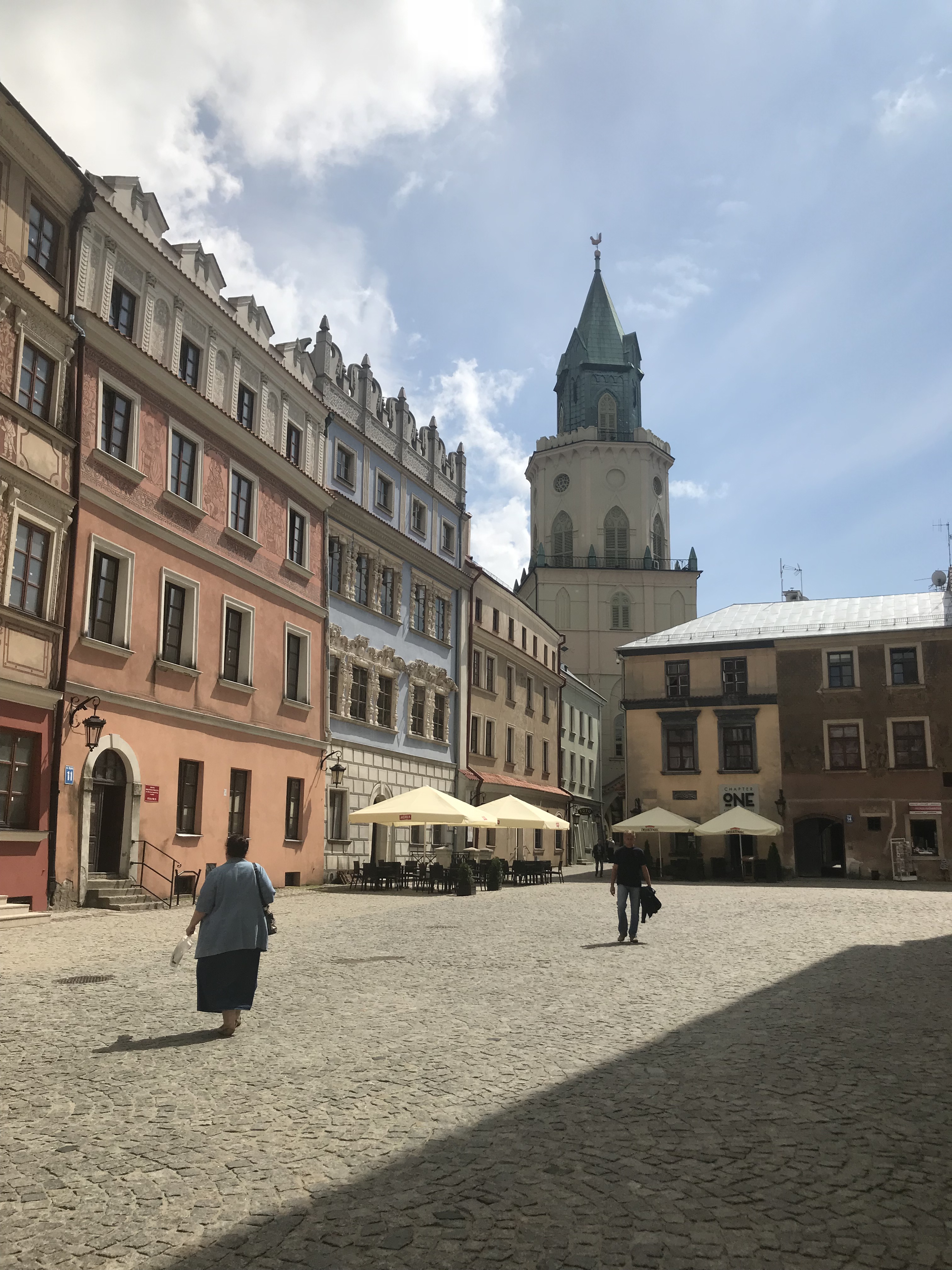
The Old Town in Lublin, Poland

I began my last full day in Poland sitting on the floor of Jacek’s apartment.

A sheepskin mat cushioned me on the parquet wood—a fleecy comfort I brought from California whose snowy whiskers were forever entangling themselves in my suitcase zipper each time I packed up for a new destination. The drowsy sunlight of early morning began to crystallize like the stamens of a waterlily reaching out from its wreath of petals. A crisp air wafted through the balcony doors, enveloping my quarters with a respite from late June. Legs crossed and one hand resting in the other, I cycled through a long series of breathing exercises while the soft undulations of a recorded mantra filled my ears.

Another long day lay ahead of me.

Soon I would wind down a hill to the bus station where I would hail a taxi to bring me to the city’s west end. The cab would traverse Wieniawa, a university neighborhood filled with lecture halls, scientific institutes, and student apartment blocks that seemed like a pocket of contemporary life far removed from Lublin’s Old Town and the Majdanek concentration camp—an impression that had been challenged by a photograph I’d seen the day before.

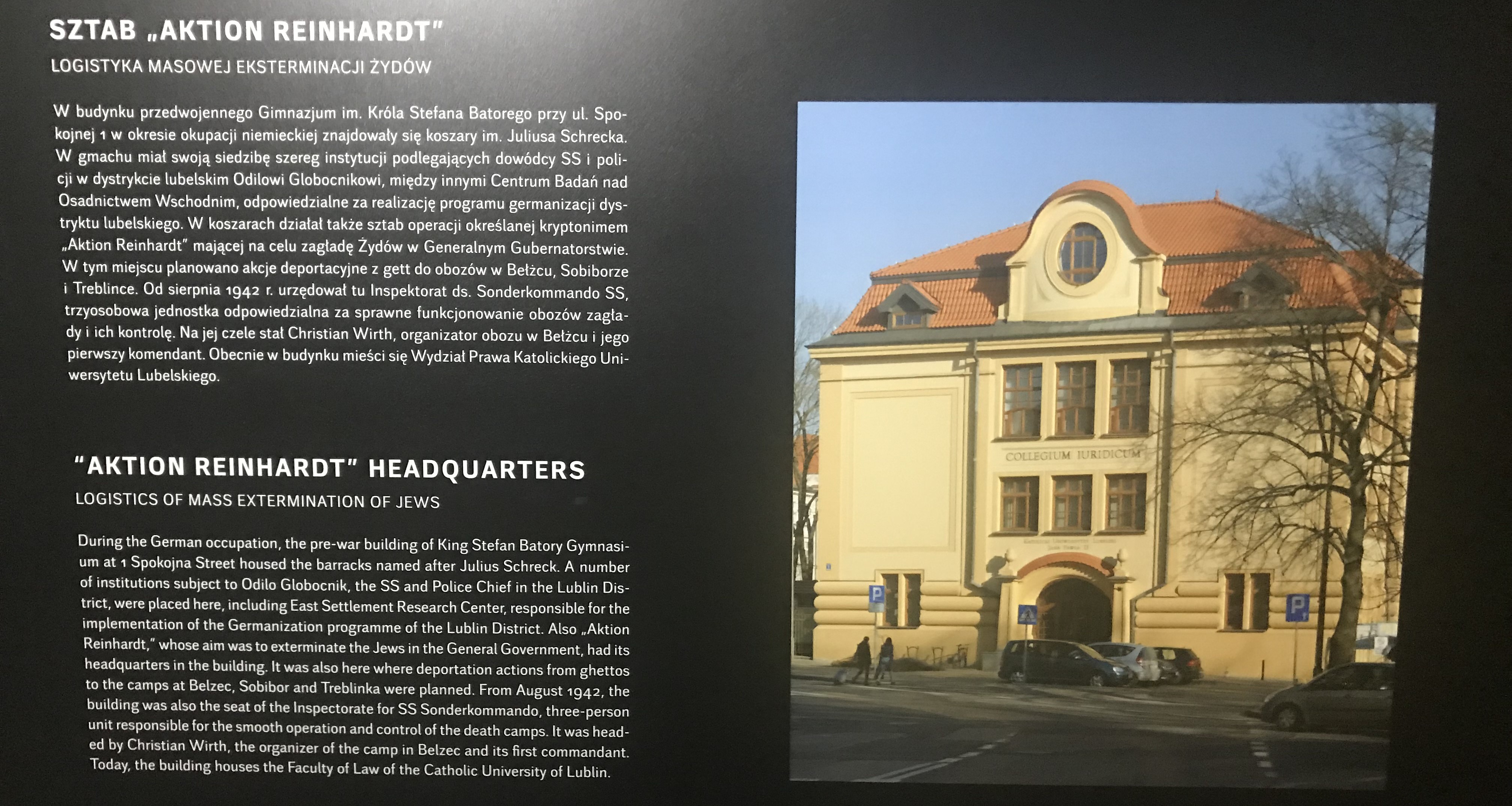
During my visit to Majdanek, I had perused a historical exhibition about Operation Reinhard, a cornerstone of the “Final Solution” that centered on the mass murder of Polish Jews at the extermination camps of Treblinka, Sobibór, and Bełżec. Lublin served as the main headquarters of Operation Reinhard and the exhibit included a photograph of the exact administrative building—a former gymnasium (secondary school) that has since become part of Lublin’s Catholic University on the edge of Wieniawa. Today, the hum of institutional routine is the neighborhood’s link to the past rather than a sign of its insularity.

The former headquarters of Operation Reinhard

Along Wieniawa’s tree-canopied avenues, the tendrils of history would seem interwoven with the summer verdure. The taxi would deposit me in front of a Communist-era relic of a hotel that now contained an Avis desk, where I would I pick up a rental car that turned out to be no less than a maroon Volkswagen with a manual shift. I would attach my GPS to the windshield and set the coordinates for Bełżec, eighty-five miles southeast of Lublin and nine miles from the Ukrainian border.

But I had not embarked on that journey just yet.

Instead, I sat entwined in the same morning yoga routine that I had practiced for months. The very idea of writing a book about Claude Lanzmann’s film, Shoah, had dawned on me while completing the same meditative sequence three months earlier in California. Now, I found myself absorbed in the same breathing pattern, lulled by the same mantra, but perched on a floor in southeastern Poland near the end of a two-week trip around the country. As my breath descended to a slow tempo, my thoughts lingered on how quickly I had moved from the inception of an idea to the completion of its opening act. Once the notion of writing about Shoah had surfaced from a semi-conscious haze, I knew traveling to Poland would be one of my first steps.

Now approaching the end of that journey, I had come full circle as I drifted into a meditative state in Lublin. I felt tempted to cede all credit to my yoga practice for bringing me to this moment. But its main role was a catalyst—the origins of the Shoah project and my trip to Poland had much deeper roots.

*                      *                      *

For years, I have pursued closer contact with books, films, and histories that I’ve found especially compelling. Fictitious works rooted in real places often spur my curiosity in seeing them firsthand and in some cases I have traveled to locations that a favorite writer or filmmaker incorporated into their work. While there is a “fandom” component to these journeys, their underlying attraction for me is mystical. When a real place becomes part of a fiction, it seems to be granted a second life, taking on another order of existence beyond its everyday appearance. The details of the dual lives of such places fascinate me. Never entirely here nor there, they represent an interface between the material world and the metaphysical realm of human creativity.

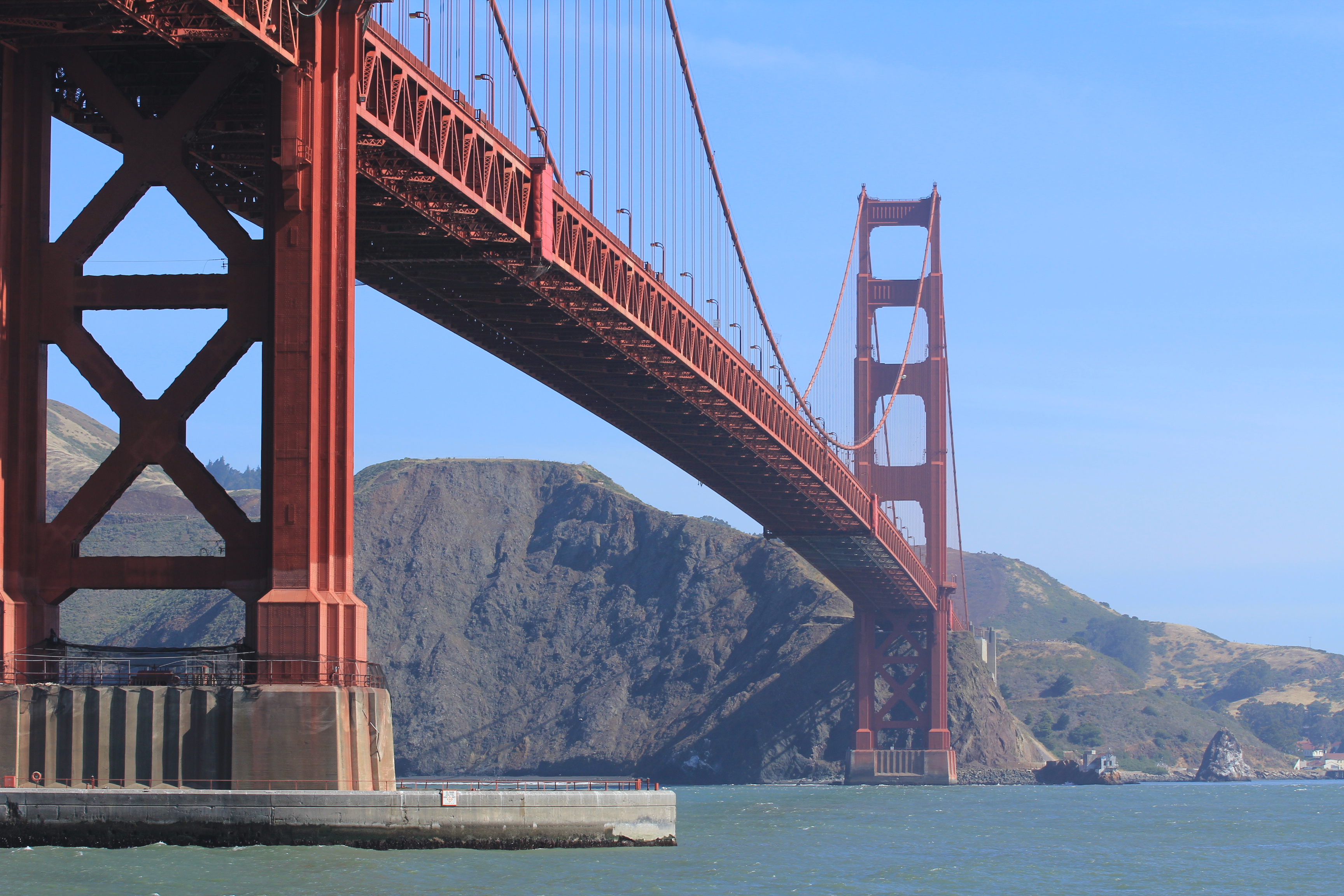
Stepping into such in-between places is not always a light undertaking. What might appear to be an amusing diversion can sometimes yield unnerving insight. Some years ago, Hitchcock’s Vertigo worked its way into my travel itinerary in San Francisco. As the film’s main setting, Hitchcock made extensive use of famous city landmarks to lend his work an iconic air. After adding a few sites to my “to do” list, I soon found myself ambling by the Palace of Fine Arts and glancing up at the Golden Gate Bridge from Fort Point in half-conscious imitation of Scottie, the film’s protagonist played by Jimmy Stewart. In the early scenes of Vertigo, the audience follows Scottie as he shadows Madeline, the wife of an old friend, as she wanders the city. Madeline appears to pursue, and possibly be possessed by the spirit of Carlotta Valdes, a long-deceased ancestor who committed suicide after being cast aside as the mistress of a wealthy man. Against the backdrop of San Francisco landmarks, the audience is drawn into a hypnotic spiral as it follows Scottie following Madeline following Carlotta.

The Golden Gate Bridge as seen from Fort Point, San Francisco, CA

Scottie’s investigative shadowing imbues the city with the enigma of Madeline, in which the lines between past and present, fact and fiction, and self and other are blurred to threatening and captivating effect. By incorporating San Francisco landmarks into the mise-en-scène, Hitchcock not only staged Vertigo’s psychological conflicts but wove them into the fabric of the city itself, fraying the presumed edge between cinematic fiction and everyday reality in the process. Seeking out a few of these sites on my own was less about Hitchcock becoming my tour guide than falling further under the spell of Vertigo—a film about falling under spells that simultaneously instills that experience in the audience. Paradoxically, stepping out of the movie theater and onto the streets of San Francisco to uncover the reality behind the image was the ultimate sign that I remained mesmerized by Vertigo’s chimeras, that the film was still playing me.

Not all of my journeys, however, have been so abstract in their intentions or teasing in their results. In contrast to fictitious works, my pursuit of historical sites is often tied to the classroom.

Just before I discovered the Shoah project, I had visited Crescenta Valley Community Regional Park near Glendale, California to see the results of a recent historical controversy that I had been teaching my students. The dispute centered on new sign that had been installed at the park entrance by the LA County Parks and Recreation Department in 2016, which read, “Wilkommen zum / Welcome to Hindenburg Park.” The sign had been donated by the Tricentennial Foundation, a local organization seeking to commemorate the park’s history as a hub of German-American culture in Southern California.

From the 1920s through the 1950s, a portion of the land that now belongs to Crescenta Valley Park had been privately owned by the German-American League, a community group that sponsored cultural activities around the greater Los Angeles area including an annual Oktoberfest. In 1934, the League named their recreation area “Hindenburg Park” in honor of former German president Paul von Hindenburg who had died earlier that year. With the onset of World War II, the League renamed the park to the more benign, “La Crescenta Picnic Grounds” although the “Hindenburg Park” nickname persisted for years. In the 1950s, LA County acquired the land and incorporated it into the neighboring Crescenta Valley Park. More recently, the Tricentennial Foundation sought to recognize and preserve the memory of “Hindenburg Park” by presenting county officials with the welcome marker.

In response to the sign’s installation, area residents (including fellow German-Americans), historians, and the Jewish Federation of Greater San Gabriel and Pomona Valley criticized the sign as an honorific for President Hindenburg and a one-sided acknowledgment of the park’s history. Hindenburg, they reminded, had a big hand in engineering the antisemitic “stab-in-the-back” myth that scapegoated German Jews for the country’s loss of World War I, which had a profound impact on postwar German society and Adolf Hitler, whom he would later appoint as Chancellor. The “Hindenburg Park” sign, they argued, perpetuated the honoring of Hindenburg while ignoring his historical record.

“Hindenburg Park” had also been the site of pro-Nazi rallies and propaganda campaigns in the 1930s, including a youth camp modeled on the Hitler Youth. Such activities had been devised by the German-American Bund, a pro-Nazi movement in the US sponsored by the Third Reich that managed to penetrate the German-American League in Southern California. “Hindenburg Park” was in fact one of many sites of attempted Nazi subversion in the greater Los Angeles region.[1] Cal State Northridge maintains an archive of Bund artifacts and propaganda, including photographs and flyers from “Hindenburg Park” and an online exhibition. The new sign represented selective memory, according to opponents, rather than a complete picture of the park’s history.   

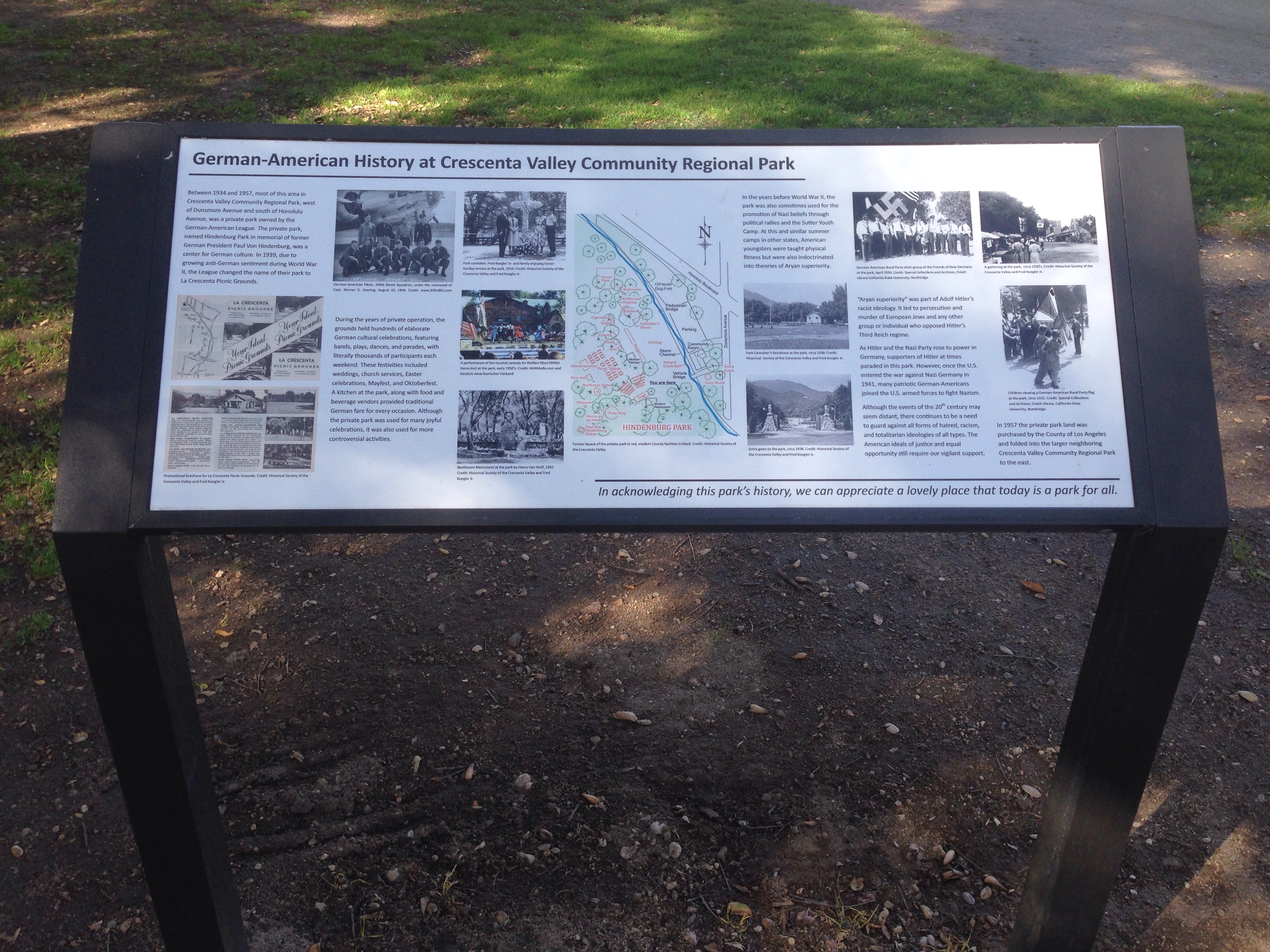
About a year and a half after the controversy erupted, the LA County Parks and Recreation Department brokered a settlement: the welcome sign donated by the Tricentennial Foundation would be taken down and replaced by a small historical exhibit showing different sides of the park’s history. When I learned of its installation, I decided to track it down and see what information it contained.

“Can I come with?” volleyed a student from the back of the classroom when I announced my intention to visit the park that weekend and share the results on Monday. While I demurred at the suggestion of a carpool or an unofficial class trip, I appreciated their amiable curiosity in the cliffhanger I’d presented to them.

The next morning, I had a hard time finding the new exhibit. I did recognize the former location of the “welcome” sign but found no further clues to direct me. Weekenders reclining in lawn chairs gave me puzzled looks when I asked them for help. Perhaps the exhibit had been vandalized and taken down for repairs, I thought, but that would have made the local news. On the verge of giving up while groaning at the prospect of returning to my students empty-handed, I ventured deeper into the interior of the park. There, I stumbled upon it almost by accident at the edge of a field.

The historical exhibit at Crescenta Valley Park

Compared to the entrance sign donated by the Tricentennial Foundation, the historical exhibit was a decidedly low-key affair. Easily overlooked instead of hard-to-miss, from a distance it resembled an interpretive nature sign. The exhibit had been framed as “German-American History at Crescenta Valley Community Regional Park” and a map of the former grounds of “Hindenburg Park” occupied the center of the panel. It appeared that the sign’s location had been chosen to allow viewers to imagine the former landmarks of “Hindenburg Park” within the contemporary landscape. 

The map of “Hindenburg Park” from the exhibit

Each “side” in the controversy had three columns of text and archival images to highlight their perspective on the park’s history with the map serving as a demarcation line. The left side emphasized cultural festivities and German-American service in the U.S. armed forces during World War II while the right side revealed Nazi activities and the promotion of Hitler’s racial ideology in the park. A concluding statement called for vigilance to safeguard “American ideals of justice and equal opportunity” while appreciating a “lovely place that today is a park for all.”

The historical exhibit at Crescenta Valley Park

When I shared photos of the exhibit with my students the following week, their reactions pivoted on the difficulty I had finding it. Having already learned about the Bund movement, which they found very unsettling, they expected the exhibit to have a similar stature to the welcome sign. While recognizing the differences between historical and monumental displays, they thought the exhibit would have taken up a bigger footprint in the park. Shouldn’t a message of vigilance be given due prominence instead of being left to chance encounters?

Meanwhile, I drew their attention to the fact that the exhibit mentioned President Hindenburg as the park’s namesake but did not discuss his connection to antisemitism and the rise of Adolf Hitler. Placing Hindenburg in historical context might have exposed county officials to criticism and embarrassment for originally accepting and displaying the welcome sign. It also would have muddied the “positive” account of the park’s history and undermined the “two sides” approach to settling the controversy.

Here, I am reminded of an artifact from the Cal State Northridge archive that I had previously shared with my students: a flyer for a May Day Festival at the park in 1939 slated as a “Giant Pro-American Rally” that in addition to music, food, and folk dances included speakers from the German-American Bund who would, “Expose the Real Enemies of Our United States of America.” Or as I usually quip to students, “Come for the food, stay for the propaganda.” By attempting to give equal voice to the two different constituencies in the welcome sign controversy, the exhibit oversimplifies the park’s history by framing it as pro versus con. The flyer, however, reveals a murkier historical reality, one that is rooted in the entanglement of the “two sides” rather than their neat separation. A larger exhibition with a bigger footprint would be needed to really examine the park’s history beyond the sign debate binary.

Refining public memory toward greater sophistication and justice not only informs my approach to the “Hindenburg Park” controversy and my work as a history teacher but it’s also what draws me to an expansive and nuanced work like Shoah.

*                      *                      *

Perhaps the most fertile soil for the Shoah project’s genesis came from the classroom, where I have been smuggling bits of the film into my lesson plans for years. Excerpts from Lanzmann’s work have briefly illuminated the darkened lecture halls of world and U.S. history surveys and flickered across projector screens in writing courses and honors seminars about gender and ethnicity. Shoah’s density lends it versatility as a pedagogical device—from introducing students to lesser-known aspects of Holocaust history to analyzing cinematic technique and interpreting survivor testimonies. Still, the film’s nine-and-a-half hour running time and the intricate context of any given scene might seem like insuperable barriers to everyday classroom use. Bringing Shoah to undergraduates has placed me in the role of a secondary film editor who parses excerpts that can be introduced, viewed, and discussed within the allotted class time. Adapting course curricula to include the film while tailoring the film to fit the logistics of a class meeting has been a challenging but rewarding enterprise.

On “Shoah Days,” a slight flutter will arise in my stomach as the students take their seats and I unpack the DVD box set at the lecture podium. In contrast to my other lesson plans, presenting Shoah feels more personal and exposed. By carving an unexpected path from the course curriculum to specific moments in Lanzmann’s film, my own zeal is on display. A palpable stillness envelops the room as the film’s subdued pace and muted aesthetic centers their attention on each voice, sound, and image on screen. When the classroom lights are turned back on, an introspective silence is followed by small group conversations and then a full class discussion.

Lanzmann’s film is an unusual and demanding viewing experience, one that is oriented towards reading between the lines rather than following a trail of emotional cues. His work calls for the spectator to see beneath the surface of what appears on screen while adapting to non-linear and elusively thematic narrative threads. For students, the lack of familiar landmarks and the foiling of their expectations can be especially challenging.

I learned to teach Shoah in part through trial-and-error by dropping students into its filmic river, seeing where they ended up, and reeling them back in. I often noticed them seeking conventional emotional cues from a movie that omits them on purpose. Sensing a gap or tension in being left to their own devices, some students looked for emotional signals from the figures on screen to orient their own feelings, often misreading the film and those figures in the process.

Here, I am reminded of a fleeting moment in graduate school when I worked as a teaching assistant for a World War II history class. I had decided to show clips from Shoah in my breakout sections one week to generate discussion and supplement the professor’s lectures on the Holocaust. I began with the film’s unforgettable opening sequence of Simon Srebnik, a survivor of Chełmno, returning with Lanzmann to the former site of the extermination camp and its environs (see #11). These elaborate scenes, which center on the unfolding of Srebnik’s memory, are followed by a brief counterpoint drawn from Lanzmann’s interview with Michael Podchlebnik, another survivor of Chełmno. While Srebnik revisits and “reenacts” elements of the past in situ, Podchlebnik, speaking at home in Israel, prefers to keep his distance. During this brief segment, Podchlebnik often smiles, which prompted a prolonged beam in return from one of my students,

This exchange of smiles surprised me.

Podchlebnik’s demeanor in this scene had always struck me as nervous and vulnerable, his incongruous smile teetering on the verge of tears at the prospect of sharing memories of Chełmno. The occasional brightness that would sweep over his face seemed to belie an underlying weariness. Seeing him hover at the brink of an inexpressible past, my feet would roll onto their sides.

Perhaps the student felt uneasy, too. Podchlebnik’s smile might have been a welcome sight after watching Srebnik retrace the edge of a mass grave at Chełmno. But it was not a lifeline nor a beacon of grandfatherly warmth but something more akin to a shield. By taking Podchlebnik’s smile at face value, the student might have found a reprieve from the larger exhumation of the past unfolding on screen. Ironically, a protective veneer could become a point of emotional identification.

Lanzmann, however, remembers Podchlebnik’s smile differently.

In his memoir, The Patagonian Hare (published in French in 2009 and in English in 2012), Lanzmann distinguishes it as “courageous” and characterizes Podchlebnik as “heroic and rigorous.”[2] His countenance made such a profound impression on Lanzmann that he declares it the “face of the Shoah.”[3] And when Podchlebnik dissolves into tears in a later scene, Lanzmann says that he also cries when he re-watches it and recalls pressing his hand on Podchlebnik’s shoulder to “help him find a voice.”[4]

Discovering this passage in the memoir also elicited my surprise. Had I missed some subtle cue in this scene all along? Or was Lanzmann taking a revisionist stance on his work in response to perennial criticism for being too pushy with his interviewees? In the scene viewed by the students, for example, he asks Podchlebnik why he smiles all the time, which sounds like a provocation rather than an appreciation.

The answers to both questions are “no.”

To understand why, we must situate the Podchlebnik scene in relation to the ones that directly precede and succeed it and examine the original, full-length interview available through the US Holocaust Memorial Museum’s online collection of Shoah outtakes.

First, it is important to recognize that Shoah is not a long series of standalone moments with different interviewees; rather, it is a mosaic composed of carefully selected fragments arranged in thematic patterns. Adjacent segments of the film are interwoven by subtle contiguities and overlapping subject matter while larger sections of the film contain underlying motifs. As a result, the meaning and purpose of any given scene is wrapped up in the adjoining scenes, which requires more than a close reading of individual segments to recognize.

The scene concerning Podchlebnik’s smile and his relationship to the past is preceded by Simon Srebnik’s return to Chełmno. The contrast in how they interact with the past—the former at home and reluctant to speak and the latter returning to Poland and reenacting key moments—helps mediate audience expectations about survivor memory from an early point in the film. Some figures may speak more openly than others, demeanors will vary from one person and one moment to the next, and all are carrying immeasurable burdens that resist articulation. The immersive opening sequence with Srebnik is tempered by Podchlebnik’s reticence, a polarity that introduces the viewer to the spectrum of on-screen remembrances from Holocaust survivors in the film.

The discussion of Podchlebnik’s smile is followed by a short clip of Hanna Zaïdel, the daughter of Motke Zaïdel, a survivor of the Ponary Forest massacres near Vilna, Lithuania. Her brief appearance in Shoah is culled from a longer interview that Lanzmann conducted in Israel with her father and Itzak Dugin, another survivor of Vilna; one part of the interview occurred at Motke Zaïdel’s apartment surrounded by family (including Hanna) while the other part unfolded at the Ben Shemen Forest to approximate Ponary. In Shoah, Ms. Zaïdel sits behind her father in the family living room and explains her interest in hearing his story:

[H]e was a silent man, he didn’t talk to me. And when I grew up and was strong enough to face him, I questioned him. I never stopped questioning him, until I got at the scraps of truth he couldn’t tell me. It came out haltingly. I had to tear the details out of him, and finally, when Mr. Lanzmann came, I heard the whole story for the second time.[5]

As she speaks, the camera pans to the left and rests on a close-up of her father’s stoic face.

As the child of a survivor, Ms. Zaïdel alludes to the strain of being raised in the shadow of the Holocaust. Her father’s silence about the past might have served as a strategy of self-preservation and family protection but it also entailed distance and disconnection. For Ms. Zaïdel, her father had long appeared mysterious, unapproachable and requiring enormous strength and persistence to confront. Even if the past had not been openly discussed in their family, it had always been present through his silent figure.

Lanzmann’s inclusion of Ms. Zaïdel’s statement early in the film plays several roles. First, it acknowledges that Shoah is in part a film for the children of survivors as well as younger and future generations. Her tenacity expresses a commitment to not only to understand her father better but also to unearth the truth about the Holocaust—an undertaking, she acknowledges, Lanzmann helped to advance. At the same time, the relentlessness she attributes to herself provides context for Lanzmann’s own persistent questioning of guarded figures such as Podchlebnik and her father. Through her statement, Lanzmann telegraphs his own role as interviewer in the film, likening it to a resolute and occasionally vexing family member who hounds the truth and does not easily give up.  

Situating Podchlebnik’s smile in relation to the adjacent scenes with Simon Srebnik and Hanna Zaïdel reveals that the struggle to conjure and transmit memory is an active dynamic in Shoah rather than a rough edge smoothed over in the editing process. The sense of exposure present in the film, in turn, implicates the audience, who must navigate the rawness and tension of what unfolds on screen without emotional cues and scaffolding to lean on. This challenge is integral to the experience of watching Shoah, especially for the first time, as symptomatized by the student who burrowed into Podchlebnik’s smile for emotional grounding. Mitigating the sense of exposure generated by the film is an unlikely belated move by Lanzmann. His inclusion of Podchlebnik’s smile is purposeful and multivalent and as a director he is not known for hedging his bets.

Lanzmann’s remarks in The Patagonian about Podchlebnik’s courageousness are best understood in relation to the original interview. A digitized version of their exchange in May 1979 is available online through the United States Holocaust Memorial Museum, which purchased the outtakes of the film (totaling 220 hours) from Lanzmann in 1996 and gradually posted them on their institutional website (under the “Claude Lanzmann Shoah Collection”) beginning in 2015.[6]

The outtakes reveal that Lanzmann’s interview with Podchlebnik followed a traditional, chronological account of his life—from sketches of his prewar life in Koło (about eight miles from Chełmno) to the details of his escape from the camp and the years of hiding that ensued. During this wide-ranging discussion, Podchlebnik appears more composed than he does in Shoah, his frequent smile signaling more affability than nervousness. Perhaps even more surprising is the discovery that the discussion of avoiding the past happened near the end of the interview rather than the beginning. While it appears in Shoah as a prelude to broaching the past, in the original interview it was an epilogue for having done so. Upon further reflection, however, it makes sense that Lanzmann started the interview by simply asking Podchlebnik his age and saved inquiring about his relationship with the past until much of it had already been disclosed. The apparent discrepancy in this case is really an illustration of how Lanzmann incorporated elements from a relatively conventional interview into an artistic work that follows a different set of imperatives.

The outtakes, it should be noted, are not a gargantuan “director’s cut” of Shoah nor is Shoah a highlights reel of the outtakes. Even though they are cut from the same celluloid cloth, the relationship between them is one of discontinuity. Michael Podchlebnik is different in the outtakes than he is in the film. The same can be said of Lanzmann. The artistic process fashions the materials it employs into something new, including the artist who casts himself in his own work. As a result, it might be no surprise that Lanzmann’s recollection of Podchlebnik does not perfectly align with the figure appearing in the film. Indeed, Lanzmann’s brief sketch of him in The Patagonian Hare combines pieces of Shoah, the outtakes, and his own memories of their encounter.

The outtakes of the interview with Michael Podchlebnik do contain some of the tenderness that Lanzmann alludes to in the memoir. He often appears in the camera frame seated near Podchlebnik, occasionally resting his hand on his shoulder at difficult junctures. Eye contact and physical touch are the most direct sources of connection between them since they are separated by a language barrier. Podchlebnik speaks in Yiddish during the interview and his exchanges with Lanzmann are mediated by Fanny Apfelbaum, a translator who sits off-camera. Lanzmann often poses his questions to Apfelbaum instead of directly to Podchlebnik (e.g. “What died in him in Chełmno?”), and she responds by speaking for the interviewee in the third person (e.g. “Everything died. But he’s only human and he wants to live”), which adds a slight stiltedness to the interview. These complications might explain why Lanzmann’s memory of Podchlebnik emphasizes the physical—the face, the smile, the tears, “my hand pressing on his shoulder,” “heroic and vigorous.”[7] Body language, gesture, and touch, with their attendant possibilities and ambiguities, assumed heightened importance under such conditions of verbal separation. Through his smile, Podchlebnik both acknowledged Lanzmann and continued to elude him.

Incongruous smiles—from a figure in Shoah and a student watching the film—provoke interpretive work. Indeed, that is the intended effect of a film that does not signpost meaning. According to Lanzmann, “Le film est fait…pour que les gens continuent à travailler. Pendant le déroulement de la projection, mais aussi après.” [The film is made…so that people continue to work. During the screening but also afterwards.][8] Embracing that work in its full complexity has made me a better teacher and interpreter of Shoah—undertakings I discovered through a concurrent journey of meandering, experimentation, and self-observation.

The Old Town in Lublin, Poland

[1] See Arnie Bernstein, Swastika Nation: Fritz Kuhn and the Rise and Fall of the German-American Bund (New York: St. Martin’s, 2013); Bradley W. Hart, Hitler’s American Friends: The Third Reich’s Supporters in the United States (New York: Thomas Dunn, 2018); Bernhard Rohrbacher, “‘Mit Deutschem Gruss’: On the History of Hindenburg Park in La Crescenta and the German American League of Los Angeles,” California History 95, no. 1 (2018): 25-53; Steven J. Ross, Hitler in Los Angeles: How Jews Foiled Nazi Plots Against Hollywood and America (New York: Bloomsbury, 2017).

[2] Claude Lanzmann, The Patagonian Hare, trans. Frank Wynne (New York: Farrar, Straus and Giroux, 2012), 436-437.

[3] Lanzmann, 436.

[4] Lanzmann, 436.

[5] Shoah, directed by Claude Lanzmann (1985: Criterion Collection, 2013), Disc 1, 14:55-15:27, DVD.

[6] Lindsay Zarwell and Leslie Swift, “A History of the Claude Lanzmann Shoah Collection at the United States Holocaust Memorial Museum” in The Construction of Testimony: Claude Lanzmann’s Shoah and Its Outtakes, ed. Erin McGlothlin, Brad Prager, and Markus Zisselsberger (Detroit: Wayne State, 2020), 50.

[7] Lanzmann, 436-37.

[8] “Le lieu et la parole” in Au sujet de Shoah: le film de Claude Lanzmann (Paris: Belin, 1990), 425. The English translation of the quote is my own.

Posted in Uncategorized | Leave a comment

#14 – FROM WARSAW TO LUBLIN & MAJDANEK

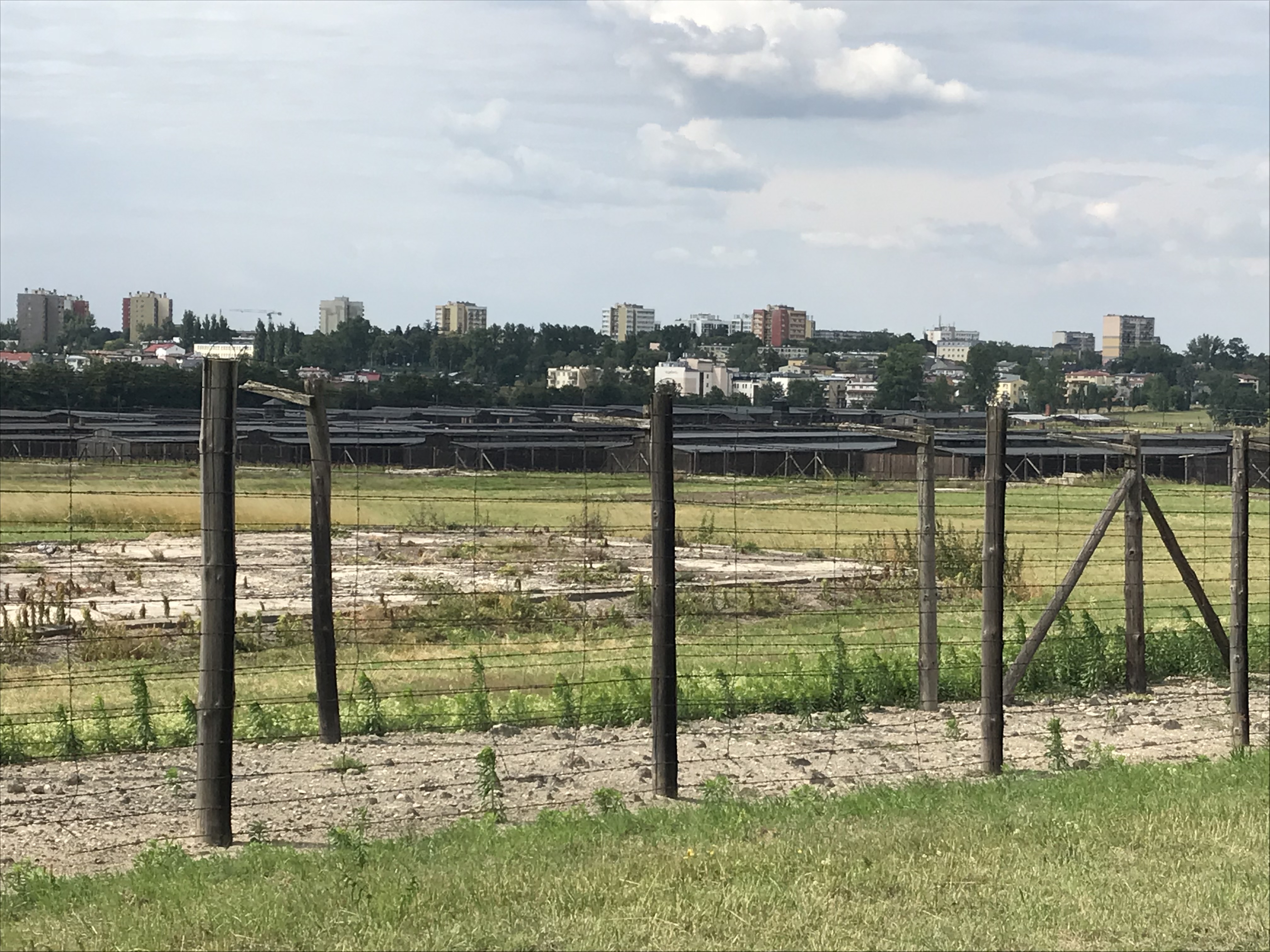
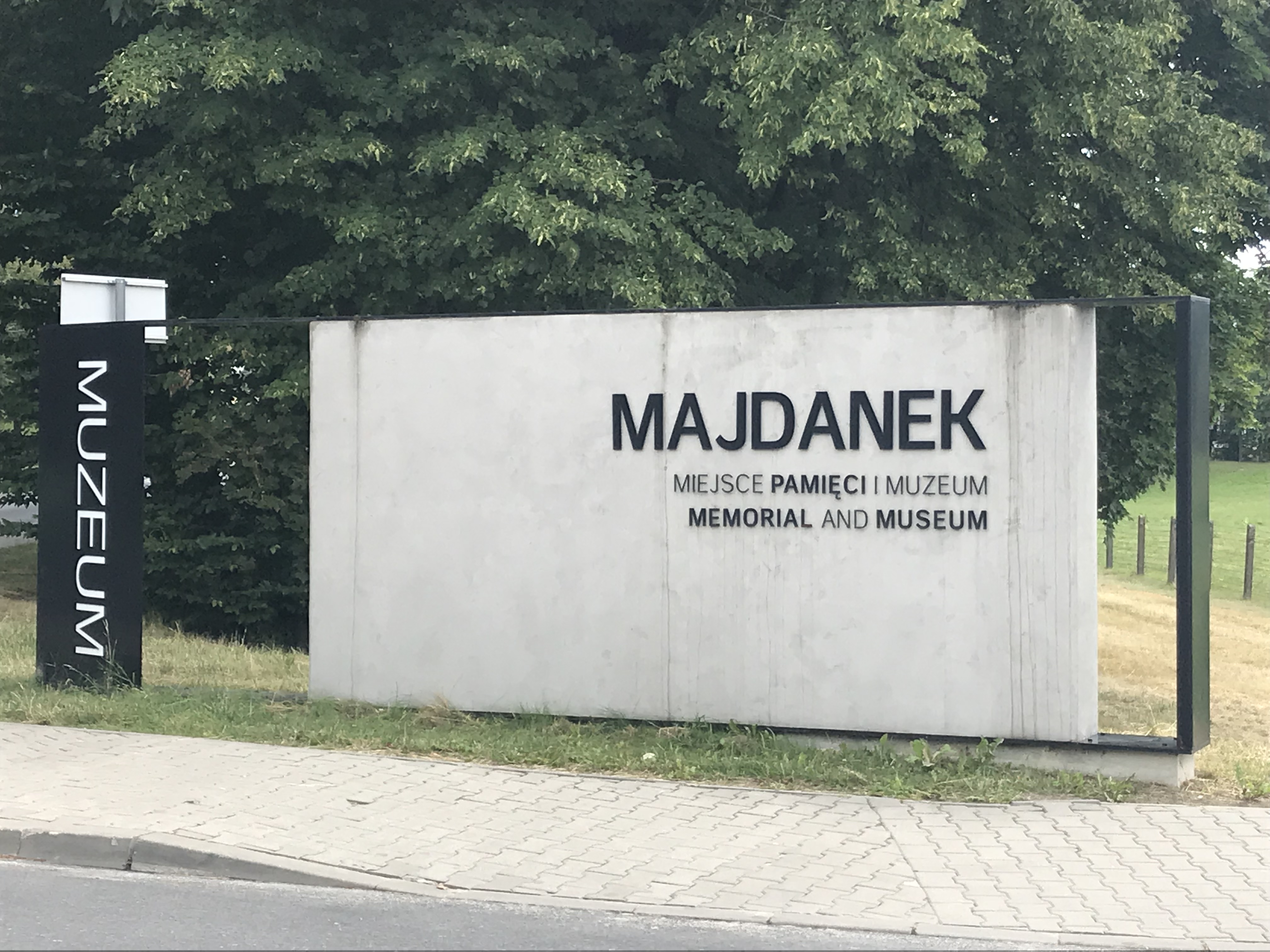
The Majdanek Concentration Camp in Lublin, Poland

During my long weekend in Warsaw, I often lingered at dusk looking out the window.

Leaning on the sill of my third-story perch at the corner of Nowolipki and Karmelicka streets, I studied the tree-lined sidewalks and drew imaginary constellations from the curtained glow of neighboring apartments. The world just beyond my room’s picture window seemed to resemble a college campus, an impression encouraged by the shared student flat where I was residing.  Communist-era apartment blocks strummed a similar chord to the well kept but drab dormitory villages found at state universities. Impervious to nostalgic embroidery, they cast an impassive gaze over the endless cycle of residents passing through them. As a tourist swept up in the latest rotation, I looked out as slabby faces peered in and saw through me. A glimpse of neighbors milling about their kitchen or the pink hue of a sunset hanging over the rooftops added a wisp of texture in an impermeable landscape, as if Warsaw had been coated with Teflon.

My temporary window in Warsaw, Poland

Yet the barbs of the city’s history lay just beneath the surface and occasionally punctured its veneer. Indeed, many of them could be found within a few hundred yards of my room. Across the street, a bunker from the Warsaw ghetto uprising once existed where an apartment building now stands. Around the corner, the remains of Pawiak Prison—a notorious site used by the Gestapo for torture and interrogation—had been converted into a museum. Walking a few blocks north on Karmelicka Street led past the Polin Museum of the History of Polish Jews (inaugurated in 2013) and the Monument to the Ghetto Heroes before ending near the Umschlagplatz Monument, which marks the site of the “Great Deportation” of a quarter million Jews from the Warsaw ghetto to the Treblinka extermination camp in the summer of 1942. A few blocks west of my apartment on Nowolipki Street, a large cache of documents from the Oyneg Shabbos secret archive detailing Jewish life and suffering in the ghetto had been unearthed after the war.

Although monuments, museums, and markers of the Warsaw ghetto radiated in all directions from my third-floor window, the past still felt distant and abstract. The contemporary neighborhood bears little resemblance to its pre-war incarnation since the Nazis razed the area in response to the month-long ghetto uprising led by Jewish resistance fighters in 1943. Today, architectural relics of the Cold War set the tone of a bygone era. Posthumous memorial traces of the ghetto often blend in with these monolithic surroundings. The historical reality of the ghetto as a negative space designed to negate the lives of its inhabitants and reduce them to nothing, has no thorny immediacy in this looming, featureless environment.

Looking out the window at the corner of Nowolipki and Karmelicka, I experienced a sense of historical density and paradox rather than the past “coming to life.” Beneath the façade of the apartment buildings that enveloped me, I perceived geologic layers of nothingness—ethereal strata accumulated from successive histories of negation. The once mostly Jewish neighborhood of Muranów collapsed into the ghetto abyss where Polish Jews faced an ever-escalating deprivation of life. Spiraling into the void, a desperate insurgency sought to “negate the negation” imposed by the ghetto as an instrument of annihilation. The Nazis then effaced the ghetto itself and the area reemerged after the war as an embodiment of the Polish People’s Republic behind the Iron Curtain.

When I looked out into the neighborhood, I saw erasure. And people lived in it.

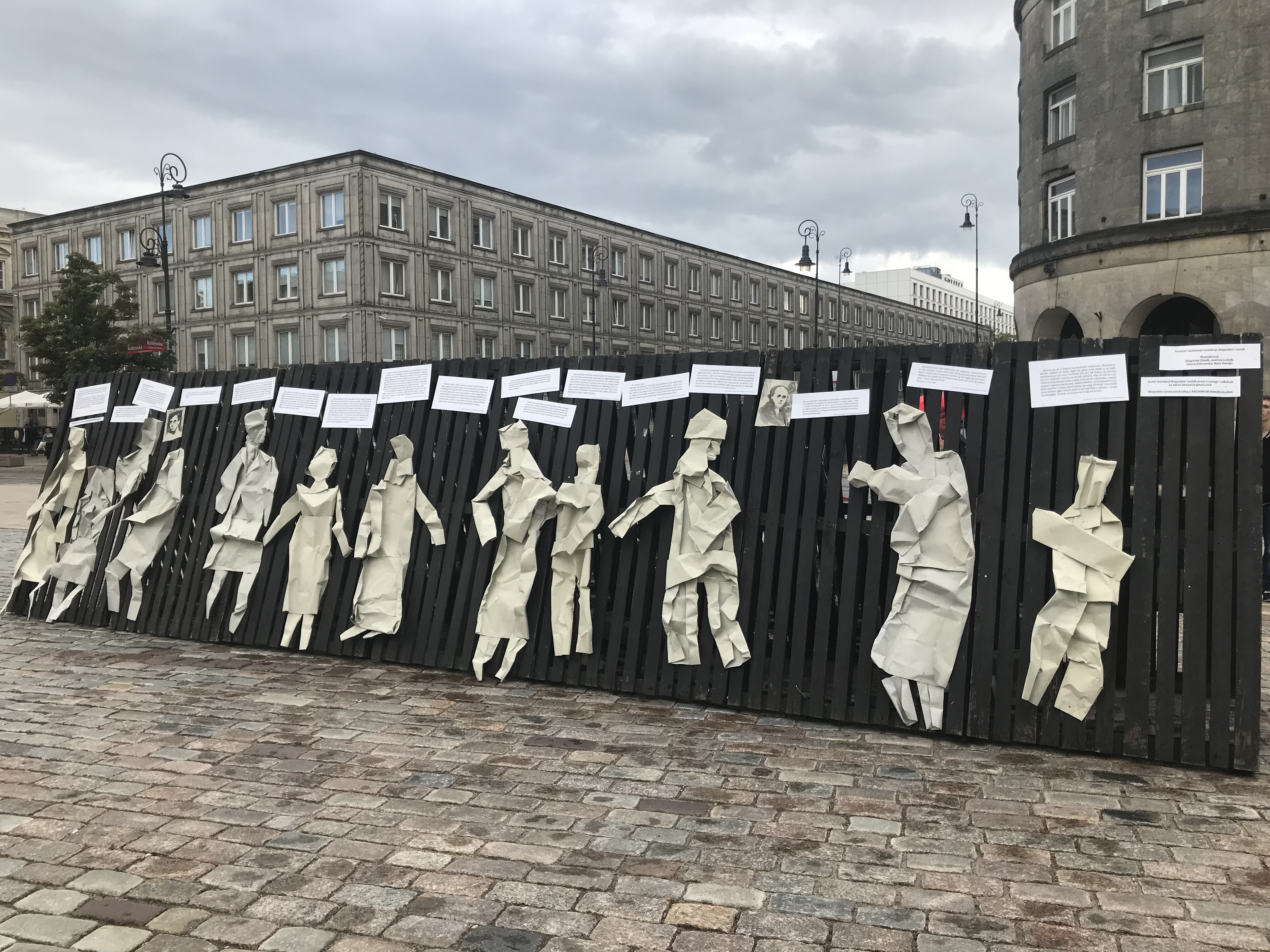
Muranów’s resurrected habitability felt too neat and tidy. Its dull, plodding architecture set the tone of the neighborhood where numbness and predictability might be mistaken for comfort and security. Symbols of historical memory have adapted to its cadence. Even a temporary art installation staged as a disruptive reminder of the Holocaust echoed the anonymous, repetitive abstraction of its surroundings and perennial themes of national martyrdom. Domesticating the former site of the Warsaw ghetto in a monotone timbre does not negate the negation, it erases the erasure.

Bogusław Lustyk’s Gloria Victis (“Glory to the Vanquished”) installation in Warsaw

Confronted with homogenization, my eyes sought rawness and immediacy. I wanted to see some of the rubble and scorched earth that had been plowed over in the postwar era. To clear the ruins and begin life anew on the former site of the ghetto is in part an act of forgetting.

The postwar neighborhood could have been built around part of the ghetto’s remains rather than over them tout court. Debris-hewn vacant lots and other fractures ought to have remained in the landscape to suspend the final realization of the ghetto’s erasure. Beyond the posthumous symbols and institutions of memory that punctuate tourist maps, maintaining an artifactual presence of the ghetto in Muranów would have been an act of justice and a step towards an intentional living with history. Instead, it has long since been replaced by a monolithic and myopic livability.

Life among the ruins, however, often yields strange juxtapositions and selective memories rather than a vanguard of truth and reconciliation.

What does it mean to live near the remnants of a Nazi concentration camp?

It’s a question that has lingered in the recesses of my mind since visiting the Dachau concentration camp in Germany during the final days of a month-long, college graduation trip to Europe. My itinerary had already included many of the hallmarks of a first-time European tour: cosmopolitan cities, Mediterranean beaches, and Swiss chalets. With my remaining time, I had decided to make a stopover in Munich for a few days before boarding an overnight train to Prague, the last destination of my journey. As a history major who had read Primo Levi, researched moral life in the concentration camps, and attended seminars by Holocaust scholars, I felt drawn to the city’s periphery for a closer look at history that I only knew from school. By visiting Dachau, I intended to pay my respects and open myself to the imprint of what remained.

After a day of wandering Munich, I headed for the suburbs on an overcast Saturday morning. A regional train brought me to the town of Dachau, twelve miles northwest of Munich, and I caught a shuttle to the camp from the station. The bus wove through orderly residential neighborhoods lined with terracotta roofs and townhomes painted in soft hues. After rounding a corner, my stomach tightened as a line of guard towers and barbed-wire fence emerged on the horizon. Seeing the camp in the distance while passing through a trim but unremarkable suburbia felt alarming. The contrast suggested a disturbing lack of physical and psychological distance between the town and the camp, the quotidian and the genocidal, the suburban and the fascist, the past and the present.

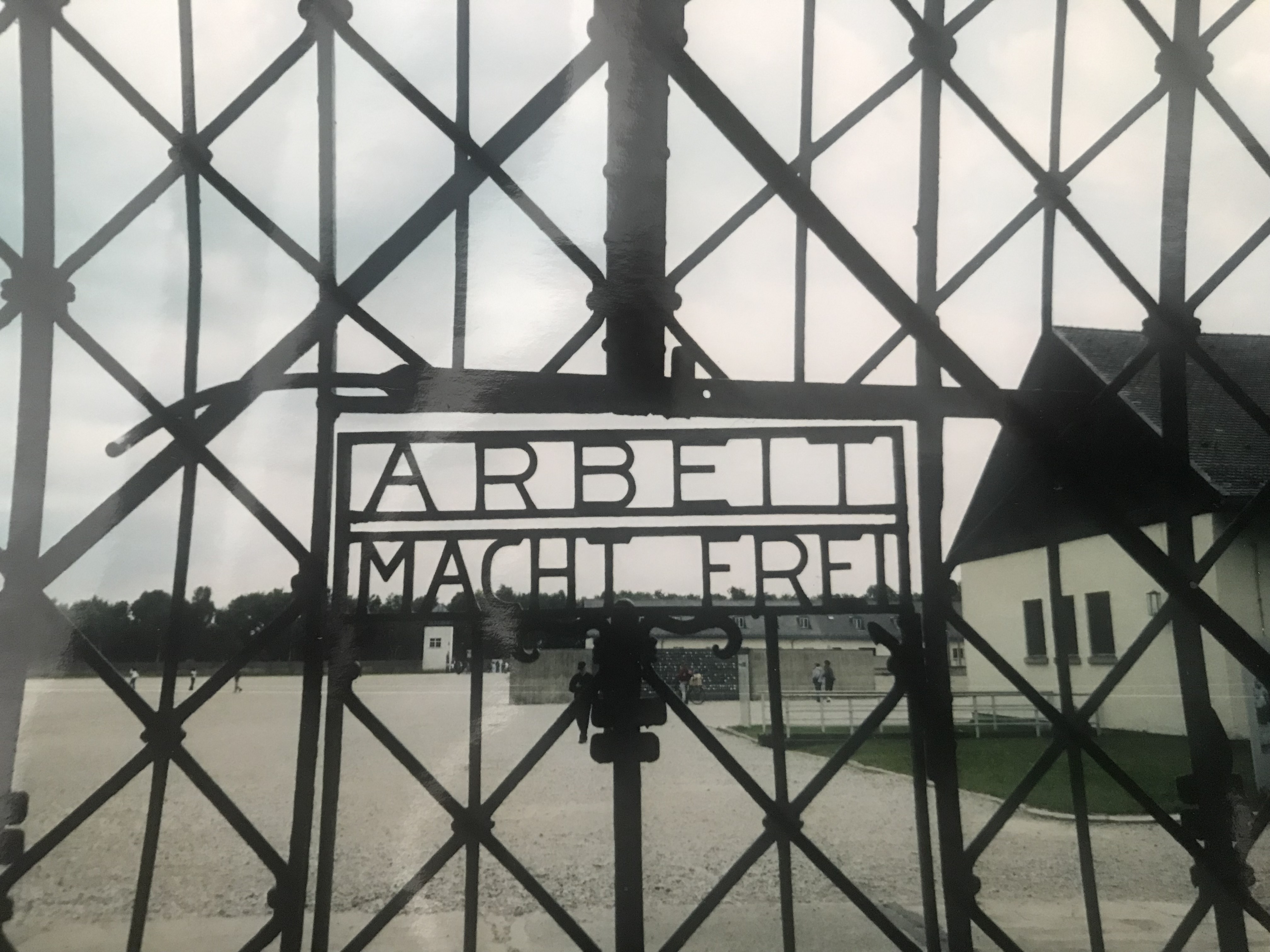
Entrance to the Dachau Concentration Camp in Germany

Living near a Nazi concentration camp like Dachau might entail a refined ability to compartmentalize. Holocaust scholars James Young and Harold Marcuse have each highlighted a convoluted bit of public relations written by Dachau’s mayor for a tourist pamphlet in the 1980s. While recognizing that tourists have come for the camp, the mayor offered the following guidance:

“After your visit, you will be horror-stricken. But we sincerely hope you will not transfer your indignation to the ancient, twelve-hundred-year-old Bavarian town of Dachau, which was not consulted when the concentration camp was built and whose citizens voted quite decisively against the rise of national socialism in 1933. The Dachau Concentration Camp is part of the overall German responsibility for that time. I extend a cordial invitation to you to visit the old town of Dachau only a few kilometers from here. We would be happy to greet you within our walls and to welcome you as friends.”[1]

The interweaving of the town and the camp that I saw from the shuttle bus might have prompted the mayor, had he been sitting beside me, to insist on their mutual exclusion and lament the Nazi cards dealt to an otherwise venerable Bavarian town. The camp was a national relic that could be distinguished from the local history. Would I care to see the town’s medieval church after lunch?

Here, insisting on a sharp distinction between the town and the camp appears to be a symptom of a repressive, even schizophrenic, relationship to the past that visitors are defensively invited to adopt.

Although the town of Dachau cannot be reduced to the camp, it cannot be neatly dissociated from it either. Dachau was the first and longest-running Nazi concentration camp (1933-1945) that began interning political prisoners within a few months of Hitler becoming chancellor. Given its location in a highly populated region of Bavaria, the camp maintained some degree of public visibility even if civilian knowledge of its exact inner workings remained partial. Its presence interpellated popular consent to the Nazi regime, whether in the form of enthusiastic support, fearful compliance, or willful ignorance. Such pressure would have been particularly acute in the town of Dachau where simply going about everyday life served to normalize the camp and the emerging Nazi reality it embodied. By continuing to be itself, the town enabled the camp’s continued existence alongside it.

While the everyday experience of living in the shadow of the Dachau concentration camp remains an open question, over the past twenty years local officials have moved beyond a stance of mutual exclusion and toward a more integrated and transparent approach to the town’s relationship to the camp and the Nazi era. I will highlight two such developments.

In 2005, fifteen former residents of the town of Dachau who perished under Nazi persecution received commemorative Stolpersteine (“stumbling blocks”) outside their former homes. A Stolperstein is a stone with an engraved brass plaque identifying the name, date of birth, date of death (if known), and location of the victim’s death that is usually installed in the sidewalk outside their former residency. Honorees include Jews, Roma, Sinti, Jehovah’s Witnesses, the mentally disabled, gay men, and groups deemed “socially undesirable” by the Nazis. Since their development by the German artist Gunter Demnig in the early 1990s, over 75,000 Stolpersteine have been installed across more than twenty-five countries to date. In Dachau, the Stolpersteine recipients include Jews, Communists, “criminal types,” and victims of the euthanasia program. The town’s website provides biographical information about each person, a photo of each Stolperstein, and street addresses with links on Google Maps for locating them.

In 2007, town officials installed a “Path of Remembrance” leading from the railway station to the camp gates with historical signage posted along the two-mile route. The historical markers, copies of which can also be found on the town’s website, reveal many historical interconnections between the town and the camp: SS officers lived in houses and villas in the area; some prisoners had to repair local roads as forced labor; a branch line connected the train station to the camp although many arriving prisoners had to make the journey on foot through town; near the end of the war, a train full of dead and dying prisoners from Buchenwald backed up from the camp into town; the day before the U.S. Army liberated Dachau, a group of prisoners and local residents attempted an uprising at the town hall; upon the camp’s liberation, members of the U.S. military forced area residents to view its condition and help bury the dead.

The Stolpersteine and the “Path of Remembrance” in Dachau incorporate memory and memorialization into the landscape of everyday life outside the camp and provide historical leads for visitors. They represent local steps toward truth and accountability that contribute to a larger reckoning with responsibility for the Nazi era by Germany and its accomplices. The attention they have received on the municipal website alongside maps and information about other historical points of interest create a more substantial and balanced appeal to tourists. Still, the updated historical picture remains incomplete. While the “Path of Remembrance” creates tangible links between the town and camp, acts of complicity and collaboration by the residents of Dachau are left to inference. There appears to be a residual hesitancy in assigning guilt to those who did not wear an SS uniform.

My own visit to Dachau preceded these changes by several years. After the unsettling sight of the guard towers emerging behind rooftops of local houses, my visit to the camp felt quiet and pensive. I spent much of my time indoors learning about the camp’s history at the museum located inside a former maintenance building. Since the site had fallen into disrepair for many years after the war, few original structures remained to be seen. A walk around the footprint of the former barracks led to contemporary memorials. Instead of ruins, an unnatural tidiness pervaded the grounds as if one had stepped inside an airless, inert vacuum. Some people still took photos and made video recordings. Had either of them existed at the time, I would have liked to follow the “Path of Remembrance” back into town and track down some of the Stolpersteine. The town of Dachau still had more to say. 

If the polished surfaces of Warsaw and the juxtaposition of the two Dachau’s left me seeking the rough edges of the past, I would get more than I bargained for in Lublin.

*                                  *                                  *

The Old Town in Lublin, Poland

In Lublin, Poland, I am appreciated for having an interest in Eastern European history. At least that’s the impression I made on Jacek, my Airbnb host, according to the review he posted on my profile after my three-day visit to his city. His assessment was both accurate and askew in part.

I came to Lublin as the final anchorage point of my two-week journey around central Poland to visit historical sites and memorials featured in Claude Lanzmann’s epic Holocaust film, Shoah.

In Lublin, Holocaust history runs deep. The city served as the main administrative headquarters of the SS during the Final Solution. The Nazis also created a Jewish ghetto near the Old Town and established the Majdanek concentration camp (officially known as Konzentratrionslager Lublin or KL Lublin) in a southeastern neighborhood.

Lanzmann filmed a few brief scenes at Majdanek and the former site of the Lublin ghetto but did not include any of them in the final cut of Shoah. He did, however, feature the extermination camps of Bełżec and Sobibór, both located within a two-hour drive of Lublin. At the time of my visit, Sobibór had been closed for conservation and the construction of a new museum. As a result, the main item on my agenda was a daytrip to Bełżec, eighty miles southeast of Lublin near the Ukrainian border. That left me with an extra day of travel, which I spent at Majdanek.  

I arrived in Lublin in the late morning on a bus from Warsaw, just one day after my visit to Treblinka. Having several hours to spare before I would be able to check in at Jacek’s apartment, I stored my suitcase at the tourist office, picked up a handful of maps and brochures, and wandered the Old Town. I ambled through plazas lined with outdoor restaurants and alleyways brightened with mural paintings and mobile art. I found lunch at a bookstore/café and scouted a vegetarian Indian restaurant where I would later return for dinner.

By mid-afternoon, I was settling into my accommodations—a combined living and dining area converted into a guest bedroom with the aid of a futon. The room had a balcony that opened onto a verdant courtyard surrounded by apartment buildings on a quiet side street. My host, Jacek, worked as an official in the city government and as an associate of Marie Curie-Skłodowska University, one of several universities in Lublin. He possessed a polite sense of restraint that I found agreeable the day after my train ride from Warsaw to Małkinia (See #12) and didn’t ask probing questions about my trip. I was happy to play the casual visitor since coming all the way from California to spend an afternoon in Bełżec would require a long explanation.  

After noticing my collection of tourist literature, Jacek pointed out sites of local interest in Lublin including the royal castle and an open-air ethnographic museum. He also pulled up videos on my laptop that illustrated the history of Lublin during the medieval and early modern eras and gave me a book of poetry he had published. I received his guidance with curiosity and disclosed my preference for smaller, less touristed cities like Lublin and Łodź that I had developed over the course of my journey. Although neither of us referenced the Holocaust, my tourist pamphlets about Majdanek and Lublin’s Jewish history sat on the table between us. My amenability toward learning about Lublin’s wider history seemed worthy of recognition to Jacek: I was an American interested in Eastern European history. 

James Young has written that tourists visiting Poland from abroad often lack broader knowledge of the country’s history beyond World War II and the Holocaust.[2] It’s a telling observation with many implications. From an American standpoint, the history of Poland and other Eastern European countries is often overlooked in favor of their colossal neighbors and erstwhile conquerors, Germany and Russia, and the name “Europe” often evokes England and France first. To possess knowledge of Polish history only in relation to the period of Nazi occupation might be a symptom of the overall narrowness of “Western”-oriented histories.

I had come to Poland as a Holocaust tourist with a very specific itinerary and limited time for broader sightseeing. As my journey progressed, I found myself wanting to explore the cities I passed through in greater depth and connect with their historical and cultural offerings. The reprieve of a vegetarian restaurant proved to be my main source of local life at the end of each day. Based on my time constraints, the pursuit of historical depth in one area meant gliding over the surface of others.

My exchange with Jacek did not alter my immediate itinerary but it did provoke me to seek more information about the history of Lublin and its Jewish community. Both originated in the medieval era, a period when Polish Jews benefited from tolerance and rights granted by the Piast dynasts.[3] In 1569, a series of diplomatic meetings held in Lublin (known as the Union of Lublin) forged the Polish-Lithuanian Commonwealth, a massive kingdom that included areas of modern-day Ukraine, Belarus, and Russia. The Commonwealth drew the largest Jewish population in Europe, which quadrupled in size from 200,000 at its outset to 800,000 in 1795 when the kingdom dissolved.[4] At the time of the Union, Lublin was already a center of Jewish life that included a yeshiva and a Jewish printing press that published the first Talmud in Polish.[5] By the nineteenth and early twentieth centuries, Lublin’s Jews had established schools, newspapers, social and political organizations, and a hospital. Lublin’s development as a university town led it to become known as the “Jewish Oxford.”[6]

The accolades of Lublin’s Jewish community, however, belie a longer history of instability and unrest in Poland. In 1795, Russia, Prussia, and Austria completed the partitioning of the Polish-Lithuanian Commonwealth, which divided the Poles across three different countries. Most fell under the domain of the Russian Empire (including Lublin), where the Tsars used military force, censorship, and religious intolerance to maintain power. Polish nationalism grew in the nineteenth century, finding dramatic expression in the January Uprising of 1864, which unsuccessfully attempted to restore the old Commonwealth. Zionism also gained traction among Polish Jews in response to discrimination, settlement restrictions, and pogroms in the Russian Empire.

An independent Polish nation-state emerged from the rubble of World War I, an aftermath that left Germany defeated, the Austro-Hungarian Empire in collapse, and the Soviet Union emerging from the Russian Revolution. While a provisional Polish government had been declared at Lublin in November 1918, the new republic would consolidate over the next two years through the Paris Peace Conference and wars with the Soviet Union and Ukraine. The Second Republic contained parts of modern-day Lithuania, Belarus, and Ukraine, making it one-fifth larger than contemporary Poland. It dissolved in September 1939 with the Nazi invasion and subsequent partitioning of Poland between Germany and the Soviet Union under the Ribbentrop-Molotov Pact.

Under wartime occupation, Lublin became a district of the General Government, a Nazi administrative unit in central and eastern Poland, and an epicenter of the Holocaust. According to the final pre-war census conducted in 1931, around 39,000 Jews inhabited Lublin, which represented almost 35% of the total city population.[7] In the spring of 1941, the Nazis established the Lublin ghetto near the city center and blocked it off with barbed wire and street detours. They filled the vacated Jewish homes outside the ghetto with Poles and in turn passed the Polish residences off to Germans.

Nazi operations in Lublin accelerated in the summer and fall of 1941. The SS established arms and clothing factories on the outskirts of the city to support the recent Nazi invasion of the Soviet Union and operated them using the forced labor of Jews and prisoners-of-war from nearby concentration camps. In October, Lublin became the administrative headquarters of Operation Reinhard, the SS-led initiative to mass murder all Jews in the General Government using extermination camps at Bełźec, Treblinka, and Sobibór. Ukrainian security forces proved integral to the campaign and received training at the Trawniki labor camp twenty miles outside of Lublin. When the Operation concluded in the fall of 1943, between 1.6 and 1.735 million Jews had perished during its two years of implementation.[8] Eighty percent of the residents of the Lublin ghetto died in the gas chambers of Bełźec in April 1942.[9]

Lublin also became the site of a major concentration camp beginning in the fall of 1941—Konzentrationslager (KL) Lublin—known locally as Majdanek based on the name of the neighborhood where it was located. It started as a camp for Soviet POWs in the fall of 1941 but soon performed multiple functions, from incarcerating Polish peasants whose lands had been confiscated for German settlement to supplying the local SS factories and German industries with forced laborers. Majdanek served as a concentration, extermination, labor, transit, and POW camp during its nearly three years of existence. It was also one of three sites in the Lublin region used for Operation Erntefest (“Harvest Festival”), a mass shooting of Jewish prisoners over a two-day period in November 1943 that resulted in 43,000 deaths.[10] Claude Lanzmann stood before the camera and recounted this event when filming at the camp. The total number of deaths at Majdanek is estimated to be 80,000 with Jews representing 75% of the victims.[11]

The Soviet Army liberated Majdanek in July 1944 during the Battle of Lublin. In the wake of this military victory, the Soviets expanded their bid for control of postwar Poland by installing the Polish Committee of National Liberation (PKWN) in Lublin, an organization used to marginalize the sovereignty claims of the Polish resistance movement and the national government-in-exile in London.[12] Meanwhile, the Red Army began imprisoning members of the Polish Home Army at Majdanek. After the war, Soviet-backed authorities turned Majdanek into a museum about Nazi atrocities, Polish victimhood, and Soviet deliverance. It likely marked the beginning of the “victims of fascism” framework that emphasized Polish martyrdom while subsuming Jewish claims of victimhood. This historical outlook defined the Polish People’s Republic and would leave an enduring mark on national memory in Poland.[13] 

*                      *                      *

Entrance to the Majdanek Concentration Camp in Lublin, Poland

I set out for Majdanek on a late Wednesday morning, ascending Lubartowska Street toward Lublin’s Old Town under an overcast sky. Across from the copper-green cupolas of St. John the Baptist Cathedral, I caught a municipal bus heading toward the southeastern outskirts of the city that would reach the camp in two-and-a-half miles. The journey began by tracing a procession of tree-lined streets, apartment complexes, and billboard advertisements as passengers circulated about their daily routines. Just beyond a residential neighborhood an expansive field emerged on the right side of the bus. I noticed wooden guard towers dotting the landscape and signaled for the next stop.

The bus deposited me near the “Monument to Struggle and Martyrdom,” a gnarled monolith that seemed to evoke a demonic rhinoceros in cubist form. Designed by the Polish sculptor Wiktor Tołkin, the monument has stood at the original entrance to the camp since 1969 where it remains a legacy of the Polish People’s Republic. The sculpture’s hulking stance seemed to threaten all who approached it with imminent goring, which led me to anticipate an “in your face” approach to visitor engagement throughout the camp.

Wiktor Tołkin’s “Monument to the Struggle and Martyrdom” at the original site of the entrance to the Majdanek Concentration Camp

Rather than entering Majdanek through Tołkin’s hellish portal, visitors must first negotiate the more prosaic entryway of a parking lot and a visitor center a few hundred meters further southeast. I picked up a map and purchased a few books about the history of the camp in the visitor center, a contemporary structure of glass and concrete run by a staff of young adults. Its youthful airiness felt like a summoning of historical logos in response to the histrionic pathos of Tołkin’s monument. In effect, Majdanek has two entrances that each represent different eras and contrasting approaches to memory. The tension between them would become an underlying theme of my visit as I made my way deeper into the camp.

The visitor center at the Majdanek Concentration Camp

As I embarked on a path that circumnavigated the main historical sites of the camp, my attention first gravitated toward a set of outdoor museum panels about the “Days of Majdanek,” an annual commemorative series held at the camp from 1945 until 2015. Like the visitor center, the signage appeared to be a recent installation and its authors acknowledged that the prevailing political climate in Poland often shaped the “Days of Majdanek” during its sixty-year history. A pro-Soviet standpoint informed its inception, one that emphasized Polish martyrdom and Red Army liberation as Stalin sought to orchestrate the country’s postwar future. It included a historical exhibition inside one of the barracks that displayed cannisters of Zyklon-B to induce “feelings of horror and dread” among visitors to the camp. Through a combination of selective memory and appeals to pathos, the first “Days of Majdanek” aimed to remake Polish national identity in the mold of Soviet loyalty.

The small exhibition about the “Days of Majdanek” could be interpreted as an implicit critique of the nationalist history championed by Poland’s Law and Justice Party (PiS) in recent years. Since gaining control of the presidency and the parliament in 2015, the right-wing, populist PiS has implemented historical revisionism about World War II and the Holocaust supported with laws and institutions to monitor and punish perceived affronts to Poland’s “good name.”[14] The PiS has sought to construct an unequivocally patriotic narrative about Poland that emphasizes national heroism, martyrdom, and innocence during the Second World War. Such an effort developed in part in reaction to decades of historical scholarship documenting instances of Polish involvement in the Holocaust as perpetrators and accomplices—work recast by the PiS as anti-Polish. This reactionary juncture in the politics of memory in Poland gained international notoriety in 2018 when PiS-sponsored legislation amended the role of the Institute of National Remembrance to include the prosecution of public speech that allocates Holocaust responsibility to Poland with exemptions for artistic and academic work. Poland’s “Holocaust law” has been widely condemned as an attack on free speech, historical inquiry, and public memory.

The Soviet-crafted “Days of Majdanek” and the historical engineering of the PiS share common ground. Both have sanctified Polish martyrdom as the historical narrative of World War II in Poland and the foundation of national identity and political loyalty—indeed, of Polishness itself. Both have subsumed the specificity of the Holocaust and the plight of Polish Jews under this narrative framework in varying degrees.

By detailing the origins of the “Days of Majdanek,” the museum curators have historicized the concept of Polish martyrdom and exposed a government-sanctioned narrative about the camp from the Soviet era. This new installation near the camp entrance models critical engagement with history rather than an affirmation of martyrology—a tacit critique of the PiS.

The Majdanek Concentration Camp

During my visit to Majdanek, I spent most of my time in the newer looking “museum side” of the camp, which consisted of historical exhibitions inside reconstructed barracks. From the “Days of Majdanek” to a history of the camp and a special exhibition about Operation Reinhard, the accounts on display tended to reflect a disinterested and transparent point of view. Past framing of the camp as a site of Polish martyrdom rather than Jewish victimhood received acknowledgment and correction. Sites that had been rebuilt after the war were identified. Signage often quoted the memories of Jewish and Polish prisoners who survived the camp. The exhibit on Operation Reinhard included a photograph of its headquarters, which is now a building on the campus of the Catholic University of Lublin. These historical presentations answered many of my questions about the camp.

From the special exhibition about Operation Reinhard

Beyond the logos of the “museum side” of the camp, the rest of my visit to Majdanek felt like an escalating spectacle of horror. The gas chambers remained intact and in full view. One barrack contained a mountain of shoes. An excavation of the original camp road revealed broken matzevah from Jewish cemeteries used as cobblestone. The restored crematorium building and its five original furnaces appeared ready to resume operations. The execution ditches used in Operation Erntefest still scarred the landscape.

A gigantic, open-air mausoleum designed by Wiktor Tołkin provided the terrible climax. As part of his “Monument to Struggle and Martyrdom,” it stood 1.1 kilometers across from the monstrous gate, linked together by a straight line called the “Road of Homage and Remembrance.” It resembled a petrified flying saucer. Within it lay an enormous heap of human ash speckled with rocks and dirt from the Nazis’ attempt to conceal their barbaric crimes. The words, “Let our fate be a warning to you” stood above the entrance inscribed in Polish. After the initial shock, I felt revolted by its continued display: I had been lured into a mass grave repurposed as the Polish Golgotha.

The mausoleum of Wiktor Tołkin’s “Monument to the Struggle and Martyrdom”

I also observed how houses and apartment buildings lined the camp boundaries, making the gas chambers, crematorium, execution ditches, and mausoleum everyday sights for local people as they worked in their yards, sat on their balconies, or cast stray gazes out the window. Had national martyrdom glazed over their eyes like solar eclipse glasses so they could behold their surroundings without burning their eyes?

Outside the bathhouse and gas chambers at Majdanek

Tołkin’s ostentatious monuments dwarf the camp and all its historical complexity in favor of a communion with national pathos. Anonymous human ashes—most likely Jewish in origin—have sat for more than five decades inside the mausoleum as the embodiment of Polish martyrdom. While scholars and curators work in earnest to reckon with the historical record, the rhinoceros flares its nostrils and bows its head to charge.

Wiktor Tołkin’s “Monument to the Struggle and Martyrdom” at the original site of the entrance to the Majdanek Concentration Camp

[1] James E. Young, The Texture of Memory: Holocaust Memorials and Meaning (New Haven, CT: Yale University Press, 1993), 69. Harold Marcuse, Legacies of Dachau: The Uses and Abuses of a Concentration Camp, 1933-2001 (Cambridge: Cambridge University Press, 2001), 15.
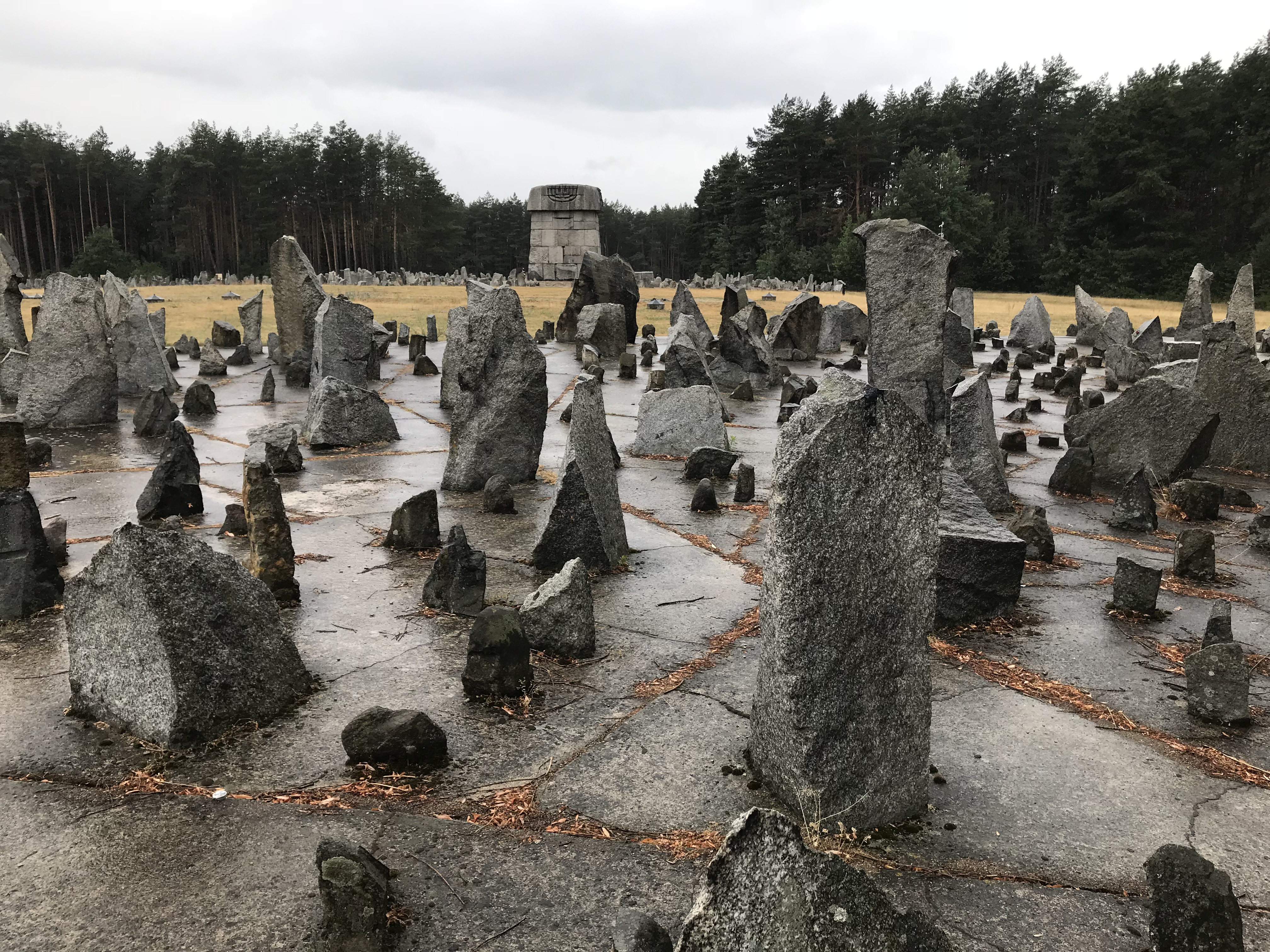
[2] Young, 144.

[3] Norman Davies, God’s Playground: A History of Poland in Two Volumes, Vol. 1, The Origins to 1795 (New York: Columbia University Press, 1982), 79-80; Jerzy Lukowski and Hubert Zawadzki, A Concise History of Poland, 3rd ed. (Cambridge: Cambridge University Press, 2019), 39-41.

[4] Davies, 240. Lukowski and Zawadzki estimate that the Jewish population in the Commonwealth in 1770 was close to a million. See Lukowski and Zawadzki, 131.  

[5] Antony Polonsky, The Jews in Poland and Russia, Vol. I, 1350-1881 (London: The Littman Library of Jewish Civilization, 2019), 124, 128-129.

[6] Lublin: A Jerusalem of the North (Lublin: Lublin Municipal Office, n.d.).

[7] Antony Polonsky, The Jews in Poland and Russia, Vol. III, 1914-2008 (London: The Littman Library of Jewish Civilization, 2019), 99.

[8] Yitzak Arad, The Operation Reinhard Death Camps: Belzec, Sobibor, Treblinka, rev. ed. (Bloomington: Indiana University Press, 2018), 440.

[9] Saul Friedlander, The Years of Extermination: Nazi Germany and the Jews, 1939-1945 (New York: Harper Collins, 2007), 356.

[10] Arad, 425.

[11] Beata Siwek-Ciupak, Majdanek: A Historical Outline, trans. William Brand (Lublin: Państwowe Muzeum na Majdanku, 2014), 28, 30.

[12] Lukowski and Zawadzki, 347-348.

[13] Jörg Hackmann, “Defending the ‘Good Name’ of the Polish Nation: Politics of History as a Battlefield in Poland, 2015-18,” Journal of Genocide Research 20, No. 4 (2018): 590.

[14] See Hackmann, 587-590. See also Timothy Snyder, “Poland vs. History,” The New York Review of Books, May 3, 2016;Alissa Valles, “Scrubbing Poland’s Complicated Past,” The New York Review of Books, March 23, 2018; Jan Grabowski, “The New Wave of Holocaust Revisionism,” The New York Times, January 29, 2022.

Posted in Uncategorized | Leave a comment

#13 – TREBLINKA (PART II): A WALKING TOUR

IMG_4507

At the end of the platform, at right-angles to the tracks, nailed to two posts set in concrete, was a signpost bearing the name Treblinka on either side so travelers could see it from either direction. Treblinka was nothing but a ghost station: as I stood petrified on the platform, attempting to come to terms with the enormity of what I was witnessing, trains passed, some hurtling straight through, others stopping to load and unload passengers. [1]                                                                                                                                                                                                                                                                                      – Claude Lanzmann                                                                                                                                                                                        *               *                *                                                                                                                                                                                  I am naturally drawn to the scenic route.
It’s a predilection seemingly inscribed on the soles of my feet, where it leaves testimonial blisters. I hear its ancestral rumble as I imagine my great-grandfather cutting his motorcycle across the state line at dawn for breakfast at a mountain lodge, bending and weaving his way through the hidden corners of the suburban weekend. As a child, I remember absorbing its languorous rhythm on Saturday afternoons in the bob and sway of a small sailboat tacking upriver as my father surfed us through the frothy wake of passing motorboats. Many years later, my own trailblazing once led me from a bike ride around a sunny, pastel village to the discovery of a seaside trail, which in turn led to a scramble down a toothy cliff and into the emerald glow of a Mediterranean grotto.
The scenic route is more than the proverbial leisurely stroll. It is a state of being in which the exigencies of time and purpose are temporarily held in abeyance. By following its contours, we merge with a rhythm and logic beyond our own design and open ourselves to being imprinted by the world. Rather than finding what we are looking for, that which seeks us is given the opportunity to reveal itself. The world must speak through us if we are truly to have anything to say. We are more vehicle than driver. To wander the scenic route is to invite the world to interrupt us so that we might better know our place within it.
Such a lesson was not lost on Marcel Proust. The narrator of his monumental work, In Search of Lost Time, finally achieves his long-delayed self-actualization as a writer in the final volume of the novel after nearly falling on his rear end in a Parisian courtyard. As he walks pensively toward the entrance of an aristocratic soirée, he fails to notice an oncoming car. The cry of the chauffeur prompts him to step back sharply to avoid the car but he stumbles over some uneven paving stones behind him in the process. Fortunately, he is able to regain his balance and avoid a nasty fall. This seemingly unremarkable episode, however, triggers a much more consequential set of realizations.  
IMG_9193
As the narrator recovers from his near fall and stands on the uneven cobblestones, he experiences an unforeseen, radical shift in consciousness. Perennial doubts that had occupied his mind up to that moment—about his talent as a writer, about the significance of literature itself—suddenly evaporate. Elation surges within him as opaque images unfurl in his mind. These visions, he soon realizes, are a lost memory of standing on uneven stones inside St. Mark’s Basilica in Venice many years ago. That long-forgotten physical sensation, which scarcely registered to him then, now resurfaces as a portal of time travel back to an earlier self and its unprocessed archive of impressions. By gaining access to his raw past, he transcends his sense of personal limitation and finally commits to writing, the result of which is revealed to have been In Search of Lost Time all along. The entire seven volumes of Proust’s novel might thus be interpreted as the story of a stumble and the restoration of the circuitous path that led to it. 
From this brief sketch of what is arguably the decisive episode in Proust’s magnum opus, I’d like to draw several lessons. First, the scenic route fertilizes the artistic process, much like the piles of bison manure I frequently encountered along the trails of Catalina Island this summer. Whether the “scenic route” represents an obscure road or a meandering life, it churns up contemplative space and nutrient-rich experiences that nurture and refine the creative spirit. Second, the harvesting of that journey occurs unexpectedly, often in a state of flux rather than by force of will or reason. The world might actually be throwing us into alignment precisely when we seem to lose our footing within it. In that awkward, uneven state, the door to creative self-realization “opens of its own accord.”[2]
Finally, Proust locates the deepest recesses of memory in physically embodied experience rather than the mind. As the narrator reenacts his backward stumble and unlocks its association with St. Mark’s, he observes that, “the supposed snapshots taken by my memory [of Venice] had never told me anything.”[3] At the surface level, memory often operates like a camera that doesn’t merely record but actively creates “memorable moments.” It is a self-aware, conventional process that strands Proust’s narrator in the cul-de-sac of the “official story.” His near fall in the courtyard, however, inadvertently resurrects a hidden trove of past impressions long-since evaporated from his conscious mind but quietly registered in his physical body. This restoration of “lost time” affirms the consistency and value of his life, his vision, and his voice.
IMG_9195
What does this meditative detour through Proust and the scenic route have to do with Lanzmann’s Shoah and my visit to Treblinka?
Quite a lot, actually.
Lanzmann experienced his own Proustian moment during his first visit to Treblinka that would prove decisive for Shoah.
Already four years into his project, Lanzmann made an obligatory first visit to Poland in March 1978. Even though Shoah’s indelible depiction of place is foundational to its power as a statement on the Holocaust, the role it would play was not immediately apparent to Lanzmann as he notes, “I arrived [in Poland] full of arrogance, and convinced I was coming only to confirm that I had not needed to come.”[4] Shortly after landing in Warsaw, he met up with translator Marina Ochab, rented a car, and headed straight to Treblinka. Exploring the memorial site for several hours produced little effect on him other than a needling disquiet for having failed to be moved.  
Unwilling to resign himself to mounting self-criticism, Lanzmann returned to his car with Ochab and began driving “aimlessly” along the perimeter of the camp. [5] The road eventually led them into the neighboring villages, which sparked a series of mounting realizations for Lanzmann. As he exchanged glances with the locals from behind the steering wheel, he recognized that many of the older residents likely witnessed the camp in operation. His subsequent sighting of the Treblinka village sign cut through the mythological veneer of the place-name he so often encountered in the pages of his research. The frayed distinction between past and present all but collapsed when he stood on the platform of the Treblinka train station and observed passengers disembarking. Reflecting on this moment decades later, Lanzmann compared himself to an exploding bomb.
Like Proust’s narrator, Lanzmann discovers his artistic voice through an accidental encounter with a hidden, dormant past that he feels duty-bound to articulate. Initially, both are confronted by self-doubt and a sense of inner limitation based on their perceived failure to self-actualize with the world. In response, they openly roamed and aimlessly wandered. Taking the scenic route loosened the grip of consciousness and allowed them to expand with the unfolding landscape. For Proust’s narrator, the act of mergence is an awkward stumble that breaches an unseen, embodied history. For Lanzmann, the revelation of overlooked traces of the Holocaust hiding in plain sight detonates his creative vision for the film. Both figures are time-bombs who throw themselves into the production of timeless, monumental works of art. 
IMG_4488
Upon leaving the Treblinka train station, Lanzmann launched into action by interviewing local villagers who remembered the camp. That day, he met Czesław Borowi, a middle-aged farmer whose land directly abutted the train tracks near the station. Lanzmann and his crew would return to film him several months later. His somewhat bemused recollection of backed-up trainloads of Jewish victims waiting next to his fields for hours if not days before being uncoupled and pushed into the camp on a rail spur would earn him notoriety in Shoah. 
Acting on a local tip, Lanzmann and Ochab next headed to Małkinia and awoke Henryk Gawkowski and his wife late at night. Gawkowski was a Polish railway worker who drove trains of Jewish victims to the village station and then into the camp itself, receiving extra rations of vodka to aid the completion of this horrendous task. Following a conversation that wound into the early morning hours, Lanzmann returned in the summer to film Gawkowski driving a locomotive between Małkinia and the village station as a line sketch reenactment of the past.
Today, the railway between Małkinia and Treblinka no longer exists.
I made this discovery while walking five miles from Małkinia station to the camp on a rainy afternoon in June.
Still dazed from the conversation and watered-down vodka on the train from Warsaw [See “Treblinka (Part 1): The Train to Małkinia”], I rambled along Road 627 as misty raindrops collected in my hair and passing trucks kicked up a cloudy spray. Crossing the Bug River, I entertained vague recollections of the Napoleonic Wars and Tolstoy’s War and Peace. Later, I would read of SS officers cooling off in the river during the scorching summer months while the bodies of would-be escapees from the train lay scattered in the fields next to the track.
IMG_4483
After the bridge, the pedestrian path diverged from the road and led me to the outskirts of Treblinka village. Wood-splintered barns and farmhouses cast ghostly eyes through the cover of trees. A passing car on a dirt road paused to observe a tourist getting his bearings. Eventually, the trail returned to the main road and a sign in brown lettering pointed to the entrance of the Treblinka camp.
A cobblestone driveway led into the woods, winding past small memorials that seemed to hint at the enormity of what lay deeper within. A comment book inside a visitor kiosk revealed that a group of students from UNC Chapel Hill had visited just a few days earlier. On the far end of the parking lot, a small museum recounted the history of the camp and highlighted recent archaeological excavations around the site.
The museum exhibition also featured a panel with a photo of Abraham Bomba. A Polish Jew deported to Treblinka from the Częstochowa ghetto in southern Poland, Bomba lost his wife and infant son shortly after stepping onto the station platform inside the camp. A barber by trade, the camp officials eventually inducted him into the Sonderkommando (a special detail of prisoners forced to work at the gas chambers, crematoria, and mass graves). Bomba’s task was cutting women’s hair moments prior to their death in the gas chamber.

IMG_4500

Abraham Bomba is one of the most unforgettable figures in Shoah. According to Lanzmann’s memoir, he was also one of the most difficult interviewees to track down—at one frenetic point in his search, Lanzmann knocked on all the doors in a Bronx apartment building. After finding him in upstate New York, Lanzmann had to trace his whereabouts again two years later, this time to Israel where he filmed him. Bomba speaks in two main sequences in Shoah: in the first, he sits on a terrace in Jaffa and describes his arrival and first night at the camp; in the second, he engages in a dialogue with Lanzmann about his experiences in the Sonderkommando while cutting a man’s hair in a barbershop.
Bomba’s first appearance in Shoah contributes to an extended sequence about the arrival process at Treblinka that interweaves testimonial statements from two survivors of the camp (Abraham Bomba and Richard Glazar) and the recollections of local Polish eyewitnesses (including Czesław Borowi and Henryk Gawkowski). The viewer is introduced to Treblinka aboard a locomotive driven by Gawkowski from Małkinia to the village station. As the steam engine grinds to a halt, the camera lingers on the station sign, echoing Lanzmann’s explosive first visit to the site while conjuring the viewpoint of arriving victims peering through the slats of the cattle cars in a desperate attempt to orient themselves and know their fate.
The long wait in the village before the final push into the camp produced scenes of tragedy and farce. Gawkowski, Borowi, and the villagers imitate a throat-slitting gesture they surreptitiously made toward the train cars, an alleged warning to the victims that inescapably bears the sting of mockery. Meanwhile, several railway workers share wrenching memories of Ukrainian guards who killed would-be escapees and randomly shot into the cars out of their own frustration. Bomba himself recalls the joy of some of the Poles who witnessed the deportations in Częstochowa and the confusion during his arrival at the Treblinka death camp. Immediately after being selected for work, Bomba helped clear the suitcases and personal belongings left behind on the platform, moving quickly to avoid the blows of the guards. Only later in the day did he realize the fate of his family and the other deportees.

IMG_4503

Bomba’s second appearance in Shoah is one of the most famous and frequently discussed segments in the entire film. It occurs at the beginning of Shoah’s second half, preceded by an excerpt from a secretly taped interview with Franz Suchomel, a former SS guard at Treblinka, who sings the camp song taught to the prisoners for the amusement of their tormentors, which he cannot help but display once again while reciting it. The subsequent scene with Bomba unfolds over eighteen minutes as he slowly cuts a man’s hair in a crowded barbershop in Jaffa. At first, Lanzmann poses technical questions about his role as a women’s haircutter at Treblinka, including an initial period in which the barbers worked directly inside the gas chamber before the door was sealed. When asked about his first impressions of the situation, Bomba demurs mechanically that he had been given a job to do.
Bomba begins to crack when Lanzmann asks him to imitate the gestures of cutting the women’s hair on the man sitting before him. Bomba’s voice quickens as he says, “We did it as fast as we could.” Then he flinches and turns away in the middle of moving the scissors demonstratively around the man’s head. When Lanzmann returns to the question of his first impressions, Bomba replies distantly, “You were dead. You had no feeling at all.” As if the grip of his defense mechanism had just loosened, he then shifts to the first-person and says to Lanzmann, “As a matter of fact, I want to tell you something that happened.”
Bomba recalls encountering women he knew from Częstochowa at the gas chamber. “What could you tell them?” he asks rhetorically, underlining the futility of the situation while alluding to his own personal devastation. As his memories surface more freely, Bomba falls silent when remembering another barber on the Sonderkommando whose wife and sister showed up at the gas chamber. His eyes water and a stray teardrop rolls down his cheek. Eventually, at Lanzmann’s gentle but firm supplication, he completes the story with a broad statement about trying to do the best for loved ones under impossible circumstances.
Like Proust’s narrator, Bomba’s embodied memory is breached by the uncanny repetition of a physical movement. The backward stumble in a Parisian courtyard and the flurry of scissor snips in an Israeli barbershop resurrects specific moments from the past: standing within St. Mark’s Basilica in Venice and standing within a gas chamber in Treblinka. Beyond the widely contrasting nature of these memories, it is worth noting the precarious circumstances of their evocation. For Proust’s narrator, the return to Venice is the serendipitous outcome of near disastrous collisions with the car and the pavement. For Bomba, returning to his repressed trauma (and the memory of the victims entwined with it) is a tremulous negotiation of simultaneous urges to bear witness and remain silent. In Shoah, this conflict is externalized (and thus partly mitigated) by Lanzmann’s prompting as an interviewer along with the mise-en-scène of the barbershop providing a conduit of memory. While some have interpreted Lanzmann as strong-arming Bomba in this scene, such a critique risks occluding Bomba’s agency and investment in the exchange. Upon recovering his voice, he reminds Lanzmann, “I told you today was going to be very hard.”

IMG_4494

Bomba remained on my mind as I began wandering the former grounds of the camp. Since the Nazis liquidated Treblinka in the autumn of 1943, no original structures remain. The memorials on the site commemorate the victims and punctuate an effaced landscape with a semblance of historical texture. The final two-hundred meters of the railway spur leading to the arrival platform is marked by dozens of rectangular, granite blocks embedded in the ground equidistantly to resemble train tracks. In Shoah, Lanzmann extends the metaphor by tracking the camera over the blocks to simulate the perspective of arriving victims.
IMG_4509
The central memorial at Treblinka is an eight-meter obelisk surrounded by seventeen-thousand granite shards set in concrete that might be characterized as a post-apocalyptic cemetery. Positioned near the original site of the gas chambers, the obelisk is inscribed with a menorah near its top on one side and abstract, fragmented tangles of human forms on its other. The words “never again” appear in several languages on an adjacent block. A procession of large stones connecting the arrival platform to the obelisk are carved with the names of countries whose Jewish citizens perished at Treblinka. Several hundred granite shards beyond the obelisk bear the names of Polish cities, towns, and shtetls whose Jewish communities faced deportation and death at the camp.

IMG_4534

I opened up a map I had picked up at the visitor kiosk and began tracking down the stone for Częstochowa. In Shoah, Lanzmann cuts to this memorial shard immediately after Bomba regains his voice and completes his story. It’s a powerful coda that personalizes the Częstochowa memorial while simultaneously indicating an infinitude of lost voices from that community and beyond. The value of individual testimony and the incalculable losses of the Holocaust amplify one another in this moment of silence.

IMG_4533

After being thunderstruck on the train platform in Treblinka village, Lanzmann found that the camp site and the memorial, which had previously left him cold, began speaking to him. What he included in the final cut of Shoah directly reflects that revelatory journey on his first day in Poland. His work is a realization of instinct and receptivity.
While Lanzmann landed in Warsaw doubting that he had much to gain by visiting sites like Treblinka, I arrived in Kraków wondering if Shoah had rendered visits to the camps superfluous. What could I expect to find decades after Lanzmann’s timely interviews with survivors, bystanders, and perpetrators who have long since passed? This is not to cast Shoah as the definitive statement or exhaustive final word on the Holocaust. Instead, my visit to Poland tended to reinforce its indispensability as a cinematic memorial.
I journeyed deeper into the woods along a cobblestone road framed with pine needles. After two kilometers, I reached the former grounds of the Treblinka labor camp. On the left, a sunken clearing punctuated by rippling mounds of dirt marked the site of the gravel quarry where prisoners once toiled. On the right, an enormous field with a few crumbling, concrete foundations revealed the former site of the labor camp. Still further ahead, in what seemed to be the most remote area of the entire Treblinka complex, the road terminated at a cemetery. The signage nearby indicated that mass graves for labor camp prisoners once existed on this spot and that the condemned who had been led down this path often saw bodies already lying on the side of the road.
A wave of isolation swept over me. I had walked into a trap. My stomach tightened as the past echoed from behind the pine trees. I had wandered into death. Ten days into my trip in Poland, the onset of unease had grown visceral and lonesome. 
As I began the long walk back to the visitor kiosk, my mind turned protectively toward the certainties of an evening meal in Warsaw. Worn out by my pilgrimage, I had the attendant call me a cab for Małkinia.
IMG_4528
[1] Claude Lanzmann, The Patagonian Hare (New York: Farrar, Straus and Giroux, 2012), 473.
[2] Marcel Proust, Time Regained, trans. Andreas Mayor and Terence Kilmartin, rev. D.J. Enright (New York: The Modern Library, 1999), 255.
[3] Proust, 256.
[4] Lanzmann, 471.
[5] Lanzmann, 471.

Posted in Uncategorized | Leave a comment

#12 – TREBLINKA (PART I): THE TRAIN TO MAŁKINIA

IMG_4569a
“Why are you going to Małkinia? It’s a village with nothing.”
His weary tone tugged at me like the hand of a skeptical navigator attempting to rouse sense before the final lurch toward some forsaken shoreline. “Come to Białystok, instead,” he implored.
Beside him sat a young woman in a summery, short-sleeved t-shirt with images of palm trees and an ocean sunset printed above the words, “Newport Beach.” This unexpected reminder of Orange County aboard a Polish National Railway train making an eastward run across Mazovia bore a further inscription, an invocation to “Follow the Sun.”
                               *                            *                           *
Granite-colored clouds blanketed the sky as I traversed Warsaw earlier that morning to the city’s eastern rail station. By foot and by tram, I made my way from a rented room in the Muranów neighborhood to the terminal in the Praga district, across the Vistula River.
The student apartment on Nowolipki Street where I had settled for the weekend lay within the former boundaries of the Warsaw ghetto, a 1.3 square mile section of the city that once held nearly 450,000 people at its peak.[1] The Nazis created ghettos in occupied Eastern Europe at the beginning of World War II to concentrate Jews with the initial intention of eventually expelling them from the Third Reich.[2] The advent of the “Final Solution” in 1941-42, however, resulted in the “liquidation” of the ghettos and the deportation of their inhabitants to death camps and concentration camps. Starvation, disease, forced labor, and executions also took enormous tolls on the ghettos throughout their years of existence. In Warsaw, the Nazis ultimately razed the ghetto in response to a last-stand, armed rebellion by Jewish underground organizations in April-May 1943.
Today, signs of remembrance can be found throughout the former site of the Warsaw ghetto. A monument at the Umschlagplatz (“embarkation point”) on Stawki Street marks the round-up point where Jews faced deportation to the Treblinka death camp, some sixty-five miles to the northeast, under the Nazi aegis of being “resettled in the East.” During the “Great Deportation” from July 22 through September 12, 1942, at least a quarter of a million Jews from the Warsaw ghetto were murdered at Treblinka.[3] The footprint of the ghetto wall is etched into the city landscape and tall metal posts on Chłodna Street denote the pedestrian bridge that once connected two different sections of the ghetto separated by an “Aryan” thoroughfare.

This slideshow requires JavaScript.

Another focal point is a park square in Muranów that contains the Polin Museum and several monuments pertaining to the Warsaw ghetto. Opened in 2013, the Polin Museum of the History of Polish Jews contains a massive, state-of-the-art exhibition about the thousand-year history of Polish Jewry from medieval migrations to the aftermath of World War II. The museum is flanked on its eastern side by a monument to the Warsaw ghetto uprising and by a statue of Jan Karski, a member of the Polish underground who secretly visited the Warsaw ghetto and a transit camp near Bełżec in October 1942. After escaping from occupied Europe, Karski shared his eyewitness account with Allied leaders, including Anthony Eden and President Roosevelt. In Lanzmann’s Shoah, Karski’s account of his two clandestine visits to the Warsaw ghetto runs nearly forty minutes and is the longest interview sequence in the film.

This slideshow requires JavaScript.

In Warsaw, traces of the past coexist with the city’s ubiquitous apartment blocks that stand like a faceless procession of Iron Curtain vintage. Meanwhile, the city’s old town has been colorfully reconstructed with Disney-esque flair. Both have been built atop a city reduced to rubble in the name of utopia. Both advance new claims about the “end of history” that ironically seem retro today. Perhaps what persists is the utopian impulse to escape history, which paradoxically entrenches us more deeply within it, often with depth-less and devastating consequences.

This slideshow requires JavaScript.

Upon arriving at the Eastern Warsaw Terminal, I purchased a ticket for Małkinia and kept an eye on the departure display board while picking up bread and snacks at a supermarket inside the station. Małkinia is sixty miles northeast of Warsaw and the second train stop en route to Białystok, the metropolitan center of northeastern Poland. From Małkinia station, it is five miles to the former site of the Treblinka death camp to which I would either walk or take a taxi.
There are actually two different camps at Treblinka. As the Nazis launched their invasion of the Soviet Union in the summer of 1941, they established a labor camp near a gravel quarry for 1000 to 1200 Polish and Polish-Jewish prisoners, a site that would eventually become known as Treblinka I.[4] The construction of Treblinka II, a death camp with three gas chambers run on carbon monoxide from a diesel engine, began in the spring of 1942 as part of Operation Reinhard. As a central component of the “Final Solution,” Operation Reinhard aimed at the annihilation of Polish Jews in the General Government through the creation of death camps at Bełżec, Sobibor, and Treblinka. It resulted in the murder of 1.6 to 1.8 million people in 1942-43, over half of which occurred at Treblinka.[5] The Nazis closed, dismantled, and covered over all three camps well before the end of World War II, a process hastened at Treblinka and Sobibor by prisoner rebellions resulting in mass escapes.
As a regional train approached the platform, I glanced at my ticket to figure out which car I had been assigned. Once aboard, my eyes traced the compartment numbers as I ambled down a narrow aisle and my chest tightened when I discovered that my seat lay within a nearly full unit. I silently reproached the ticket agent in Warsaw for the flicker of satisfaction she might have received for filling the compartment even though the train wasn’t particularly crowded. Perhaps our fate lies in the hands of another’s technocratic enjoyment, like blocks in a Tetris game.
Six faces peered as I opened the door and slid inside. Next to the window, a boy of seven or eight leaned on his mother and thumbed through an illustrated children’s book. Across from them, a young, neatly dressed teacher in a tan blazer half-smiled to herself while gazing out at the unfurling landscape. Near the compartment door sprawled three friends who sat up and retracted their feet to allow me to pass. I found my seat beside a man from this group in his twenties with a short, gravelly beard, a scab on his cheekbone, and a purplish black eye, which he periodically concealed behind a pair of dark sunglasses. Opposite him sat a demure woman in her late teens knitting at the locks of her blond hair while beside her the leader of the pack, a young man with a knapsack on his lap, gave me a studied look as I settled in for the journey. A conversation seemed all but inevitable at that point.
“Dzień dobry!” he chirped.
I returned his greeting with the broad, awkward smile of a tongue-tied tourist.
“Ah, English?” he modified expectantly.
“Yes, that’s me.”
“Where are you from?”
“California,” I replied, bracing for impact. The mild curiosity evoked by a solo American traveler is often swept into a faraway, starry-eyed, “Really?” upon discovery that the subject hails from the Golden State. I received such a reaction a few days earlier in Warsaw from my host’s sister and my current questioner belonged to the same youthful generation well-versed in the global inflections of California-infused pop culture. An emissary from a lustrous horizon had serendipitously landed before him on this overcast Monday morning.
His eyes widened and introductions followed automatically. Łukasz was returning home to Białystok with his friends Anastazja and Denis, the former wearing the Newport Beach t-shirt and the latter, from neighboring Belarus, sporting the bruised face. An illicit offering of libations ensued as Łukasz surreptitiously produced a bottle of vodka and a liter of Pepsi from his backpack. With each polite decline, my self-appointed host assumed an increasingly offended air so I partially met his hospitality by occasionally sipping from the cup he shared with Denis. Fortunately, the vodka tasted quite watered down. It was only another thirty or forty minutes to Małkinia and I simply needed to make sure that I didn’t miss the stop.
Indeed, the time limit assuaged the mild unease needling me. Łukasz’s solicitous attention verged on excess. A monolingual Spaniard with a liver condition drifted across my mind as a worthy addition to a shrewd traveler’s repertoire of dramatis personae. A concessions vendor wheeled past our compartment and Łukasz bought more Pepsi as well as a carton of orange juice and some pretzels for the young reader, whose mother conjured an appreciative smile in return. He negotiated the subsequent appearance of the ticket inspector with affable banter as the liquor bottle ducked further inside his backpack. Those with cards up their sleeves nurture accomplices, I noted as the train slowed to its first stop in Tłuszcz.
Upon learning that I would be leaving the train in Małkinia, Łukasz furrowed his eyebrows, “But there’s nothing there.”
“Well, I’m not actually going to Małkinia. It’s just on the way to Treblinka.”
For the architects of Operation Reinhard, Treblinka’s simultaneous isolation and proximity to major rail lines made it ideally suited for their plans. At the time, Małkinia served as a railway junction between the main line running northeast from Warsaw to Białystok and another line running east from Małkinia to Siedlce. The village of Treblinka had a station on the Małkinia-Siedlce line and from there the Nazis ordered the construction of a spur leading directly into the death camp.
The link between Małkinia and the Treblinka death camp is established from multiple vantage points in Shoah. Henrik Gawkowski, a local Małkinia resident who worked as a train engineer during the war, famously appears in the film driving a locomotive between Małkinia and Treblinka village along the same route where he once transported countless Jewish victims. Richard Glazar, a Czech Jew and prisoner-worker who sorted victims’ clothing at Treblinka, recalls seeing the station sign at Małkinia as the train ominously pulled off the mainline during his deportation to the camp. Footage of the present-day station is shown at the beginning of Franz Suchomel’s description of camp operations during peak months. Suchomel, a former SS Scharführer [squad leader] at Treblinka had been secretly filmed by Lanzmann with a hidden camera. In a later scene, Raul Hilberg mentions Małkinia while analyzing a fahrplananordnung, a train schedule internal to the Deutsche Reichsbahn [German National Railway], which provides a logistical snapshot of “death traffic” to Treblinka.

51WXEHs3TIL._SX337_BO1,204,203,200_

A still image from Lanzmann’s interview with Franz Suchomel
By attending to the minor details and everyday routines recounted in eyewitness testimony, the living reality of the past comes more sharply into focus. Forgotten places resurface as vectors of the Holocaust. There is everything in Małkinia.
Denis perked up as Łukasz relayed the quixotic plans of the errant Californian to him in Polish. Sedate until this point, Denis bit into his words and I could only guess at his meaning. His remarks provoked a measured response from the teacher who had been looking intently out the window for most of the journey. Łukasz explained to me that Denis had questioned why I would visit a memorial site for people I never knew while the young teacher defended it as a noble act.
I was beginning to feel like a human Rorschach test. Indeed, I had anticipated being thrust into the spotlight when I first glimpsed the nearly full compartment. To Łukasz and his friends, I embodied a contradiction of terms: Californian visits Treblinka. To the teacher, I signaled a greater good. Both were easier discussions than the history that had actually brought me here. In spite of the close quarters we all managed to dance around it. Rather than delving into an explanation of my work, I preferred to observe their reactions to the inkblot of my intentions. The contours of resistance interest me more than polite nods. There is truth in avoidance.
The train rolled into the next station and I gathered my belongings, anticipating it to be Małkinia even though I couldn’t see any signs on the platform. Łukasz stood up and took hold of my arm, enjoining me one last time to continue with them to Białystok. Yet that route still led to Treblinka as nearly 120,000 Jews from the Białystok district were murdered there, including thousands from the Białystok ghetto.[6]
I pulled myself free with a perfunctory, “I’ve got to go,” and then confirmed with an attendant that we had in fact arrived at Małkinia before I stepped off the train. Next to the deserted platform, weeds spiraled up between the tracks while rusting cargo cars sat listlessly nearby. The parking lot was bereft of taxis. I noticed a small station house where I could arrange for a cab to pick me up but I preferred to decompress after the train ride left me slightly dazed.
I looked to the sky, felt a mist of rain on my face, and began walking.
IMG_4486
[1] Raul Hilberg, The Destruction of the European Jews, 3rd ed. (New Haven, CT: Yale University Press, 2003), I: 230.
[2] Yitzhak Arad, The Operation Reinhard Death Camps: Belzec, Sobibor, Treblinka, rev. ed. (Bloomington, IN: Indiana University Press; Jerusalem: Yad Vashem, 2018), 7-15.
[3] Samuel D. Kassow, Who Will Write Our History? Rediscovering a Hidden Archive from the Warsaw Ghetto (New York: Vintage, 2007), 308.
[4] Arad, 62.
[5] Arad, 440.
[6] Arad, 172-73.
Posted in Uncategorized | 1 Comment

#11 – CHEŁMNO

IMG_4363The Church of the Birth of the Virgin Mary in Chełmno nad Nerem, Poland

I hovered the key chain around the dashboard but the car wouldn’t start.
 
It seemed an inauspicious beginning to my first international car rental and my second full day in Łódź, Poland. After a few moments of dancing the key chain in all directions, I returned to the Avis desk in the lobby of the DoubleTree Hotel to ask for assistance. Despite the sense of ease and guarantee afforded by American brands abroad, the actual start-up of the Renault Clio eluded me. A young sales agent breezed out to the parking lot and revealed that rather than being a keyless ignition, a gray plastic card attached to the key chain had to be inserted into a special slot below the radio.
 
The car now running, my next feat was setting up the GPS my father had loaned me, the main challenge of which proved to be updating the starting location to the hotel. After another round of fiddling with electronics, I set my course for Chełmno nad Nerem (“Chelmno on the Ner”), about forty-five miles northwest of Łódź. The hour-long drive led me north through Łódź’s rural outskirts before connecting to a westbound toll highway, for which I had prepared a stash of low-denomination złoty bills and an assortment of groszy coins in a brown zippered pouch. The mere prospect of car horns squawking behind me while an automated toll machine denied my credit card or a blank-faced toll collector refused whatever cash I had on hand was enough to inspire preemption.
IMG_4429The rental car: a Renault Clio from Avis
After weaving around shipping trucks and trailered farm equipment for many miles, I eventually exited onto a two-lane country road that cut through rolling green fields distantly bound by thick forests. The sparsely populated villages along this route materialized as an occasional roadside building or house that stood in contrast to the digital dot suctioned to the windshield. I might have missed Chełmno nad Nerem all together had it not been for the faded, turquoise church that emerged like a beacon in the pastoral landscape. I slowed the car and a moment later turned into the parking lot of the Muzeum Chełmno.
 
From Łódź, a quiet drive across an unassuming landscape had brought me to the first Nazi death camp.
 
Chełmno’s history is somewhat unusual in relation to conventional understandings of the Holocaust. In contrast to the other extermination camps in occupied Poland, such as Treblinka, Bełźec, and Sobibor, the Nazis established Chełmno (known as Kulmhof in German) in the “Wartheland,” a western region carved out for immediate colonization and incorporation into the Third Reich. Since much of this area had previously belonged to the German Empire (1871-1918) and retained a German-speaking population, it became an early site for the attempted realization of Lebensraum (“living space”), Hitler’s racist and imperialist ideology of “Aryan” territorial expansion in Central and Eastern Europe.
IMG_4381Views of the Ner River and surrounding countryside
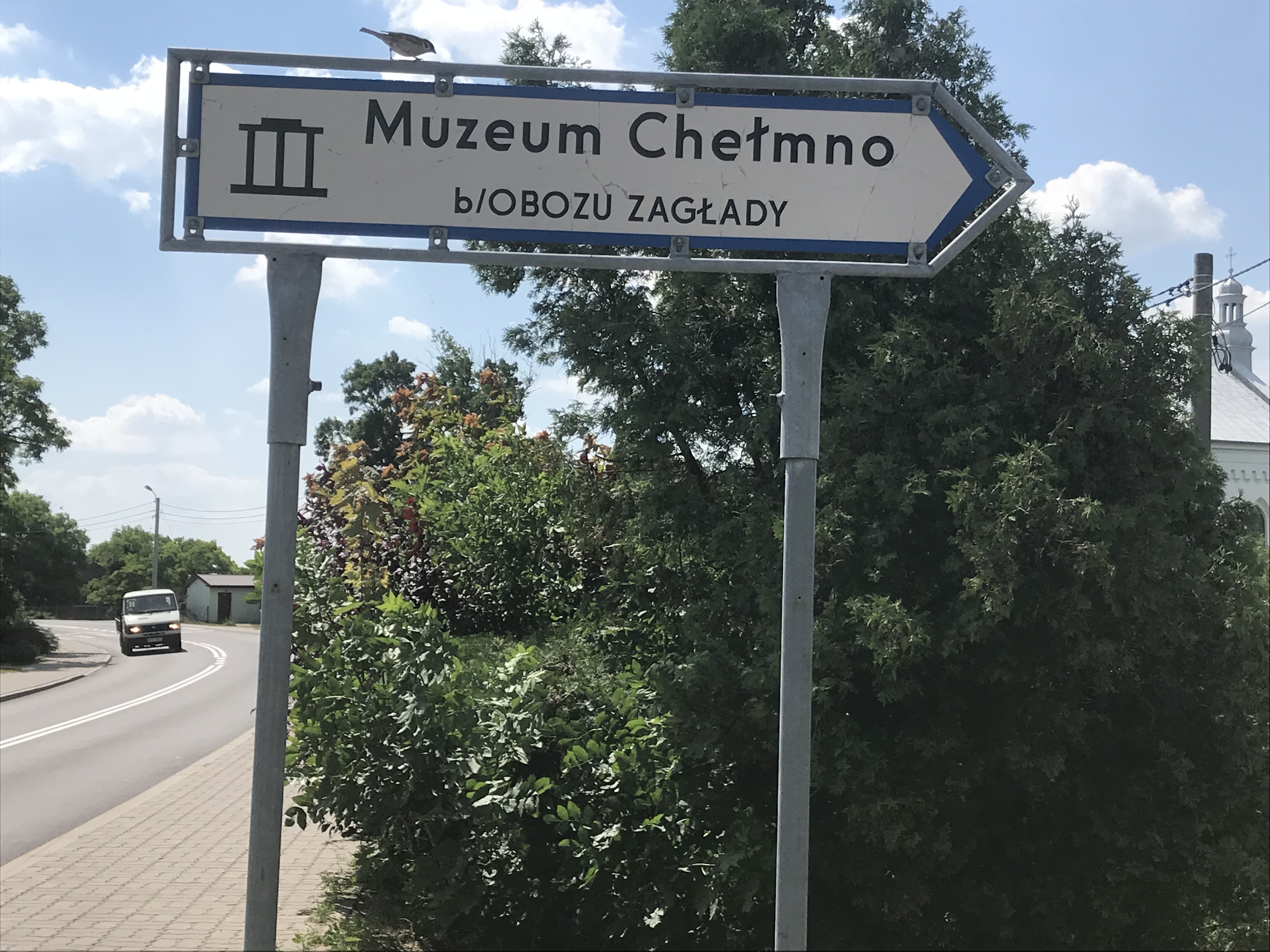
Following the invasion of Poland in September 1939, the Nazis began concentrating Polish Jews in the “General Government,” a special administrative district comprised of four city-based districts: Warsaw, Kraków, Lublin, and Radom. In the early days of the war, the Nazis attempted to forcibly relocate Poles and Polish Jews from the Warthegau to the General Government in order to make room for “Aryan” colonists. This policy gradually shifted towards the systematic extermination of Jews in the Warthegau after the Nazis invaded the Soviet Union in June 1941.
 
The annihilation phase of the Holocaust began with Einsatzgruppen (“mobile killing units”) shooting Jews en masse in Soviet territories conquered by the Wehrmacht (Nazi Army). Initial references to a larger, “Final Solution to the Jewish Question” surfaced in Nazi ministerial documents that summer. Several months later, Chełmno opened on December 8, 1941 as an extermination site for gassing Jews and Roma Sinti from the Warthegau, including the Łódź ghetto. With Chełmno operational, the subsequent convening of the Wannsee conference on the “Final Solution” on January 20, 1942 served to coordinate and expand a destructive process that had already been set in motion.
 
The extermination methods used at Chełmno are another unusual feature of the camp. While other death camps relied on gas chambers to conduct mass murder, at Chełmno the Nazis utilized an even more rudimentary method—herding victims into the cargo holds of specially-designed trucks and asphyxiating them with carbon monoxide from the engine exhaust.
IMG_4364The museum entrance in the village of Chełmno
The “gas vans” at Chełmno developed in response to simultaneous demands for the “liquidation” of Polish mental asylums in Nazi-occupied territories and the alleviation of psychological strain on the Einsatzgruppen from the mass shootings they carried out in the Soviet Union.[1] In the summer and autumn of 1941, the gas vans were the latest result of an ongoing process of invention to increase killing efficiency while shielding the perpetrators from it. They also represent a key intermediary step in the emergence of the “Final Solution” from the initiation of the Tiergarten (T-4) euthanasia program in Nazi Germany to the establishment of death camps in occupied Poland. Indeed, the first commandant of Chełmno, Herbert Lange, had previously led efforts to create “mobile euthanasia units” in the Warthegau. After being “broken in” by the euthanasia program and the Einsatzgruppen, the gas vans became institutionalized at Chełmno.
 
In addition to the gas vans, the improvisatory character of Chełmno is revealed by its physical organization to which the term “camp” can only be applied provisionally. Rather than carving out a single, fabricated space in the Polish countryside, the Nazis seized and repurposed land and buildings across the region. The village of Chełmno and the nearby Rzuchów forest constituted its two main sites.
 
A nineteenth-century mansion (referred to as the “castle” in Shoah) served as the focal point of village-based camp operations from 1941 to 1943 (known as the “first period” in the camp’s history). Transports of victims arrived here from Koło, a large town eight miles away with railway connections to Łódź and Poznań, the two largest cities in the Warthegau. Victims would spend the night in the mansion before being instructed to undress for delousing under the auspices of being transferred to a labor camp.[2] Then they would be led to the basement where the gas vans awaited them. Four kilometers away in the Rzuchów forest, their corpses would be unloaded and discarded—at first in mass graves during the early months of the camp’s existence and later in “burning pits” and crematoria.
IMG_4351Efforts to excavate and preserve the foundations of the mansion are ongoing.
After ten months of operation, mass murder ceased at Chełmno in September 1942 based on its “success” at the total annihilation of Jews in the Warthegau (aside from the Łódź ghetto).[3] Over the next six months, the Nazis concealed traces of the genocide at Chełmno, which included the destruction of the mansion. A modified version of the camp reopened from March 1944 to January 1945 during the “liquidation” of the Łódź ghetto. During this second phase of the camp’s existence, victims would be held overnight in the Church of the Birth of the Blessed Virgin Mary (next to the former site of the mansion) before being transported to makeshift barracks in the Rzuchów forest and loaded onto the gas vans.
 
The total number of victims at Chełmno over both periods of operation is estimated to be between 150,000 and 350,000 based on documentation that survived the Nazi cover-up.
 
Today, a new historical museum sits near the former grounds of the mansion while memorials punctuate the Rzuchów forest and lesser-known sites across the region.
 
The museum and the visitor center
When I visited Chełmno on a Thursday morning in late June, all was quiet. As I parked the car near the museum, I felt like a lone patron peeking into an empty restaurant. I walked into a small visitor center and purchased a guidebook to the camp. Behind the desk, a young man about my age offered to direct me around the site. His swift gait spoke of a deep knowledge of the camp concealed beneath the routines of tourism and the demands of state-run institutions. He escorted me to a historical exhibit in the museum and later we reunited inside the granary, the only original building that remains in this section of the camp.
During the first period of Chełmno, the granary served as a warehouse for valuables despoiled from the victims. Then in the second period it housed a small cadre of Jewish prisoners used for forced labor. As the Red Army approached in January 1945, it ultimately became the site of a massacre and prisoner revolt. Fleeing Nazi personnel locked the remaining prisoner-workers inside the granary and began leading them out for execution in small batches. A riot ensued and the prisoners killed one of the guards before the Nazis set the building ablaze.
The granary
As we stood inside the granary with its ghostly brick foundations peering through a patchwork of restoration, my guide switched on an overhead projector and an interview with one of the two prisoners who miraculously survived this final ordeal appeared on the wall.
 
It was Simon Srebnik.
 
I wrote about him briefly in a previous blog entry about my visit to Oswieçim’s Jewish cemetery, specifically during a discussion of a sequence in Shoah dealing with the erasure of the dead. Standing in the Rzuchów forest, Srebnik recalls the disposal of victims’ ashes in the Ner River during Chełmno’s second period, which initiates a deft segue to the desecration of Jewish cemeteries in Łódź and Oswieçim. Beyond this scene, Srebnik and Chełmno are foundational to Lanzmann’s film—it begins with them, builds from them, and frequently returns to them like an organizing principle.
IMG_4337Simon Srebnik can be seen on the bottom right of the group photo.
The first half of Shoah (designated in the film as the “First Era”) spends a great deal of time in and around Chełmno, including excerpts of the following:
 
  • On-site interviews with Srebnik in the village and the forest;
 
  • An interview with Michael Podchlebnik, a Jewish prisoner-worker from Koło who survived the camp’s first period;
 
  • An interview with Pan Falborski, a Polish worker from Koło who witnessed the deportation of Jews to the camp during its first phase;
 
  • An interview with Martha Michelsohn, a German woman who settled in Chełmno during the war with her husband, a Nazi schoolteacher;
 
  • A group discussion with local villagers in front of the church with Srebnik on hand;
 
  • Interviews with Polish residents in the nearby town of Grabów, whose Jewish community had been murdered at Chełmno;
 
  • Lanzmann’s reading of a letter from Jacob Schulmann, the rabbi of Grabów who warns his colleagues in Łódź about Chełmno in January 1942;
 
  • Lanzmann’s reading of a secret Nazi memo from June 1942 that proposes modifications to the gas vans to improve their efficiency.
 
The issues and themes covered in these sequences are too numerous and complex to itemize; they engage the perspectives of victims, bystanders, and perpetrators and run the gamut from camp operations and the extermination process to collective memory and antisemitism. By making a lesser-known death camp so central to his film, Lanzmann situated Chełmno more squarely on the map of Holocaust history.
 
While I can certainly credit Lanzmann for my visit to the camp, Chełmno largely remains off the proverbial beaten path. Awareness of its existence requires serious interest in Holocaust history and a visit necessitates careful planning due to its remote location. Of the five death camps I visited in Poland, Chełmno was the only one not mentioned in my Lonely Planet guidebook.[4] While a backpacker in Kraków might spontaneously book a last minute tour of Auschwitz and a visitor to Lublin might hop a city bus to Majdanek, no such opportunities exist for Chełmno (nor for several other death camps). Although Shoah moves Chełmno to the center of Holocaust history, the camp’s marginality persists beyond the celluloid.
IMG_4401A path in the Rzuchów forest leading to the main site of Chełmno’s mass graves. Srebnik and Lanzmann are seen walking here in the opening minutes of Shoah.
When I saw Srebnik’s image appear on the granary wall, it felt in part like a secret handshake had been exchanged. I gave the man from the visitor center a nod of recognition. Lanzmann’s work had brought me here and once again I would be led by Srebnik.
 
In the opening moments of Shoah, a scrolling text introduces the film as beginning in present-day Chełmno, the “place in Poland where Jews were first exterminated by gas,” with Srebnik returning to the site as an eyewitness. The text elaborates that as a young teenager he had been deported from the Łódź ghetto to Chełmno during the second period of the camp’s history and assigned to the prisoner workforce. Noting his abilities as a singer, the Nazis forced him to entertain them during trips along the Ner River, which runs past the village. The film then cuts to the present with Srebnik floating down the river in a rowboat, singing a folk song he used to perform for his captors while curious locals look on and recall the past.
 
Unadorned lyricism and the vibration of the human voice become portals of memory as Charon leads us across the River Styx into Hades.
IMG_4405The site of one of Chełmno’s mass graves in the Rzuchów forest
When his image reappeared in the granary, Srebnik looked older than he did in Shoah, his hair whiter and his expression wearier. Sitting before the camera in conventional documentary style, he recalled the grisly task of removing victims’ gold teeth from pieces of jawbone. It’s the kind of visceral, horrifying detail that Lanzmann wisely limits in Shoah. On the rare occasion of their occurrence, such passages are usually brief and arise incidentally within the context of a larger testimony. The viewer’s attention remains on the speaker and his or her story.
 
Shock, however, averts. Blunt forays into corporeal violence that exceed the human imagination elicit momentary awe that all-too-easily hardens into emotional distance, whether protective withdrawal or numbing acknowledgment. Rather than drawing us deeper into an already much-resisted topic like the Holocaust, it paradoxically pushes us out and reinforces avoidance. These observations are neither a criticism of Srebnik’s testimony nor an implied limitation on the gathering of historical information. Rather, my concern is how historians and filmmakers use such knowledge, which not only raises questions about what to include and how to present it but also what to set aside. Although I encountered the same Srebnik in the granary that I did in Lanzmann’s film, the differences in representation seemed to render him as two separate individuals.
IMG_4376The Church of the Birth of the Blessed Virgin Mary
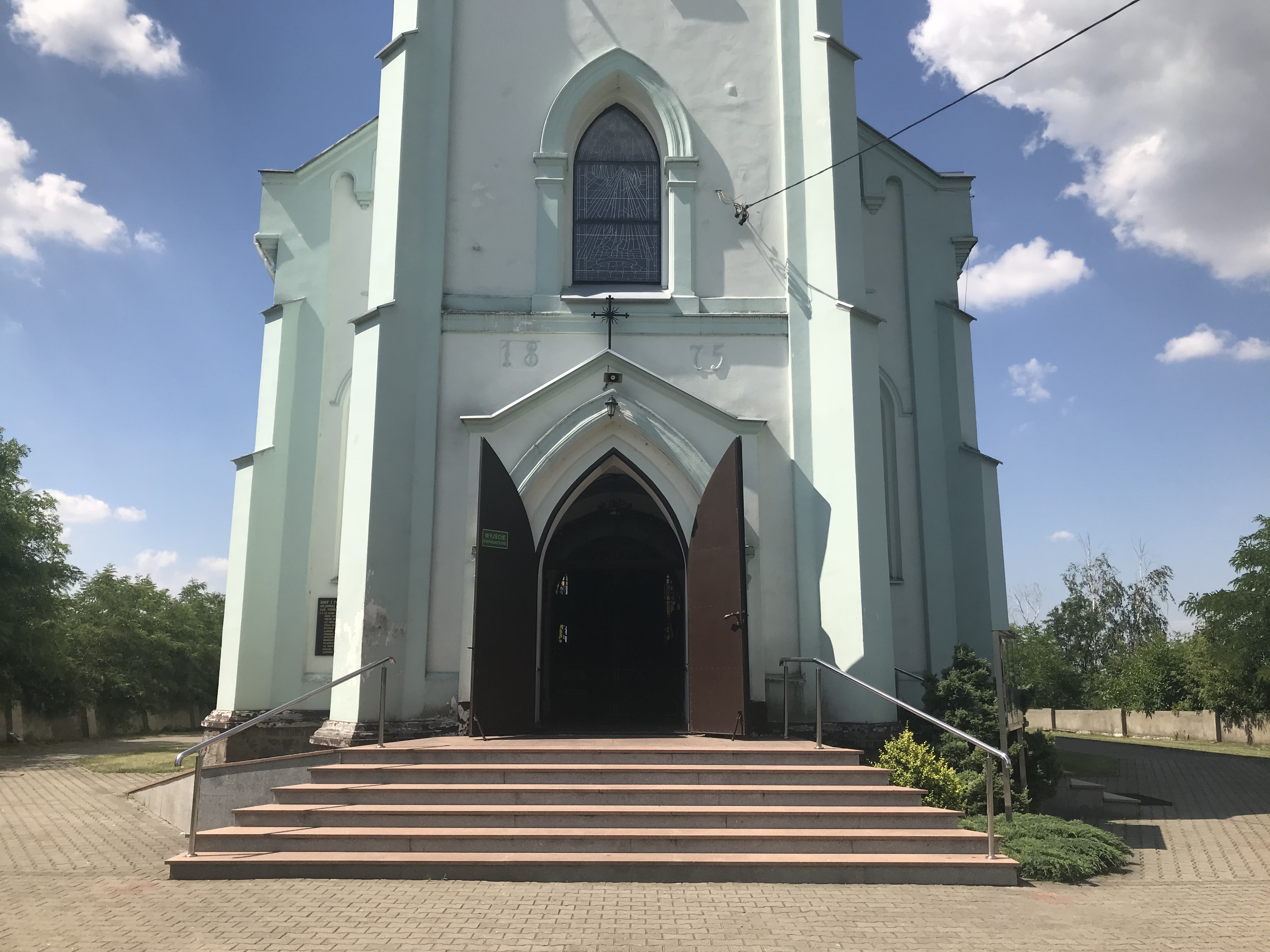
After the granary, I left the museum grounds and walked a few hundred feet back along the road to the Church of the Birth of the Blessed Virgin Mary. Its bright and singular presence belies its history as a storehouse for victims’ possessions during Chełmno’s first period and as a site for corralling victims to the gas vans and the Rzuchów forest during the second period. Today, it continues to operate as a parish church although it was closed on the day I visited. While its role in the camp’s history is described at the museum, I could not find any markers or memorials outside the church acknowledging its relationship to Chełmno. The lack of reciprocity struck me as a passive disavowal of the past, one that ultimately leaves the church unhealed.
 
Shoah exposes another layer of disavowal at this site. Lanzmann shot an extended sequence in front of the church with Srebnik and a crowd of villagers during a religious festival. Initially, a small group of older residents share their memories of Srebnik as a camp prisoner as they respond to Lanzmann’s questions. The conversation then expands to their recollections of Jewish victims at the church during Chełmno’s second period. After a pause in the conversation due to a religious procession, a larger crowd assembles to listen in.
IMG_4369The front doors  were open but access to the sanctuary was closed.
As the group warms to discussing the past, Lanzmann poses a seemingly simple yet loaded and potentially cringe-inducing question: why do they think all of this happened to the Jews? The church organist steps forward to relay a dubious anecdote about a rabbi near Warsaw who purportedly claimed that the Jews were finally being punished for Christ’s death. In this instance, religious antisemitism surfaces as an explanation for genocide while simultaneously being disavowed as the victim’s lament rather than an expression of the speaker’s prejudice. Shortly after this astonishing statement is made,  Lanzmann’s camera slowly zooms in on Srebnik’s face in the middle of the crowd as the volume is turned down, his quiet presence long since overlooked by those around him.
 
It’s a much-discussed moment in Shoah, one that might even be described as shocking. Given the controversy generated by the film in Poland with charges of anti-Polish bias ascribed to Lanzmann, it surprised me that the present-day church in Chełmno has not erected a Holocaust memorial or historical marker on its grounds. By not fully acknowledging and working through this aspect of its past, the church still cedes the last word to the anti-Semites—first German, then Polish.
 
From the close-up of Srebnik’s face, Lanzmann cuts to a reverse tracking shot that moves in silence from the now-empty church plaza to the Rzuchów forest. My visit continued along this passage known as the “road of death” as I headed to the second part of the camp.
IMG_4390“Monument to the Victims of Fascism” (1964)
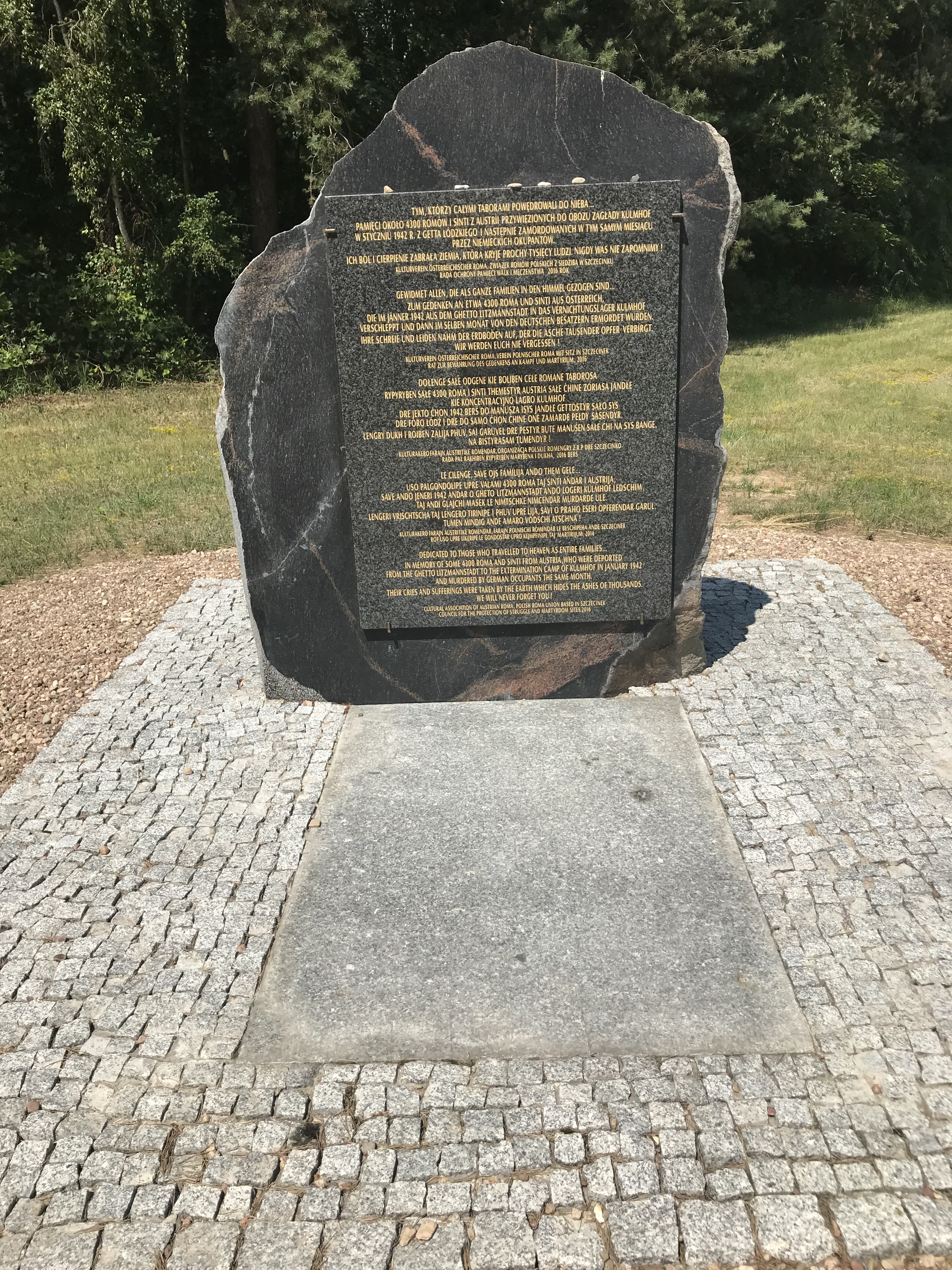
Once the location of mass graves and crematoria, today the “forest camp” of Chełmno is a memorial site with monuments and obelisks dotting its broad expanse. The most imposing is a relic of the Cold War era entitled, “Monument to the Victims of Fascism.” The museum guidebook notes that this monument fails to specify who these victims actually were (i.e. Jews, Roma Sinti, etc.) and consequently memorializes an “unspecified human mass.”[5] Dedicated in 1964, it existed when Lanzmann filmed in the area but he angled the camera away in a shot that might have included it.
IMG_4400Memorial for Austrian Roma Sinti deported to the Łódź ghetto and later murdered at Chełmno (2016)
Many smaller memorials have been placed around the site in recent decades, including a wall of remembrance, family monuments, obelisks dedicated to Jewish victims from towns and villages across the Warthegau, and a recently installed tribute to Roma Sinti victims from Austria. These new additions to the site reminded me that the work of memory is an always ongoing process. Upon returning to the site of Chełmno’s mass graves in Shoah, Srebnik remarked, “No one can describe it. No one can recreate what happened here. Impossible. And no one can understand it. Even I, here, now.”
 
Nevertheless, the endlessness and ultimate impossibility of the work of memory only further underlines its necessity.
 
Works Cited
[1] Patrick Montague, Chełmno and the Holocaust: The History of Hitler’s First Death Camp (Chapel Hill, NC: University of North Carolina Press, 2012), 199-201.
[2] Andrzej Grzegorczyk and Piotr Wąsowicz, Kulmhof Death Camp in Chełmno-on-Ner: A Guide to Remembrance, trans. Anna Klimasara (Luboń: Martyrs Museum in Żabikowo, n.d.),19.
[3] Grzegorczyk and Wąsowicz, 21.
[4] The Chełmno death camp and the village of Chełmno nad Nerem are not to be confused with a small medieval city of the same name in northern Poland which, incidentally, is included in the Lonely Planet guide.
[5] Grzegorczyk and Wąsowicz, 91.
Posted in Uncategorized | 1 Comment

#10 – A NORTHEASTERN SUMMER INTERLUDE

IMG_8283Bike riding in Brooklyn, New York
Walking down Bedford Avenue with eyes trained to a digital map and a steeply declining phone battery charge, I breezed right passed the Apple Store. My gently respiring, blue-dotted avatar had become misaligned with a red pin drop. As I retraced my steps and crossed the street, I noticed a small, black stencil of the company pomme hanging with stated understatement from a pristine and non-descript brick building that encouraged misrecognition as an old neighborhood warehouse. In gentrified Williamsburg, a trillion dollar company dons vintage-washed jeans.
I entered the cavernous emporium. Wading through the chummy waters of salesman-as-fellow-customer, I headed to a table of clinically arranged iPhones where I unplugged a display model and attached my own. Electricity trickled in like drips of rain plunking against tree leaves after a July storm. Across from me, a marooned child searched for video games on a device tethered with thin metal wire. Rather than convalesce, my phone would have to manage with a few gulps from a listless drinking fountain. I acceded to thirty minutes of patience before continuing to explore the neighborhood en route to a rendezvous with friends followed by a bike ride around Brooklyn with my father the next day.
My trek in Brooklyn fell at the tail end of a three-week trip to the Northeast to visit family and conduct a bit of research for the Shoah project.
I had spent the previous week in the Adirondacks camping on a lake island with my mother and father. For my parents, it’s an annual summer tradition that I attend as often as I can. Growing up on the Jersey Shore, the family retreat to a lake in New Hampshire or upstate New York was a ritual as hallowed as Christmas. The sun-illumined, stony depths of clear water and the scent of hemlock spoke of immanence. I recall the pleasure of a much younger self bounding down a grassy hill towards a lakeside beach, gaze fixed on the granite slabs that punctuated the path every few feet like a staircase of missing piano keys. Each “note” had its own individual color, texture, and sun-baked warmth to be savored with the eyes and the soles of the feet. Striking them in succession was like ascending a musical scale with each step heightening the anticipation of resolution in the lake’s languid chords. Remembering each note as I heard it anew was a timeless and treasured rite of childhood summers.
img175oNew Hampshire in the late 1980s
In more recent years, the sound of arrival at communion with nature has become the insistent whir of an outboard motor propelling a seventeen-foot sailboat with a canoe and a kayak in tow. Lakeside cottages and the rousing calls of children have given way to secluded island campsites and NPR news reports delivered on a portable radio. The journey in requires a thirty-minute boat ride upriver that traverses ponds and lily-padded coves before broadening into an open lake spotted with islands, like shards of wood scattered around a jigsaw. As each river bend unfolds, stoic Eastern white pines tower above the water’s edge, their innumerable branches perpetually curved back by the ceaseless northern winds. These elder statesmen of the forest bristle and sway with barefaced abandon while their fallen needles soften the earth. Skimming beneath their arbor marks passage into a realm of rugged splendor chiseled by exposure and fortitude, a sojourn not unlike the peregrinations of middle age.

IMG_6681Adirondacks, New York in 2019

The languorous, camp-time hours and constantly shifting Adirondack weather makes dipping into a book a more frequent refrain than absorbing oneself in the lake. This year, as my mother quietly plowed through her Kindle, I chipped away at lectures in yogic philosophy and waded into Holocaust literature geared towards adolescents.
Teaching college students about the Holocaust through the lens of Lanzmann’s Shoah has heightened my curiosity and awareness of what they are bringing to the table when they enter my class. What information, ideas, and materials have they already received on the Holocaust (if any)? How has the event been situated in their consciousness? What perceptions do I need to challenge and what ideas do I need to reinforce to prepare them for receiving Lanzmann’s work?
These questions point toward many core issues of the Shoah project at large. I believe this film is an essential catalyst for a deeper, more sustained engagement with the Holocaust at both individual and public levels that ought to be a household name in the United States like Anne Frank and Schindler’s List. I see at least two major challenges for Shoah to make a wider impact, both of which are structural in nature.
First, the development of an individual’s capacity to face the event, sit with it, return to it, and act with awareness from it is a difficult process requiring significant time and commitment. At best, many people only have episodic encounters with the Holocaust and often recall their emotional reactions more clearly than the historical details of the event itself. Consequently, Lanzmann’s film must contend with layers of individual resistance and a culture of limited engagement to attain a broader audience.
IMG_7439The transcript of Shoah
Second, Shoah is a very demanding film to watch and truly absorb: it’s nine-and-a-half hours of oral testimony and panning shots of forsaken landscapes that completely dispenses with the customary hallmarks of documentary filmmaking such as voiceover narration, chronological progression, archival imagery, mood music, and signposted organization. Developing the capacity to face it, sit with it, return to it, and act with awareness from it not only applies to the Holocaust but also to Lanzmann’s magnum opus itself. While it stands on its own as a monumental work of art, its interpretation has often been limited to specialized academic discourses. Lanzmann’s well-known ties to Sartre, De Beauvoir, and Les temps modernes might further abet the impression of a French director making an “art film” for intellectuals. My aim is to carve new inroads to Shoah that are deeply informed but lightly worn in order to generate a wider audience for the film while cultivating sustained interest in the Holocaust among present and future generations.
My project is thus a bridge-building enterprise that seeks to elevate viewers to the challenge of Shoah while grounding the film in a companion guide that unpacks its many subtle layers of meaning and connects them with the larger history of the Holocaust.
The question of audience—both for Lanzmann’s film and my own work—has led me to explore the place of the Holocaust in education and popular culture. Surveying my university students about Holocaust-related materials they have already encountered has yielded a list of books and films that combine canonical works and popular culture. Figures like Anne Frank, Elie Wiesel, and Wladyslaw Szpilman often appear alongside works of historical fiction such as The Book Thief and Number the Stars and fantasy films like Inglorious Basterds and Life is Beautiful. I feel compelled to know these works and the relationships people have developed with them in order to better understand the contours of what I’m terming “episodic engagement” with the Holocaust. As a result, bookmarked copies of Maus and The Boy in the Striped Pajamas found their way next to the campfire this year.
IMG_7434Camp reading
This year, our camping trip did not immediately conclude with a long drive back to New Jersey but instead led to a Shoah-related side trip across Lake Champlain to Burlington, where the papers of Raul Hilberg (1926-2007) are housed at the University of Vermont. Hilberg was a professor of political science at the University for thirty-five years and is best known as the author of The Destruction of the European Jews (1961; 1985; 2003), a foundational, three-volume work in Holocaust history. He is also the only academic “talking head” featured in Shoah.
img_7435.jpgHilberg’s classic work
Hilberg makes three appearances in Lanzmann’s film. First, he contrasts the unoriginal and historically derivative character of Nazi antisemitism with their bureaucratic inventiveness in carrying out the Final Solution. Second, he elucidates the details of a German train schedule routing deportees to the Treblinka death camp and connects it to the larger role played by the Reichsbahn (German National Railway) in the Holocaust. And third, he reanimates the perspective of Adam Czerniakow, who served as the head of the Judenrat (Jewish Council) in the Warsaw ghetto from October 1939 until his suicide in July 1942, when the mass deportations to Treblinka began.
img_7437.jpgHilberg’s 1996 memoir
Hilberg is an engrossing figure whose life, work, and appearances in Shoah have made their way into my teaching over the past two years. In a class on historical writing, I assigned chapters from his memoir, The Politics of Memory: The Journey of a Holocaust Historian, to provide students with a lucid, plainspoken historian reflecting on the stages of his career to help them cognitively map their own goals. I have also used the account of his family’s flight from Nazi-occupied Vienna to Brooklyn by way of Havana in my modern world history classes as a harbinger of World War II and as a point of comparison with Stefan Zweig’s portrayal of fin-de-siècle Vienna. When I taught the history of the Holocaust at Cal State Fullerton last spring, I included the abbreviated student edition of The Destruction of the European Jews as one of the course books—I am currently trekking through the entire three-volume edition.
While teaching my class on the Holocaust, it occurred to me to check Special Collections at the University of Vermont for materials on Hilberg and Lanzmann. A few mouse clicks led me to the Hilberg papers, which listed a folder of their correspondence and materials from a conference honoring Hilberg’s retirement in 1991 that Lanzmann attended as a speaker. While these documents were unlikely to contain any major revelations, I was curious to know more about their relationship outside the film as the very possibility of Shoah was tied in part to Lanzmann’s rapport with his interviewees. It was also an opportunity to continue retracing Lanzmann’s steps in the making of the film; rather than a flight to Poland, however, this segment only required a detour from a family camping trip.
An easily overlooked aspect of vacations is that they end before they are over. The penultimate day swings like a pendulum between a final rallying cry and a sigh of resignation, a prelude to the unraveling return journey. A side trip to an unfamiliar place, however, provokes a flutter of anticipation with the inheritance of extra innings. After literally decamping from the island and winding our way through the Adirondack Mountains in pursuit of sweets, we crossed Lake Champlain at Crown Point and entered Vermont.
img_6468.jpegSelf-sustaining farm in Charlotte, Vermont
Our convoy of trailered and roof-racked boats glided across wide vistas of undulating pastures and paused in colonial-style villages before arriving at our Airbnb in Charlotte: a self-sustaining farm about twenty-five minutes south of Burlington. Our hosts were a Dutch couple and several post-college-aged farmhands, all with ties to the University of Vermont. When the original eighteenth-century farmhouse caught fire many years ago, they constructed an environmentally-sustainable home on its foundations. Hay bales filled the walls. The mini-fridge in our room had jars of fresh yogurt and unpasteurized cream. That evening, we watched the sunset over Lake Champlain against the distant backdrop of the Adirondacks, the prospect of two full days laying ahead of us.
The next morning, my parents dropped me off at school.
IMG_6610University of Vermont, Burlington
At first glance, the University of Vermont seemed a reflection of Berkeley by way of New England: a stately, hillside campus perched above a bohemian downtown with views of an expansive lake on the horizon. At lunchtime, I descended the tree-lined streets from the University to a local, vegetarian-friendly restaurant and imagined the autumnal charm.
The University of Vermont’s Special Collections are located in the basement of Billings Library, a grand piece of late nineteenth-century architecture inlaid with ruddy stone. Hilberg’s papers are part of the University Archives and consist of twenty cartons. The focal point for me was his correspondence with Lanzmann. The two first met at a Holocaust conference in New York in 1975 and the letters in the collection span three decades from that year to 2005.
IMG_6470Billings Library, University of Vermont, Burlington
In a handwritten letter sent from Munich in 1975, Lanzmann refers to Hilberg’s magnum opus, The Destruction of the European Jews, as “the Bible.” Indeed, Hilberg’s influence led him to interview ex-Nazi bureaucrats who perpetrated the Holocaust from behind the safety of their desks. Such work, however, proved frustrating for Lanzmann, who came to regard these interviewees as “liars and cowards.” His solution? “You will be in this film,” he declares to Hilberg, adding that he will visit him in Burlington for that purpose. “I am convinced it will be very strong.” In two of Hilberg’s appearances in Shoah, Lanzmann presents him as a straight-shooting counterpoint to the dissembling bureaucratic perpetrators. Already in 1975, Lanzmann envisioned Hilberg as “the voice of the prosecution,” stating that, “When there will be no Jewish witnesses – survivors – you will be the one who will say who is who.”
Later that afternoon at the Howe Library Multimedia Department, I watched Lanzmann’s moving speech for Hilberg’s retirement. In his remarks, he reiterated the foundational importance of The Destruction of the European Jews for Shoah while playfully taking credit for making Hilberg a movie star.
Hilberg, for his part, also threw his weight behind Shoah. In a 1985 letter he asked Elie Wiesel if he had heard about Shoah, which had recently premiered in Paris. “Although I have seen only excerpts in the making,” wrote Hilberg, “I am convinced that this is the most powerful testimony about the Holocaust we will ever have on the screen.” For both Lanzmann and Hilberg, Shoah was born of conviction. Ten years later, Hilberg heartily endorsed the United States Holocaust Memorial Museum’s acquisition of the film’s two-hundred plus hours of outtakes. Ironically, decisive financial support for the purchase came from Steven Spielberg—a somewhat awkward transaction (or perhaps just desserts) given Lanzmann’s and Hilberg’s open criticism of Schindler’s List just a few years earlier.
At the end of the day, my parents and I drove past Hilberg’s former home about a mile and a half from campus in a residential neighborhood. I came to recognize the address from the many letters I had sifted through at the library. Hilberg is filmed at home in Shoah, often with Lanzmann in the frame. Tracking shots of the neighborhood and the exterior of the house are also included. The power of these scenes are sustained by the precision of Hilberg’s words and the unaffected decisiveness of his voice. Lanzmann, for his part, plays the informed, thoughtful student sharing his teacher with the world from the intimacy of his home.
The house and the neighborhood looked remarkably unchanged nearly forty years later.
IMG_6612Hilberg’s former home in Burlington, Vermont featured in Shoah
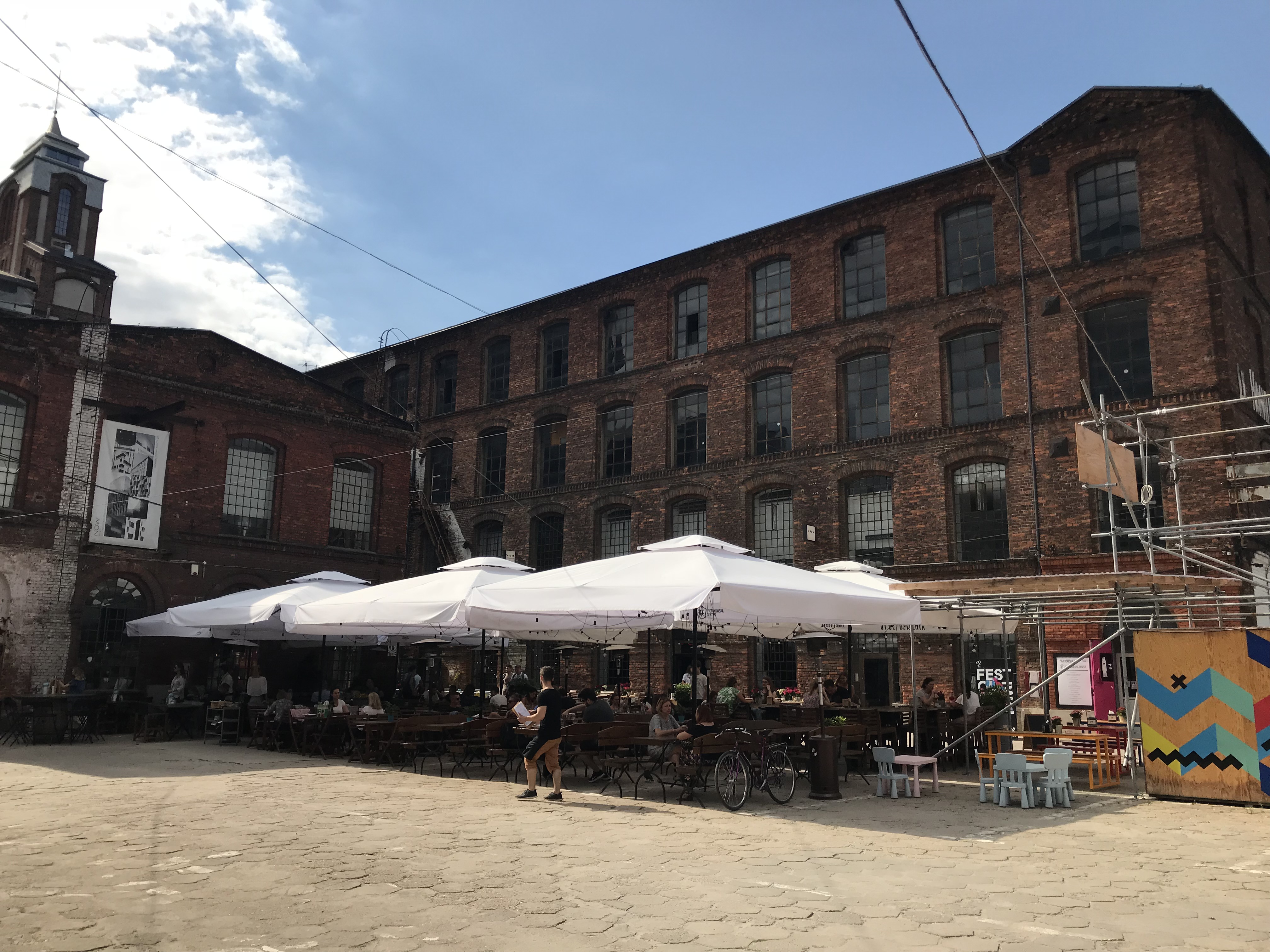
Posted in Uncategorized | Leave a comment

#9 – FROM KRAKÓW TO ŁÓDŹ AND ITS JEWISH CEMETERY

IMG_4267IMG_4322The interior gate of Łódź’s Jewish Cemetery (above) and a restaurant near Piotrkowska Street (below).
On the morning of my fourth day in Kraków, I shared an unexpectedly convivial breakfast with my final set of roommates at the hostel—a pair of Belgian friends and a young woman from Russia—along with a middle-aged couple from Chile we met at the communal table.
It had been nearly a decade since I had last stayed in a hostel and during that interval an invasive species known as the Smartphone had erupted like an algal bloom. The balm of instantaneous contact with “home” had undercut the amiable mingling and spontaneous nights-out that had long been the upshot of shared living quarters. The hurdle of making contact “abroad,” it seemed, had become steeper as the risk of vulnerability in one’s own “foreignness” was now more easily avoided. Indeed, portable comfort zones could even expand imperiously to full-volume FaceTime calls in the lounge.
IMG_4010Mundo Hostel, Kraków – I launched this website there!
In the dining area, a selection of cheeses, meats, yogurt, fruit, and rolls had been spread around the table like distant rocks in a stream. The couple from Chile spoke quietly and prepared their plates with the faint hesitation of navigating the familiar in a new place. For reasons I cannot recall now—perhaps an inquisitive glance or the circulation of the butter dish—Spanish began volleying around the table with English trailing in its wake. The couple recounted their recent travels across Eastern Europe, the Belgians discussed the World Cup, and the Russian posed mischievous questions about the current U.S. president. For all its mundanity, the conversation was like curtains drawing back onto a luminous June morning. Upon reaching its conclusion, an untraceable hint of regret accompanied our leave-taking as everyone dispersed to new and unknown destinations.
My next stop would be Łódź.
Located about 140 miles northwest of Kraków, Łódź is a post-industrial city and the third largest metropolis in Poland (after Warsaw and Kraków), home to nearly three-quarters of a million people. In the nineteenth century, Łódź ballooned from a medieval village to an urban hub with the arrival of textile factories during the First Industrial Revolution. Łódź had also been a longstanding center of Jewish settlement, which accelerated during the city’s industrialization. Decades later under the Occupation, the Nazis renamed the city, “Litzmannstadt” and the northern slum of Bałuty became the site of the Jewish ghetto (alternately referred to as the Łódź or Litzmannstadt ghetto). The ghetto interned over 160,000 Jews from Łódź and the surrounding suburbs along with tens of thousands of deportees from other parts of Europe (Hilberg 225).  Less than 900 people survived the ghetto to liberation by the Soviet Army in January 1945 (Wojalski 65).
IMG_4233Street signs in Bałuty
My reasons for visiting Łódź were twofold.
First, it would serve as a home base for visiting the Chelmno death camp, forty miles northwest of the city with access largely limited to car. That journey is the subject of my next blog entry.
Second, I wanted to track down Łódź’s Jewish Cemetery, which surfaces briefly in Shoah during an interview with Paula Biren, a survivor of Auschwitz and the Łódź ghetto. Most recently, Biren was the subject of Bałuty, one of the chapters in Lanzmann’s final film, The Four Sisters, which focuses on her experiences in the ghetto as a teenager. Biren appears in Shoah after Simon Srebnik, a survivor of Chelmno, describes the disposal of victims’ ashes in the Ner River (see my previous blog entry). Biren’s refusal to return to Poland and her doubts about the postwar status of Łódź’s Jewish Cemetery, where her grandparents were buried, introduces a key theme of Lanzmann’s film: the relationship between Poles and Polish Jews. The subsequent camera shot of the present-day cemetery, fractured and desolate in wintery abandon, substantiates Biren’s misgivings. It also reveals Lanzmann’s shared skepticism and poses it to the viewer for consideration. Consequently, I had two questions for my visit to Łódź: What would I find if I visited the Jewish Cemetery today? And what might it tell us about the current status of Holocaust memory in Poland?
The bus from Kraków to Łódź set a meandering pace as its final destination was a long haul to Gdańsk on the Baltic coast. Along the way, we passed through Katowice (about 25 miles from Oswieçim), where Primo Levi spent time in a Soviet transit camp following his liberation from Auschwitz in January 1945. He recounts the experience in The Truce, a sequel to his famous Holocaust memoir, If This Is a Man (also known in English as Survival in Auschwitz). We also stopped in Częstochowa, home to a famous icon of the Virgin Mary known as the Black Madonna as well as the hometown of Abraham Bomba, a survivor of Treblinka and one of the most memorable interviewees in Shoah. A memorial stone for Częstochowa on the former site of the Treblinka camp shows up periodically in the film in association with Bomba’s testimony.
After several hours, we pulled off the main highway and began crawling through the traffic lights on Aleja Marszałka Józefa Piłsudskiego [Marshall Józef Piłsudski Avenue], one of Łódź’s main thoroughfares that bisects the city from east to west. It’s a wide boulevard lined with tram stops, shaded parks, and sprawling shopping centers. “Piłsudskiego” (as it’s known by shorthand) is named after Marshall Józef Piłsudski, a “founding father” of the Second Polish Republic, which governed the country during the interwar period from 1918 to 1939. Gazing at Piłsudskiego under an overcast mid-afternoon sky, my initial impression of Łódź was being off the tourist grid in an industrial city of no immediate charm. Compared to the sightseeing crowds grazing in Kraków’s Stare Miasto [Old Town], here, it seemed, the exigencies of everyday life set the pace.
IMG_4325The Piotrkowska Centrum tram station at the intersection of Piłsudskiego and Piotrkowska in Łódź
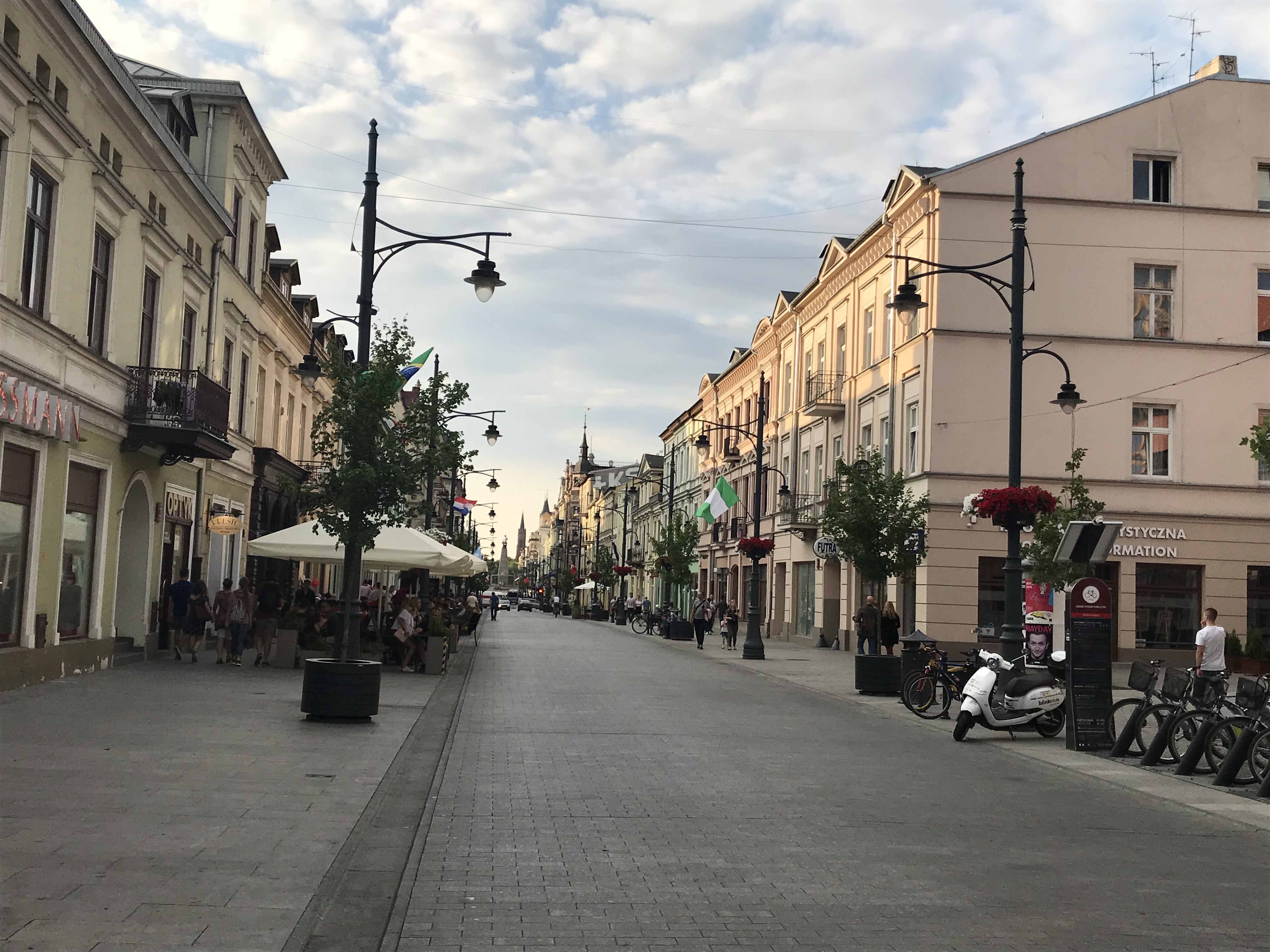
Using the on-board Wifi, I noted the location of my Airbnb on a side street off Piłsudskiego as the bus wound its way to Łódź Fabryczna, the city’s newly renovated railway and bus station. As with my traverse across Oswieçim, I kept the map open on my phone since I would be unable to connect to the 3G network during my walk. With a rolling suitcase and messenger bag bouncing and scraping off street curbs and fragmented sidewalks, I probably should have opted for a cab. But when I arrive in a new place, I like to get bearings on foot. The location of my Airbnb turned out to be in a large apartment building without a call-box. Although I had my host’s phone number, my phone had no reception. I could message him but first I would need a Wifi connection. Usually, it’s available in cafes but being in a residential neighborhood, I would need an internet connection just to find one of those! Stumped and antsy, I paced the foyer, pondering the absurdity of being inside the building and unable to contact someone within it.
I knocked on the door of a radiology clinic in the first-floor storefront. After an exchange of confused looks and broken words, the man who answered the door directed me to an English language school two doors down. An enthusiastic instructor with sparkling English connected me to their Wifi network and the minor drama of connectivity limbo concluded moments later as a young man named Aleh showed me to an empty bedroom in the apartment he shared with his roommates.
IMG_4216Piotrkowska Street, Łódź
After settling in and napping for a few hours into the late afternoon, I set off wandering through the city center. I took a tram back to Łódź Fabryczna, scouted a vegetarian restaurant near the station to save for later, and found my way to Piotrkowska Street, the main route through downtown. Lined with restaurants and shops in restored nineteenth-century buildings, Piotrkowska and the surrounding neighborhoods were a reflection of artistic and commercial life reanimating the industrial husks of nineteenth-century bourgeois society. Its clearest embodiment could be found several blocks away at Manufaktura, a sprawling, brick-laid textile factory that had been transformed into a shopping center with outdoor restaurants and international chain stores.
IMG_4223Starbucks at Manufaktura, Łódź
The atmosphere of Łódź’s central district retained a discernible local flavor, perhaps aided in the hours of my exploration by soccer fans bursting into chants and waving Polish flags as they headed home after a disappointing loss to Senegal in the World Cup. Compared to Kraków’s tourist pomp and circumstance, Łódź seemed contentedly off-beat and under-the-radar.
The next morning, I slept in.
Still recovering from the long day at Oswieçim followed by the day-long relocation to Łódź, my mind wafted with undulating curtains and chirping birds as the morning sun slowly lost its tentativeness. My routine of getting cleaned up and practicing yoga unfolded at such a leisurely pace that Aleh felt compelled to check up on me by text. By late morning, I headed to the tram station across the street, negotiating one of Poland’s ubiquitous piekarnias (bakeries) along the way.
My destination was Łódź’s Jewish Cemetery in Bałuty. The trip required two tram rides and traversing a residential neighborhood with tree-lined streets and tall apartment blocks. As I moved along Bracka Street, my eyes traced the brick wall that marked the cemetery’s southern border.
IMG_4230The cemetery gate near Bracka and Chryzantem, Łódź
At the intersection of Chryzantem, I saw a wide brick arch and a metallic green gate with Stars of David formed on it. I approached the gate and pushed.
Locked.
I groaned. Yet after my experience two days prior in Oswieçim, I had already become an experienced hand at finding my way around unexpected obstacles. Through Lonely Planet, I knew that Radegast Station, another site from the Litzmannstadt ghetto, was a few blocks away. Perhaps someone there would be able to help me.
Beyond my guidebook, landmarks of the Litzmannstadt ghetto had been clearly marked around the city. Streets located within its former boundaries acknowledged it on their signs and maps for self-guided walking tours through Bałuty had been posted around the neighborhood. Like the trail of Oshpitzin I found in Oswieçim, such efforts to preserve public memory appeared more commemorative than touristic.
IMG_4221A sign for self-guided walking tours through the Litzmannstadt Ghetto. This sign was near Manufaktura, which is also located in Bałuty.
After crossing an expansive boulevard on the north end of the cemetery, I entered a vacant area of mangy grass and empty lots. A tall brick chimney attached to a cement complex stood at the end of the street. The words, “Thou Shalt Not Kill” had been printed in Hebrew, Polish, and English in metallic letters above its gated doorway, decorated with the Star of David. Along the cement wall, each year of the war from 1939 to 1945 had been inscribed on it. Rounding the corner, the street turned to cobblestone and an old wooden train station appeared.
IMG_4237Radegast Station, Łódź
Located at the northeast corner of the Litzmannstadt ghetto, Radegast Station was the main transit point for prisoners arriving in Łódź from other parts of Europe and for the deportation of ghetto internees to Chelmno and Auschwitz-Birkenau. An inscription on a nearby wall noted that 43,000 Jews and 5,000 Roma passed through the station en route to the ghetto and 145,000 Jews from the ghetto had been sent to the death camps. The eastern wall bordering the station had been transformed into six large tombstones acknowledging the final destinations of deportees from Łódź. Memorial plaques from the cities of Łódź, Vienna, and Luxembourg paid tribute to their citizens who passed through Radegast. On the station platform stood a locomotive and three open cattle cars from the Reichsbahn (German National Railway). Compared to modern-day freight containers, these cars seemed shorter in height and more claustrophobic than one might otherwise imagine.
Circling the station building, I discovered a sign that accounted for the site’s emptiness—the museum and the deportee tunnel had been closed for renovations through November.
Foiled again.
Still, my hand reached for the station door and pulled.
Locked.
As I walked away, considering my next move to gain access to the cemetery, I heard the door swing open.
A late middle-aged Polish man who spoke English stepped outside and greeted me. He asked me where I was from and his eyes smiled when I said, “California.” He pointed me around the station grounds and gave me directions to the cemetery entrance. It turned out to be on Zmienna Street, which runs along the cemetery’s eastern end—the side I had not yet explored.
Finding the open gate was a welcome sight.
IMG_4262Entrance to Łódź’s Jewish Cemetery on Zmienna Street
Łódź’s Jewish cemetery is about 100 acres in size and is purported to be the largest of its kind in Europe (Wojalski 52, 58). A century ago it would have been known as the “New Cemetery” to the city’s long-time residents. It opened in 1892 to accommodate the exponential growth of Łódź’s Jewish population in the nineteenth century, a development that paralleled the city’s industrialization. While the “Old Cemetery,” which opened on Wesola Street in 1811, had an estimated 15,000 gravesites, the “New Cemetery” expanded to 180,000 (Wojalski 5, 14). On the eve of World War II, Łódź’s Jewish community was only second to Warsaw in size (Wojalski 65).
IMG_4263The Pre-Burial House in Łódź’s Jewish Cemetery
Upon entering the cemetery, I passed through the large pre-burial house used to prepare the deceased for internment, with separate areas for men and women. Currently, a small side room is used as an information desk where a small admission fee is collected to support the cemetery’s upkeep. A sign at the cemetery entrance underscores that the entire site is owned and maintained by Łódź’s Jewish community.
IMG_4277Memorial plaques inside the cemetery’s interior wall
Beyond the pre-burial house, a second wall with a gate is situated inside the cemetery to delineate passage between the worlds of the living and the dead (Wojalski 52). The interior side of this wall has become a site for family memorial plaques honoring Holocaust victims from Łódź.
The northern end of the cemetery is mostly wooded and has roads and pathways leading past rows of mazzevah (headstones). Elaborate mausoleums distinguish leading families in the community prior to World War II. Many areas are overgrown with vines and weeds. Illegible tombstone inscriptions are not an infrequent sight. While Jewish tradition does not require gravesites to be maintained in pristine condition, signs of the afterlife of genocide are unmistakable.
IMG_4283Łódź’s Jewish Cemetery
The scars of the Holocaust run even deeper in the southern end of the cemetery known as the ghetto field. During the Litzmannstadt period, it was a site of mass executions and mass graves. An estimated 43,000 people are buried here, largely in unmarked graves. It is the same place where Lanzmann filmed in response to Paula Biren’s report of rumors that the Poles would level off the cemetery. During my visit, I encountered no direct evidence to confirm or refute such a claim.
IMG_4315Łódź’s Jewish Cemetery
I did see a tombstone from 1969 on the north side, suggesting continued use of the cemetery after the war. A booklet about the history of the cemetery indicated that preservation efforts commenced in the 1980s (Wojalski 24). A few signs posted in the ghetto field revealed that over the past few decades surviving family members and the Israeli army have played key roles in repairing the gravesites.
Yet even some of the restoration work seemed to have already fallen into neglect. A crew of workers circulated around the field with weed-whackers to expose the new grave markers hidden beneath the long-overgrown grass.
IMG_4308IMG_4286The ghetto field in Łódź’s Jewish Cemetery
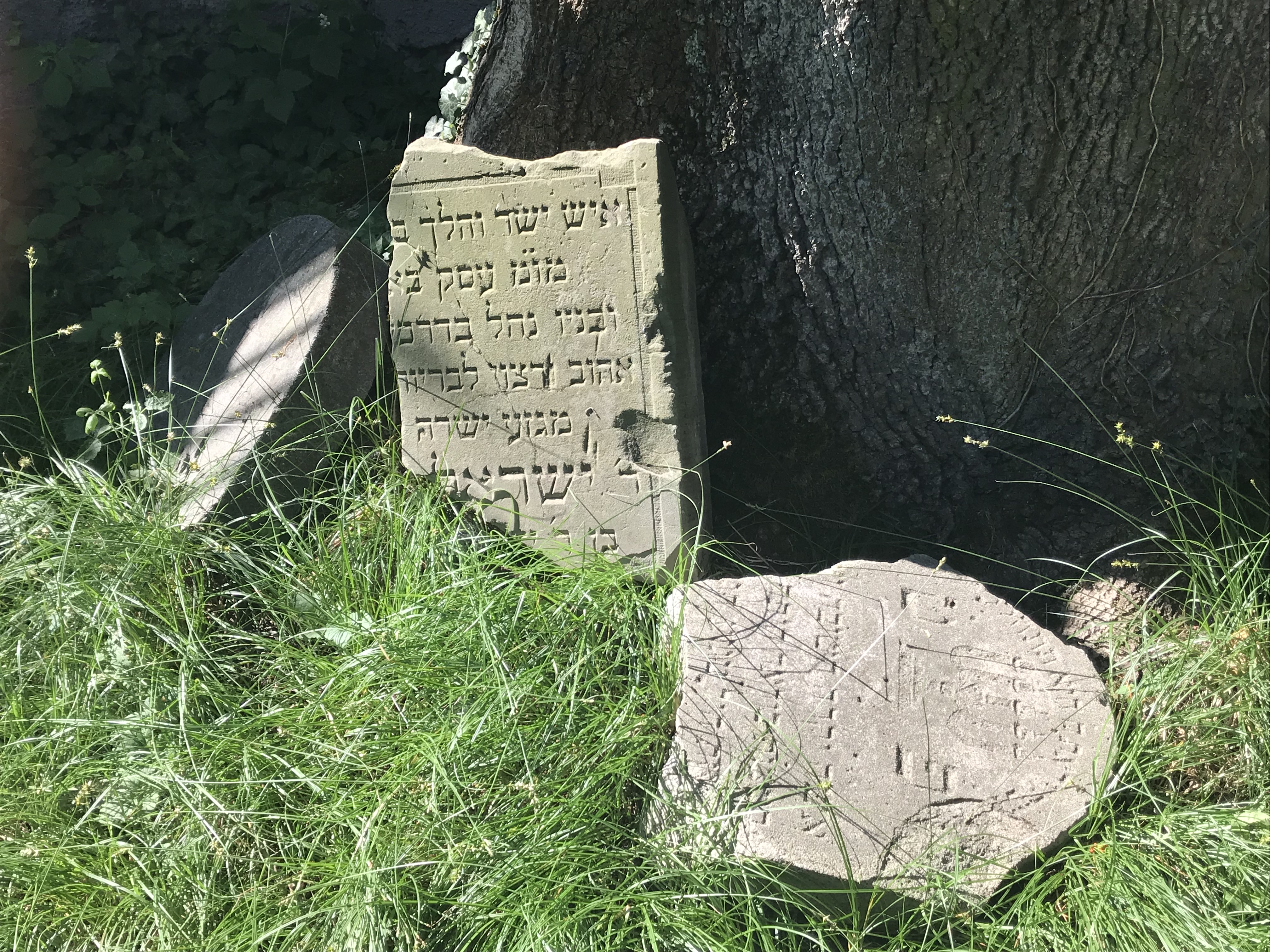
At times, disintegrating gravesites resembled unburied mummified remains rather than places of eternal rest.
I returned to the northern end of the cemetery and wandered through hidden corners, uncertain of what I sought. As I headed back to the interior gate, I met a family from Argentina—a middle-aged son and his two parents. Like at breakfast the previous morning in Kraków, I’m not sure how the conversation started and it included a mix of Spanish and English. The father was a survivor of the Łódź ghetto. I told them about my project on Shoah, a film they recognized.
“And are you Jewish?” the son asked matter-of-factly.
While I had occasionally pondered my stake in this work, I had yet to be called upon directly for a definitive answer—either by myself or by others. Over the years I’ve come to regard humanistic inquiry as a way of connecting with others, both real and figurative, through the pursuit of truth. If I want to discover something new about myself, I have yoga and meditation for that.
“No,” I replied with a hint of surprise.
“That’s good,” he said with satisfaction.
His words leaned on me like buttresses for a much-needed bridge.
Works Cited
Hilberg, Raul. The Destruction of the European Jews, 3rd ed. New Haven: Yale University Press, 2003.
Podgarbi, Bronislaw. Cmentarz Zydowski w Lodzi / The Jewish Cemetery in Łódź. Łódź: Wydawnictwo Artus, 1990.
Wojalski, Miroslaw Zbigniew. The Jewish Cemetery in Łódź. Łódź: Widzewska Oficyna Wydawnicza, 2001.


Posted in Uncategorized | Leave a comment

#8 – AUSCHWITZ-BIRKENAU (PART III)

IMG_4194Broken tombstones in the Jewish Cemetery of Oswieçim, Poland
Note: In this post, I am returning to June 17, 2018 to complete my account of the day I spent in Oswieçim, Poland.
*                              *                              *
An overcast, mid-afternoon sky loomed as I sat down in a small cafeteria just outside Birkenau. Together with the adjacent bookshop and coin-operated restrooms, it served as an informal tourist depot next to the parking lot. Nearby, charter buses angled for space, their motors emitting a half-conscious rumble, as pockets of visitors ambled toward the camp gate in a polyglot swirl.
I plugged my phone into a wall socket, connected to the Wifi, and zoomed around a map of Oswieçim with my fingertips. The nagging quest for internet connectivity and battery power has become an unofficial mediator of tourist meanderings though its daily gravitational pull is all too easily forgotten in hindsight. Europe’s 3G network a mere teasing aroma, I usually had to memorize directions, street names, and landmarks before casting adrift on the streets of Poland.
As I replenished myself with a requisite dose of afternoon sugar, I calculated my next move. I had been up since 4:30 a.m. and surveying the Auschwitz and Birkenau camps on foot for the past five hours. Before returning to Kraków on an early evening train, the final act of the day was to visit Oswieçim’s Jewish cemetery.
I wouldn’t have known about the cemetery without Shoah. It makes a brief but powerful appearance in the film during an early sequence about the physical erasure of Jewish victims. At first, we see Simon Srebnik, a survivor of Chelmno, recounting the disposal of victims’ ashes in a nearby river as his fingers sift through clumps of dirt at the site of the death camp. He then sweeps his arm in imitation of the remains being carried off in the river current. Lanzmann quickly cuts to one of the film’s rare pastoral images: the camera slowly glides across the surface of the river mentioned by Srebnik during a fiery, pastel twilight. The viewer drifts downstream like the dispersed ashes of the victims while the smoldering heavens above offer a posthumous benediction.
The opaque depths of an untraceable mass grave are delineated, paradoxically, in a scene of evanescent natural beauty. This haunting juxtaposition intensifies as we hear the strains of Srebnik singing a folk song that he had been forced to perform for the Nazis at Chelmno; it is the same song that opens the film with Srebnik reenacting his duty as child entertainer on the Ner River. His return to Chelmno reanimates the past and conjures the presence of those murdered and deprived of proper burial by detailing the place of their effacement. The landscape belongs to them; indeed, it cannot stop speaking of them.
Srebnik’s arduous journey into the liminal, twilit space between past and present, however, cannot necessarily be followed by others like him. As his singing fades over the river, Paula Biren intones, “What will I see?” in response to Lanzmann’s question about returning to Poland. “How can I face it?” she asks as her visage abruptly fills the screen in an extreme close-up. Biren, a survivor of the Łódź ghetto and Auschwitz-Birkenau, left her native Poland to settle in the United States after the war. Most recently, she starred in Lanzmann’s final film, The Four Sisters as the subject of Baluty, an installment about her experiences in the Łódź ghetto.  The appearance she makes in Shoah is brief but memorable. She states that her grandparents died in the ghetto and were buried in Łódź’s Jewish cemetery, which had allegedly been slated for demolition  at the time of the interview—“Now how can I return to that?” The camera zooms deeper in Biren’s face, who returns the gaze. Lanzmann edits to the present-day cemetery. A crow caws and the camera slowly zooms out and pans right, revealing a vacant landscape of scattered tombstones and dried-out, overgrown weeds coated in snow. The gray chill of the desecrated cemetery contrasts the blazing river idyll of the previous scene. Yet both reveal Jewish lives violently erased, their souls deprived of proper burial and a memorial trace. The audience bears witness to what Biren cannot bear to see.
MV5BNGU0YzI1OTUtYmYzMy00ODJlLTlkZWQtM2ZmYzUwMjQ2Yjc2XkEyXkFqcGdeQXVyNDkzNTM2ODg@._V1_UY317_CR111,0,214,317_AL_Pana Pietyra, a resident of Oswieçim, Poland
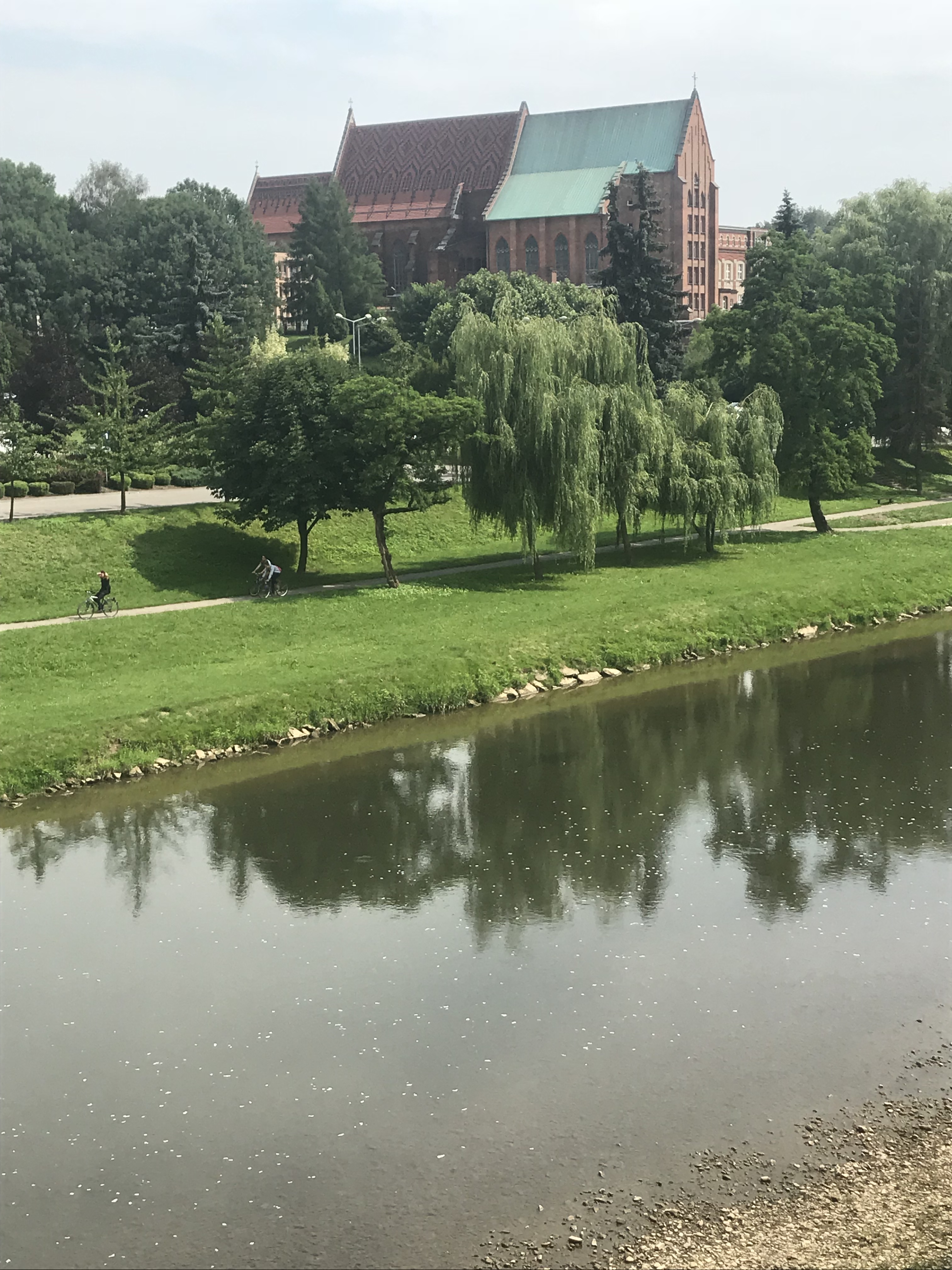
Continuing the exposé, Lanzmann’s camera rumbles over a bridge into the town of Oswieçim (Auschwitz) under a smoky, overcast sky and the clang of a church bell. As it surveys the buildings and storefronts, Pana Pietyra, a local Polish woman, recalls that Jews constituted 80% of Oswieçim’s population before the war. The town’s synagogue was destroyed during the occupation while damage to the Jewish cemetery has left it closed indefinitely. As she affirms the existence of the cemetery to Lanzmann, the camera cuts to a slow pan of tombstones toppled against one another, almost in a state of suspended animation. “They don’t bury there now,” Pietyra remarks in a voiceover.
This brief sequence—from weightless hovering above the Ner River to stumbling through the Jewish cemeteries in Łódź and Oswieçim—has always made an impression on me. The revelation of a river as a mass grave and Jewish cemeteries still lying in ruin decades after the war is deeply unsettling. Lanzmann reminds us that the annihilation of a people involved the physical and spiritual desecration of the victims and their ancestors. And such desecration has its own particular details and afterlife. The very existence of Oswieçim, its former Jewish community, and its Jewish cemetery—all within a few kilometers of Auschwitz-Birkenau—surprised me greatly during my initial viewings of Shoah. Biren’s suggestion of Polish indifference echoed by Lanzmann’s scenes of neglect also haunted me. The query, “What does it look like now?” would eventually lead me to retrace Lanzmann’s footsteps around Poland. Since tourism had already carved a well-worn path to Auschwitz, tracking down Oswieçim’s Jewish cemetery might provide a stronger litmus test of historical memory.
Provided I could find it, of course.
IMG_4167Oswieçim, Poland
I planned my moves carefully in the tourist cafeteria near Birkenau. I knew that Google Maps could still offer some guidance in the offline mode if I left it open on my phone and zoomed in on my current position. Street names might not be visible but major landmarks and the road geometry would be. Despite Oswieçim’s sizable and potentially confusing sprawl, I calculated the cemetery to be on the opposite side of town from the camps, beyond what appeared to be a downtown area. I embarked on foot as rays of sunlight pierced metallic gray clouds, a gradual clearing or an abrupt downpour equal prospects on a June afternoon.
I pondered the pebbled indentations of crumbling sidewalks and graffiti scrawled on blackened apartment buildings near the train station. The sky diluted to a hazy blue and the summer heat intensified. I passed gas stations, supermarkets, traffic circles. A riverside park and towpath materialized as my thoughts wandered to shade. The road narrowed to cross the Sola River and I quickly recognized the bridge and the buildings on the opposite bank as the location Lanzmann had used to introduce Oswieçim in his film. During the war, the retreating Polish army destroyed it just before the arrival of the Nazis on September 3, 1939. Today, the church steeple still proclaims arrival in the old town while one of its soot-covered neighbors has been cleaned and converted into a Hampton Inn. I discovered Oswieçim’s latest iteration to be a tidy Galician town with a hint of global domestication courtesy of the Hilton family.
IMG_4169Oswieçim, Poland
The road turned up hill as it led to the town center. My Lonely Planet guidebook indicated that a Jewish museum had been constructed on a nearby side street and I resolved to seek it out on my way back to the train station. For the moment, my mind remained fixed on the cemetery.
Strolling past bakeries, shops, and restaurants as the locals leisurely tended to their errands, the scars of genocide seemed to exist in another universe. Eight decades ago, however, the Nazi occupation and daily operation of the camps would have mitigated such a sharp contrast between each side of the town. Still, the continuity of everyday life in such close proximity to the epicenter of destruction revealed a hidden afterlife of genocide. The prosaic scenes I witnessed in Oswieçim were not an averted gaze but rather a partial reprieve from being Auschwitz.
IMG_4210Oswieçim, Poland
The downtown faded as I continued along the road, which had expanded into a larger thoroughfare. Then, at an approaching street corner, I saw a large concrete wall lined with an iron fence on top. The wall wrapped around the corner; tall, leafy trees stood behind the enclosure. I had found Oswieçim’s Jewish cemetery. The entrance consisted of an archway filled by an iron gate with two doorways.
And both were locked.
My stomach tightened as I twisted the knobs fruitlessly.
I had come so far…
A sign next to the gate recounted the history of the cemetery in Polish and English. The site had been established in the late nineteenth century although Jewish burials in the area date to the late sixteenth century. The Yiddish name for Oswieçim is Oshpitzin. During the early modern period, Jews defied antisemitic settlement laws to establish a strong presence in the town, which eventually became known as a Jewish refuge in Galicia. In November 1939, the Nazis burned the town’s Great Synagogue to the ground. They shuttered the cemetery two years later as they began deporting Oshpitzin’s Jews to other ghettos before ultimately returning them to the camps on the other side of town. Out of a population of eight thousand, only a few hundred survived, many of whom migrated elsewhere after the war. In the 1980s, the Scharf family of New York funded the cemetery’s repair, which included the restoration of over eight-hundred tombstones, the reconstruction of the surrounding wall, and the installation of a protective iron gate. In addition to the presence of the Scharf family ohel in the cemetery, I wondered if the scene in Shoah might have provided some of the impetus for the restoration.
IMG_4171Outside the Jewish Cemetery, Oswieçim, Poland
The sign also indicated that a cemetery key could be retrieved at the Auschwitz Jewish Center. An address had been provided but I couldn’t look it up on my phone because I didn’t have an internet connection. I felt like a transatlantic sailor bobbing in a windless harbor, swatting at the dock with an oar.
To the chagrin of my sore feet, the best bet seemed to be retracing my steps for a kilometer and finding the Jewish museum. They would know. My guidebook and sketch of the town on Google Maps would help me find them.
Located on a side-street plaza near the bridge, Oswieçim’s Jewish museum opened in September 2000 under the direction of the Museum of Jewish Heritage in New York. The museum’s exhibits document the history of Oshpitzin and its Jewish community using artifacts and primary source materials. The site also includes a small, restored synagogue that serves as a place of prayer though it has no rabbi or congregation.
I played a brief game of charades with the Polish guard at the front desk before he fetched an English-speaking staff member from the museum café. As it turned out, I had come to the right place—this was the Auschwitz Jewish Center. After looking me over, the guard handed me a copper key on a chipped, plastic key chain. Energized and relieved, I shuffled back to the cemetery gate, periodically holding the key in my pocket.

Inside the Jewish Cemetery, Oswieçim, Poland
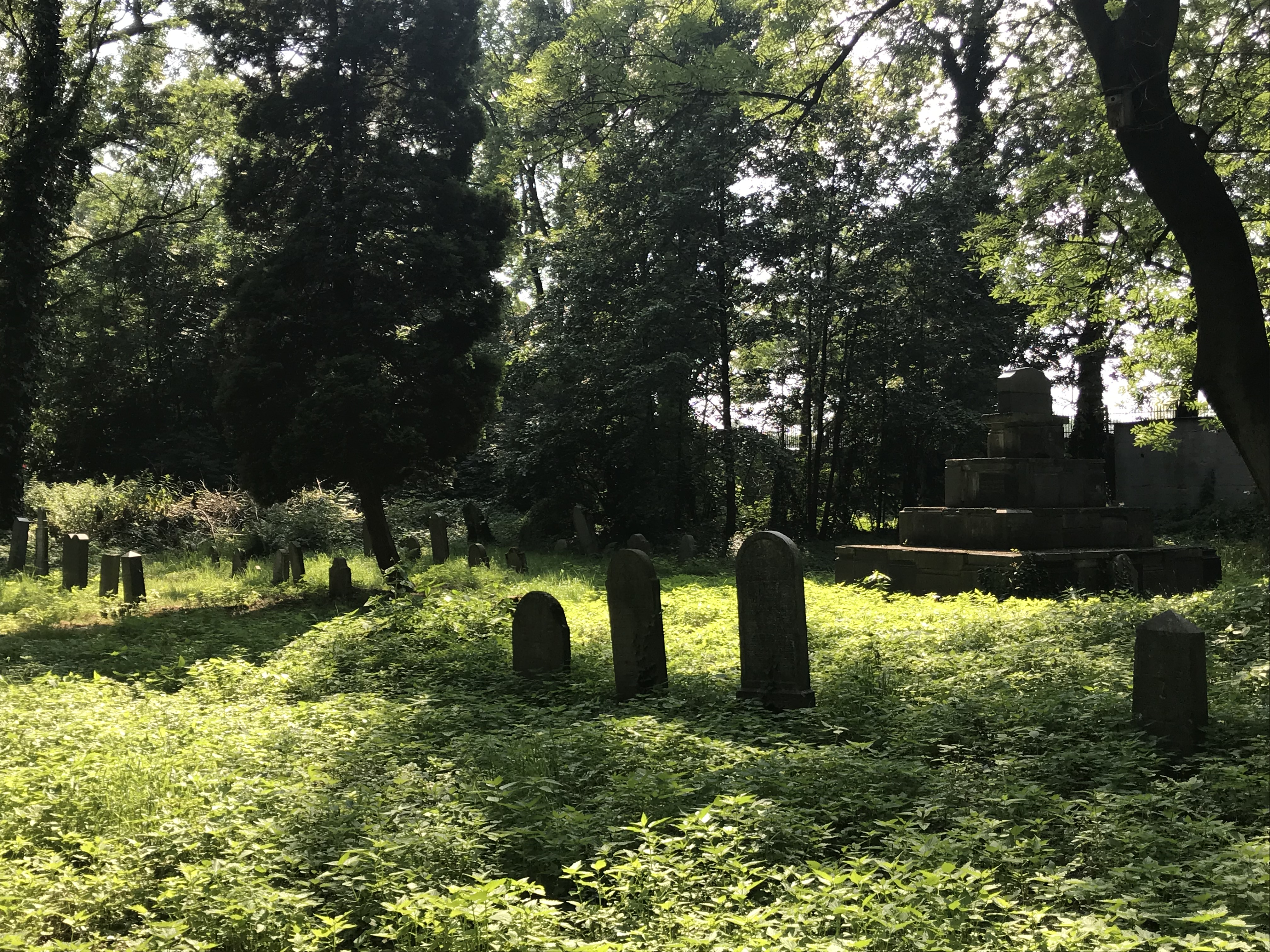
The door clanked open.
Silence enveloped me as I locked myself in. Just beyond the entrance, I sat on a concrete bench to gather myself. I looked back at the outside world ceaselessly unfolding on the other side of the gate. Seen from within the cemetery walls, the present appeared strangely timeless.
Yet what lay within seemed perpetually caught in time.
IMG_4185The Jewish Cemetery, Oswieçim, Poland
To be sure, major improvements had been made since Lanzmann filmed here. Many tombstones have been identified and restored to their proper place. Commemorative plaques have been installed along the wall near the entrance. The cemetery is now physically protected, historically contextualized, and open to the public through limited, secure access. The history of Oshpitzin even has an app offering virtual tours of the museum and the town. So many meaningful steps have been taken to acknowledge and heal the past even as Oswieçim and Oshpitzin are inevitably overshadowed by Auschwitz. Traces of the multiple histories and identities tied to this singular place are conserved and publicly available, provided one is inclined to seek them out.
IMG_4205The Jewish Cemetery, Oswieçim, Poland
The afterlife of genocide, however, also contains hidden purgatories. The Shoah was not only a concealed act of erasure against European Jews ensnared within the bounds of the Third Reich, it was also an attempt to erase that community’s past and its ability to know itself. The Nazis tore up the ancestral roots of Oshpitzin while rounding up its descendants for annihilation. The cemetery has since been restored but it is bereft of mourners. Auschwitz took those who could remember the forebears of Oshpitzin, thus condemning the dead to a second death. Broken tombstones remain, never to be fixed. Inscriptions fade. Grass overgrows. Painted numbers restore order while marking the wound and creating an unintentional sense of anonymity.
It is quiet inside the Oshpitzin cemetery. But there isn’t much rest.

The Jewish Cemetery, Oswieçim, Poland
Posted in Uncategorized | Leave a comment

#7 – FALL INTERLUDE: NEW FILMS & COMMUNITIES

archive            Working with the Archives of the Holocaust at Cal State Fullerton.
Hello again…Happy New Year…Where did the time go?
The short answer is teaching…lots and lots of teaching.
Although the past few months have been a detour from blogging, they were still very productive for the Shoah project. I will resume chronicling my journey through Poland very soon. In the meantime, here’s the Fall 2018 “newsletter.”
1) I will be teaching an upper-division course on the history of the Holocaust at Cal State Fullerton during the Spring 2019 semester.
This is an incredibly exciting opportunity that arrived at just the right time to consolidate a long period of exploration into applied expertise.
It also feels like tapping into a legacy. Allow me to explain.
About a year and a half ago, I checked out a copy of Raul Hilberg’s The Destruction of the European Jews at Cal State Fullerton. Originally published in the early 1960s, Hilberg’s monumental, three-volume tome was foundational for the development of Holocaust history as an academic field and as a subject of public interest. It also served as one of Lanzmann’s main reference points during his research for Shoah; indeed, Hilberg himself would eventually appear in the film as its sole academic “talking head.”
As I leafed through the pages of his book in my office, I discovered that a swastika and an anti-Semitic statement had been scrawled onto the title page. It also appeared that at some earlier point, a librarian had attempted to cover it up with White-Out, a solution that only made the defacement seem all the more intractable as the red, fine-point ink still bled through the whitewash with biting clarity. Even more sickening was the fact that this particular copy had belonged to the late Professor Morton C. Fierman. The book was a gift from one of his colleagues, whose handwritten dedication on the title page was now overshadowed by hate.
A rabbi and a scholar, Professor Fierman taught at Cal State Fullerton from the mid-1960s through the mid-1980s. During his tenure, he helped to establish the Department of Religious Studies and an auxiliary Institute of Judaism. In the early 1970s, he also taught the first course on the Holocaust on the West Coast and created the “Archives of the Holocaust” at the University Library as a repository for books, teaching materials, survivor testimonies, and other artifacts donated by local community members.
archives 2Audio cassettes from the Archives of the Holocaust at Cal State Fullerton.
After discovering the defaced copy of The Destruction of the European Jews, I began visiting University Archives & Special Collections to survey the Fierman collection and to learn more about the man himself. Digging my way through books, folders, and audio cassettes, I found a modest but eclectic set of materials illustrating a pioneering spirit at work. Notably, Fierman made a point of reaching out to survivors in the L.A./O.C. region to have them visit his classes and leave recorded testimony behind in the archive. A hefty copy of Fierman’s syllabus for his course on the Holocaust is also included in the collection. Beyond its extensive bibliography, which provides a snapshot of the field in the early 1970s, the document reveals a fundamental humanistic concern with the art and writing of survivors as primary sources for understanding the Holocaust. Their voices were paramount to him.
Studying Professor Fierman’s efforts to establish Holocaust studies at Cal State Fullerton set the stage for the Shoah project to dawn on me one morning during my daily meditation. Now that I am teaching a course on Holocaust history almost a year later, I feel like a torch has been passed and I have been called to build on his legacy. I hope to do so in a creative, meaningful way and will post updates about the class.
2) I attended the L.A. premieres of Lanzmann’s final films and a monumental documentary by Wang Bing that bears the influence of Shoah.
One of the main purposes of this blog has been to collect and share my thoughts on the Shoah project as it unfolds as a daunting but dharmic work-in-progress. The undertaking has become my own personal odyssey as its directives lead me to distant places and deeper within my own community. In September and November, I made trips to L.A. for the posthumous premieres of Lanzmann’s final works, Napalm (2017) and The Four Sisters (2017), and Wang Bing’s eight-hour documentary, Dead Souls (2018). These events not only provided essential viewing experiences but also fresh opportunities to connect with L.A.’s rich cultural landscape through the lens of Lanzmann.
akermanA venue for L.A.’s Chantal Akerman retrospective in Spring 2016.
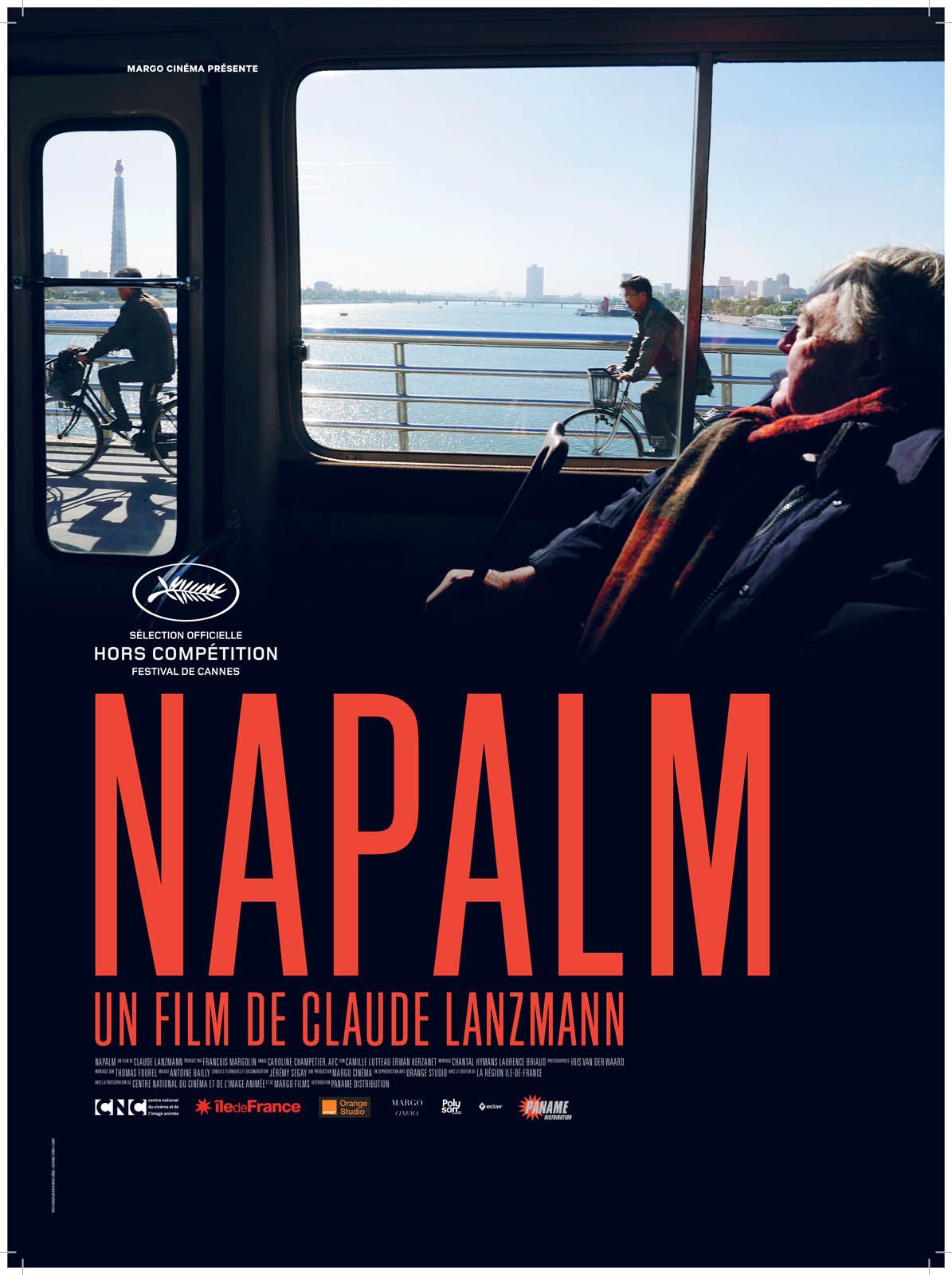
This was not the first time I have navigated the city by following the work of a late filmmaker. Following the untimely passing of Chantal Akerman, an experimental director best known for her durational approach to cinema and exploration of women’s lives, I made many pilgrimages to L.A. in the spring of 2016 for the city-wide “Contre l’oubli/Against Oblivion” retrospective of her work. While a similar tribute to Akerman in New York centered on the Brooklyn Academy of Music, the Los Angeles retrospective coordinated a wide range of cultural institutions across the city, from cutting-edge art galleries in Chinatown to long-running movie houses on Hollywood Boulevard. Their synthesis was a reflection of the hybridity of Akerman’s work itself, which sits at the crossroads of the art world and the film world. It also made attending the screenings and talks both adventurous and anthropological. Each event drew a different kind of crowd and added a new landmark to my cultural map of the city. As someone from the suburbs of New York who found L.A. baffling at first, I gained a stronger appreciation of the city’s physical and cultural decentralization by navigating it through Akerman. Rather than the heightened self-awareness and authoritative urge that often animates New York, I found that L.A., by contrast, exudes self-assured engagement. While the presentation of Lanzmann’s final works occurred on a much smaller scale than the Akerman retrospective, it continued to reveal new layers of the L.A. community.

napalm

2a) Napalm (2017), dir. Claude Lanzmann, 100 mins.
September 24th marked the L.A. premiere of Lanzmann’s penultimate documentary, Napalm, at the Downtown Independent. Acropolis Cinema and Los Angeles Filmforum cosponsored the event; both are grassroots cultural organizations dedicated to presenting experimental works far outside the mainstream that are often tied to the art world.
 Napalm is a film that had been on Lanzmann’s bucket list for years. Filmed in North Korea in 2015, often by surreptitious means, the story centers on a long-ago, fleeting romance between Lanzmann and Kim Kum-sun, a hospital nurse in Pyongyang, whom he met in 1958 while serving on a French delegation to the recently-formed Democratic People’s Republic of Korea (DPRK). Haunted by the experience, Lanzmann gave a detailed account of the affair in his memoir, The Patagonian Hare, comparing it to David Lean’s classic romance, Brief Encounter, which he had seen in Paris with Sartre in the years prior to the trip. Nearly half a century later, he resolved to make a documentary about it after revisiting the country in 2004.
Napalm initially unfolds like a travelogue from a dystopian world. Tracking shots cycle past drab apartment buildings and empty streets in Pyongyang. Low-angle shots mimic the awe-inspiring reverence solicited by gigantic bronze statues of Kim Il-sung and Kim Jong-il, whose faces beam eternally as mandatory flower bouquets are left at their feet. State historical displays are an assemblage of kitsch, clichés, and propaganda. The first half of Napalm depicts the forced smile of a totalitarian society where political repression and physical starvation are expected to be swallowed silently.
Even as the DPRK aims to arrest time itself, Lanzmann still goes there in search of lost time. He scans the cityscape and retraces the footsteps of an affair that developed over the course of one epic day with a woman he could only communicate with through gestures and picture-drawing. The gaze of the state and the disapproving looks of surrounding society deprived them of intimacy and romantic opportunity. The frustration of their desires provoked defiant maneuvering and enormous risk-taking by Lanzmann. His motivations, both past and present, are open to interpretation. The story of the affair, however, provides an unusual and deeply personal account of the Cold War, a seemingly bygone era that, not unlike the DPRK’s repressive ideology and Lanzmann’s romantic obsession, still holds the world in suspension.

dead souls

2b) Dead Souls, dir. Wang Bing, 495 mins.
 Moments before Napalm lit up the screen, I received my next assignment.
In his prefatory comments to the film, one of the organizers of the Lanzmann event announced an upcoming screening of Wang Bing’s Dead Souls at UCLA. Although I had never heard of the director or the film, the mere mention that it was an eight-hour documentary based on oral testimony made it required viewing since Shoah has few comparable peers. In fact, the connection between Lanzmann and Dead Souls runs deeper than form alone.
Following the dramatic events in North Korea, Lanzmann and the French delegation continued on to China, visiting Shenyang, Beijing, and Shanghai in the midst of “Anti-Rightist” purges spearheaded by Mao and the Chinese Communist Party (CPC). In the years prior to Lanzmann’s arrival, a brief period of liberalization known as the Hundred Flowers Campaign encouraged intellectuals to criticize the CPC. The harvest of this campaign would eventually become the basis for deporting Party critics (generalized as “Rightists” regardless of political affiliation) to labor camps near the Gobi Desert for “reeducation,” where thousands perished from starvation. Lanzmann gained a distant, partial awareness of these events during his visit. In his memoir, he recalls the ubiquity of dàzìbàos (political posters) that emphasized Party loyalty over expertise and students excoriating their professors:
I remember sitting in the office of the head of the department of Romance Languages at the University of Beijing, a private office plastered with dàzìbàos and posters criticizing him by students he could not prevent coming in even while I was sitting there, to jeer at him with a violence that terrified me…When I asked the head of the department, in French, what they were criticizing him for, he burst out laughing, baring his teeth like the Northern Chinese he was, answering in a thin, reedy voice, ‘Oh, pride! Pride!’ A year later, this pride saw him dispatched to a remote, enforced retirement where he was to spend ten years, something that utterly broke his pride, his expertise and him.
Wang Bing’s Dead Souls directly takes up this repressed history from the perspective of the victims. The film is a marathon of testimony from survivors of the Jiabiangou and Mingshui labor camps in Gansu Province and their family members. Typically filmed in their homes and speaking directly to the camera, they relate wrenching accounts of social abandonment. Labor and education scarcely seem to have occurred at Jiabiangou and Mingshui; rather, their names signify abject battles against starvation.
Like Shoah, Wang’s film eschews archival footage in favor of “history from below” recalled in real time. The presentation of such testimony, however, differs considerably in each film. Lanzmann’s theme is the genocidal process that formed the basic reality of the Holocaust. Consequently, he edits the testimonies to build a larger framework, often with great subtlety. The meandering camerawork and use of eyewitness voiceover nudges the viewer to consider the relationship between place and memory as well as past and present. The brilliant structuring of Shoah renders each moment pregnant with meaning, absorbing the viewer into a suspended present that awaits further revelations from the past.
By contrast, Wang’s aim is to let the victims tell their stories on their own time. Wang’s stylistic interventions are generally minimal; each testimony runs thirty to forty minutes and one usually flows into the next without interlude. Wang’s rigid formalism underscores the individuality of each speaker but it also demands extraordinary patience from the viewer. Screened in three parts with two intermissions, Dead Souls is a triathlon of cinematic witnessing. Its rare moments of “reprieve” nod in the direction of Shoah. Wang returns to the sites of the camps, which the CPC has long-since dismantled, covered over, left unmarked, and resettled with farmers. The hardened faces of the local peasants recall the Polish bystanders of Chelmno and Treblinka in Lanzmann’s film. In its unforgettable final sequence, a shaky handheld camera frantically scans the parched, windblown grounds of a camp site to reveal unburied human remains. The crimes of the CPC are at once so obvious that they can be exposed like a schoolboy excitedly documenting backyard fossils with a camera phone. Yet they are so difficult to reveal under the heavy weight of silence imposed by that party and its continued rule. The haunting voices of Dead Souls begin to unbury the past and dissolve such oblivion.
wang bingDirector Wang Bing (center) at the Billy Wilder Theater with Peter Sellars (left) and a UCLA student translator (right).
Wang Bing was on hand for the November 11th screening of Dead Souls at the Billy Wilder Theater at UCLA’s Hammer Museum. Peter Sellars, an acclaimed theater director and professor at UCLA, interviewed Wang at the end of the evening with simultaneous translation between English and Mandarin provided by a UCLA student. In fielding questions from the audience, Wang briefly mentioned his contact with Lanzmann, who appeared to be a personal mentor. Most questions came from Mandarin-speakers deeply moved by the repressed history on screen. Indeed, at this particular historical juncture, public memory of the “Anti-Rightist Campaign” only seems possible in diasporic communities—it’s both a possibility and a challenge for reckoning with this difficult history.

four sisters

2c) The Four Sisters (2017), dir. Claude Lanzmann [273 mins.]
At the screening of Wang Bing’s Dead Souls in West L.A., I witnessed hidden voices speak on camera and observed a mostly academic audience become an impromptu community as it grappled with the testimony and the director. One week later, a preview of Lanzmann’s final documentary at the Los Angeles Museum of the Holocaust became a spontaneous site of collective memory as survivors in the audience shared stories that bore a startling resemblance to those depicted in the film.
The Four Sisters is an omnibus consisting of four individual films: The Hippocratic Oath, The Merry Flea, Noah’s Ark, and Bałuty. Lanzmann culled each of them from his vast archive of unused footage for Shoah. If one counts The Four Sisters as four separate movies, it increases the number of Shoah “satellite films” to eight, their collective running time now significantly exceeding the original magnum opus. When all of them are combined, Lanzmann’s Holocaust documentaries are a colossal twenty-hour endeavor.
The marvel of the director’s prodigious work aside, The Four Sisters is an essential installment in the Shoah series. The testimony of women is seemingly incidental in the original film as Lanzmann trained his focus on the Sonderkommando and those closest to the manufacture of death. The relative absence of women has now been supplemented with the testimony of four exceptional figures who each receive their own film. In its approach to correcting Shoah’s gender imbalance, The Four Sisters is quite similar to Dead Souls: let the survivors speak on their own terms with minimal editing and directorial stylizing. While Wang’s physical presence in his film is largely implicit and his subjects speak without prompting, Lanzmann appears periodically as an interviewer, offering occasional reactions and follow-up questions. The audience is positioned as a pensive listener like the director. The results are deeply absorbing, the testimony of each woman extraordinary and devastating.
The first film in the cycle, The Hippocratic Oath, received a special advanced screening at the Los Angeles Museum of the Holocaust on November 18th. It chronicles the story of Ruth Elias, a Czech Jew from Ostrava, who made a brief appearance in Shoah to discuss her deportation from the Theresienstadt “model ghetto” to Auschwitz-Birkenau. In that film, she spoke to the experience of Theresienstadt Jews at Auschwitz. In The Hippocratic Oath, she speaks comprehensively of her own experience of the Holocaust, the focal point being her first pregnancy coming to term at Auschwitz. Many of the attendees at the museum screening were survivors and the children of survivors. Their reception of the film transcended conventional spectatorship. When Elias sang Zionist songs with her accordion, some audience members joined in. When she made a climactic, patriotic statement about Israel at the end of the film, many people applauded cathartically. Most strikingly, one man in attendance was the son of a woman who had also given birth at Auschwitz-Birkenau around the same time as Elias. And one survivor in attendance had known this man’s mother and witnessed her surreptitious delivery in one of the barracks. No line separated the memories on screen and those in the audience—both unspooled and rippled out together.
The Four Sisters received a week-long theatrical release at several Laemmle movie theaters across L.A. around Thanksgiving. I saw the other three films (including a second viewing of The Hippocratic Oath) in Beverly Hills. The accordion theme that begins each installment sounded like an unintentional requiem for Lanzmann and watered my eyes. The viewing that followed was difficult and somber but always human. In The Merry Flea, I noticed the shrugging demeanor of Ada Lichtman, a Polish Jew from Krakow, as she described working as a seamstress at the Sobibor death camp. Gestural refrains signaled what could not be communicated with words, which was nearly everything. In Noah’s Ark, Hannah Marton, a Hungarian Jew from Cluj, wrestled with survivor’s guilt for being part of a convoy ransomed to Switzerland based on an agreement between Rudolf Kastner and Adolf Eichmann. Her husband, a lawyer, helped draw up the list of those who would be saved.
Bałuty, whose name refers to a neighborhood that became the site of the Łódź ghetto in Poland, consists of interviews with Paula Biren, a former resident of the city who survived the ghetto and Auschwitz-Birkenau before migrating to the U.S. During her time in the Łódź ghetto, Biren gained a privileged position by working for Chaim Rumkowski, the Jewish Elder appointed by the Nazis to administer the ghetto, and by briefly serving on the Jewish police force. She quit the latter as unbearable and deemed Rumkowski untrustworthy, actions which likely resulted in her deportation to Auschwitz-Birkenau instead of the “milder” Theresienstadt ghetto. Biren appears briefly and powerfully at the beginning of Shoah to express her lack of interest in a return visit to Łódź based on rumored plans to “do away” with the Jewish cemetery where her grandparents are buried. Lanzmann immediately cuts to a slow pan of the aforementioned cemetery, revealing it to be a neglected shamble of off-kilter headstones and dried-out weeds still decades after the Holocaust. The ensuing sequence also exposes the Jewish cemetery in the town of Auschwitz to be in a similar state of violent upheaval long after the fact. It made visiting each site imperative during my trip to Poland. I will discuss both of them with photos in my next blog entry.
Posted in Uncategorized | 1 Comment