

The voice spoke during a predawn meditation in Southern California.
Its statement brief, scarcely five words,
A calm, self-assured observation,
Arising matter-of-factly in a reflective stream,
Like a small wave lapping at the edge of my consciousness,
Then dissolving into silence.
…Two months later, I landed in Kraków.
* * * * *
Shoah (1985) is a nine-and-a-half hour documentary about the Holocaust directed by the French filmmaker Claude Lanzmann. Unlike most historical documentaries, it contains no archival footage or old photographs, no voiceover narrator or cast of scholars, no musical cues or staged catharsis, no unifying message or simple answers, and no sense of beginning or end to the events it describes. Instead, the film contains voices—many, many voices. But they are not the voices of survivors with a story to tell. Instead, they are eyewitnesses to the destruction—former Jewish prisoners, Polish bystanders, and surreptitiously filmed ex-Nazis—who can provide fleeting, indirect glimpses into the lives and deaths of the six million victims. Their testimonies are coupled with a meandering camera that roams insistently through empty fields, darkened forests, ruined buildings, and other spectral sites of the genocide, whose inevitable disappearance is briefly suspended in celluloid. The ultimate subjects of Shoah are always just out of reach—death, the voiceless dead, the impending ravages of time. The film is a prolonged, refracted gaze into the depthless void of the Holocaust. It doesn’t instruct us to “never forget”—it challenges us to really know in the first place.
Shoah is formidable viewing to say the least. Its sheer length is already a challenge to a complete viewing. Its deliberate upheaval of film conventions and audience expectations imposes especially rigorous demands on first-time viewers. For some, it might seem formless, endless, even boring, and lacking a clear message. Based on my own experience, I would say you don’t watch Shoah so much as continually grow into it. After becoming accustomed to Lanzmann’s style, one can begin peeling back the film’s inexhaustibly dense layers of meaning. For the trained eye and curious historical mind, it is spellbinding viewing. Lanzmann’s sheer audacity as a filmmaker aside, the interviews are fascinating not only for what they reveal but also for what is left unsaid. We are frequently left craving more detail from a film that is already close to ten hours long. The film also provides a “deep-dive introduction” to the history of the Holocaust, from theorizing the origins of anti-Semitism to examining the quotidian details of the Final Solution and Jewish resistance in the Warsaw Ghetto.
As it approaches its thirty-fifth anniversary, Shoah deserves to be a household name in everyday conversations about the Holocaust. To that end, I am writing an annotated guide to the film that not only unpacks it wide-ranging themes and historical context but also frames it as an essential primer on Holocaust history. My aim is to spark wider interest in Shoah that is supported by historical and interpretive “maps” that increase its accessibility while blazing “trails” from the film deeper into Holocaust history.
So how did I first learn about Shoah? When did I first see it? And why did I become so obsessed with it?
During my sophomore year of college, I took an upper-division history class with a visiting Holocaust expert from Britain. At one point in the semester, the conversation turned to movies about the Holocaust. Lacking familiarity with the subject but hoping to have my nascent sentiments validated, I asked the professor what he thought about Life is Beautiful (1998). A pregnant pause. Then an off-handed quip:

“Is that the one with the Italian clown?”
My classmates tittered. I scrambled with a follow-up question:
“Okay, so then what should I see?”
His gaze softened. “Shoah,” he replied.
Of course, these works by Roberto Benigni and Claude Lanzmann are entirely different genres of filmmaking such that they might be akin to comparing apples to oranges. Yet a hugely popular, entertaining historical fantasy like Benigni’s film has relatively greater power to shape the public’s perception and storytelling expectations about the Holocaust, which in turn makes an authentically historical, unsentimental, non-cathartic, and nonlinear film like Lanzmann’s even more difficult to digest on a wide scale. So many Hollywood films about the Holocaust are single-mindedly and self-consciously “life-affirming” that the event itself often becomes a mere vehicle for such messages. In other words, many movies “about” the Holocaust really aren’t—in fact, they strongly avoid it even as they “show” it. It’s a paradox. The question I posed to my professor wasn’t actually about the Holocaust or the film—it was about my desire to retain the titular mantra I had learned from Benigni: “Life is beautiful…Wouldn’t you agree?”
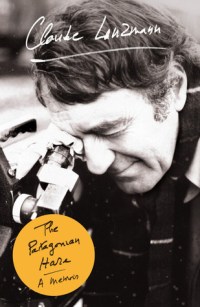
I watched Shoah to school myself. Initially, I attempted to watch it in installments at the university library but my practice was inconsistent. Years later, I read Lanzmann’s memoir, The Patagonian Hare. Learning about his fascinating life and the details behind the making of Shoah made the film seem less imposing. I ordered the Criterion edition from Amazon and holed myself up in my apartment one gray spring day. By mid-evening, I emerged tired and emotionally drained but full of desire to learn more about what I had seen. It had been so compelling and yet it felt like there was still so much more work to be done—Lanzmann was just scratching the surface.
I soon began teaching segments of Shoah in my university classes. Initially, I was curious to see how they would respond to it and what kinds of discussions would ensue. Over time, I began selecting specific sections of the film and building outwards into history from them. For example, the longest single segment in the film is a forty-minute interview with Jan Karski, a former courier for the Polish Underground who recounts his secret visits to the Warsaw ghetto, which local Jewish leaders coordinated in a desperate attempt to get the word out about systematic Nazi atrocities to the Polish government-in-exile and the Allies. Years later, Lanzmann released an hour-long companion film based on unused interview footage from Shoah in which Karski details his wartime Oval Office meeting with President Franklin Delano Roosevelt about the Holocaust. I combined these pieces with Karski’s memoir, Story of a Secret State not only to immerse students in the life of an exceptional figure from the World War II era but also to pose difficult questions about human agency, acts of witnessing, and the possibility of stopping crimes against humanity once they are already in progress.
Each segment of Shoah is a portal to a wider history. My project is to flesh out as many of them as possible while reflecting on the film’s broader themes and style. My aim is to initiate a more authentic engagement with the Holocaust for a wide, informed audience using the film.

My project begins with a trip to Poland. My objective is twofold. First, Shoah is a very place-specific film and I am curious to see what these places look like today: the death camps of Auschwitz-Birkenau, Treblinka, Sobibor, Belzec, and Chelmno; the remnants of the Warsaw ghetto; the ruins of Jewish cemeteries in Lodz and Oswiecim; the villages around Chelmno and Treblinka where Lanzmann pointedly interviewed Polish peasants about what they saw and what they thought about the Jews. What do those places look like now as sites of memory?
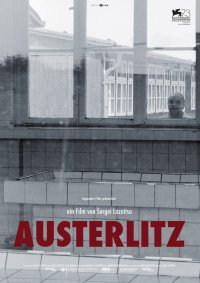
I am also interested in tourism and the Holocaust. Several years ago, I saw Sergei Loznitsa’s documentary Austerlitz (2016) through the L.A. Film Forum. The film mainly consists of long, black-and-white shots of summer tourist throngs visiting the Sachsenhausen concentration camp outside Berlin. Like Shoah, Loznitsa’s film eschews music, narration, and a clear message. Instead, it reveals an uneasy (and perhaps even darkly comic) combination of reverence and irreverence as the ruins of the past are encountered first-hand: in one segment, for example, a tour guide dramatically lectures in front of a crematorium oven and seconds later a tourist moves in and smiles for a picture. A sharp-eyed friend (and film graduate student) recalled another visitor in the film wearing a t-shirt bearing the inscription, “Cool Story, Bro.” I once suggested to my students that rather than visiting Auschwitz, many people might benefit more by staying home for a day and watching Shoah. I am traveling with that theory in mind.


You are undertaking important but painful work. I admire you.
LikeLike
“I combined these pieces with Karski’s memoir, Story of a Secret State not only to immerse students in the life of an exceptional figure from the World War II era but also to pose difficult questions about human agency, acts of witnessing, and the possibility of stopping crimes against humanity once they are already in progress.” Kurt- I am blown away by what you are writing. I am a simple person, with a simple education, which makes me feel funny about commenting here. What you have written here speaks volumes to me: ” Stopping the possibility of crimes against humanity once they are already in progress. ” This is the lesson.
LikeLike