
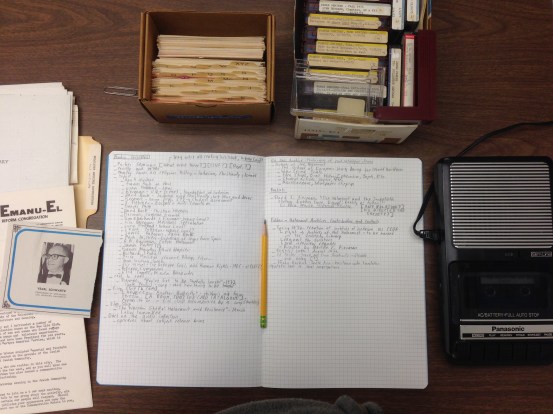
 Working with the Archives of the Holocaust at Cal State Fullerton.
Hello again…Happy New Year…Where did the time go?
The short answer is teaching…lots and lots of teaching.
Although the past few months have been a detour from blogging, they were still very productive for the Shoah project. I will resume chronicling my journey through Poland very soon. In the meantime, here’s the Fall 2018 “newsletter.”
1) I will be teaching an upper-division course on the history of the Holocaust at Cal State Fullerton during the Spring 2019 semester.
This is an incredibly exciting opportunity that arrived at just the right time to consolidate a long period of exploration into applied expertise.
It also feels like tapping into a legacy. Allow me to explain.
About a year and a half ago, I checked out a copy of Raul Hilberg’s The Destruction of the European Jews at Cal State Fullerton. Originally published in the early 1960s, Hilberg’s monumental, three-volume tome was foundational for the development of Holocaust history as an academic field and as a subject of public interest. It also served as one of Lanzmann’s main reference points during his research for Shoah; indeed, Hilberg himself would eventually appear in the film as its sole academic “talking head.”
As I leafed through the pages of his book in my office, I discovered that a swastika and an anti-Semitic statement had been scrawled onto the title page. It also appeared that at some earlier point, a librarian had attempted to cover it up with White-Out, a solution that only made the defacement seem all the more intractable as the red, fine-point ink still bled through the whitewash with biting clarity. Even more sickening was the fact that this particular copy had belonged to the late Professor Morton C. Fierman. The book was a gift from one of his colleagues, whose handwritten dedication on the title page was now overshadowed by hate.
A rabbi and a scholar, Professor Fierman taught at Cal State Fullerton from the mid-1960s through the mid-1980s. During his tenure, he helped to establish the Department of Religious Studies and an auxiliary Institute of Judaism. In the early 1970s, he also taught the first course on the Holocaust on the West Coast and created the “Archives of the Holocaust” at the University Library as a repository for books, teaching materials, survivor testimonies, and other artifacts donated by local community members.
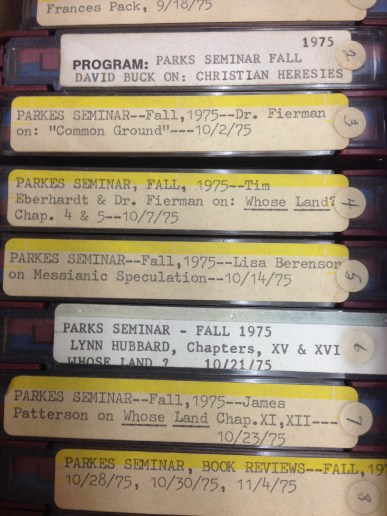 Audio cassettes from the Archives of the Holocaust at Cal State Fullerton.
After discovering the defaced copy of The Destruction of the European Jews, I began visiting University Archives & Special Collections to survey the Fierman collection and to learn more about the man himself. Digging my way through books, folders, and audio cassettes, I found a modest but eclectic set of materials illustrating a pioneering spirit at work. Notably, Fierman made a point of reaching out to survivors in the L.A./O.C. region to have them visit his classes and leave recorded testimony behind in the archive. A hefty copy of Fierman’s syllabus for his course on the Holocaust is also included in the collection. Beyond its extensive bibliography, which provides a snapshot of the field in the early 1970s, the document reveals a fundamental humanistic concern with the art and writing of survivors as primary sources for understanding the Holocaust. Their voices were paramount to him.
Studying Professor Fierman’s efforts to establish Holocaust studies at Cal State Fullerton set the stage for the Shoah project to dawn on me one morning during my daily meditation. Now that I am teaching a course on Holocaust history almost a year later, I feel like a torch has been passed and I have been called to build on his legacy. I hope to do so in a creative, meaningful way and will post updates about the class.
2) I attended the L.A. premieres of Lanzmann’s final films and a monumental documentary by Wang Bing that bears the influence of Shoah.
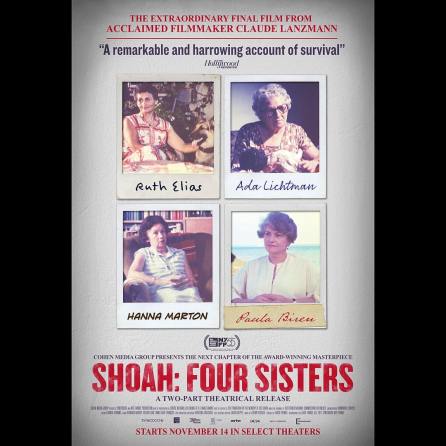
One of the main purposes of this blog has been to collect and share my thoughts on the Shoah project as it unfolds as a daunting but dharmic work-in-progress. The undertaking has become my own personal odyssey as its directives lead me to distant places and deeper within my own community. In September and November, I made trips to L.A. for the posthumous premieres of Lanzmann’s final works, Napalm (2017) and The Four Sisters (2017), and Wang Bing’s eight-hour documentary, Dead Souls (2018). These events not only provided essential viewing experiences but also fresh opportunities to connect with L.A.’s rich cultural landscape through the lens of Lanzmann.
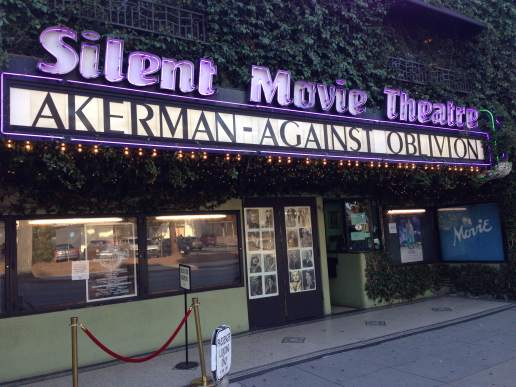 A venue for L.A.’s Chantal Akerman retrospective in Spring 2016.
This was not the first time I have navigated the city by following the work of a late filmmaker. Following the untimely passing of Chantal Akerman, an experimental director best known for her durational approach to cinema and exploration of women’s lives, I made many pilgrimages to L.A. in the spring of 2016 for the city-wide “Contre l’oubli/Against Oblivion” retrospective of her work. While a similar tribute to Akerman in New York centered on the Brooklyn Academy of Music, the Los Angeles retrospective coordinated a wide range of cultural institutions across the city, from cutting-edge art galleries in Chinatown to long-running movie houses on Hollywood Boulevard. Their synthesis was a reflection of the hybridity of Akerman’s work itself, which sits at the crossroads of the art world and the film world. It also made attending the screenings and talks both adventurous and anthropological. Each event drew a different kind of crowd and added a new landmark to my cultural map of the city. As someone from the suburbs of New York who found L.A. baffling at first, I gained a stronger appreciation of the city’s physical and cultural decentralization by navigating it through Akerman. Rather than the heightened self-awareness and authoritative urge that often animates New York, I found that L.A., by contrast, exudes self-assured engagement. While the presentation of Lanzmann’s final works occurred on a much smaller scale than the Akerman retrospective, it continued to reveal new layers of the L.A. community.
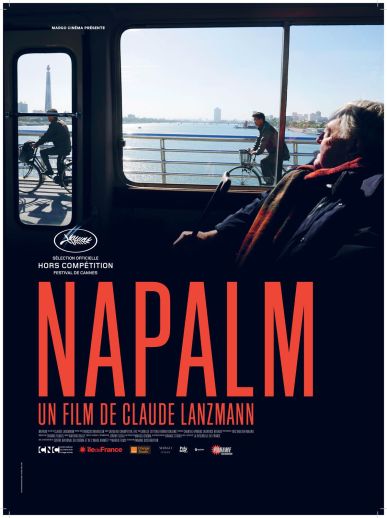
2a) Napalm (2017), dir. Claude Lanzmann, 100 mins.
September 24th marked the L.A. premiere of Lanzmann’s penultimate documentary, Napalm, at the Downtown Independent. Acropolis Cinema and Los Angeles Filmforum cosponsored the event; both are grassroots cultural organizations dedicated to presenting experimental works far outside the mainstream that are often tied to the art world.
Napalm is a film that had been on Lanzmann’s bucket list for years. Filmed in North Korea in 2015, often by surreptitious means, the story centers on a long-ago, fleeting romance between Lanzmann and Kim Kum-sun, a hospital nurse in Pyongyang, whom he met in 1958 while serving on a French delegation to the recently-formed Democratic People’s Republic of Korea (DPRK). Haunted by the experience, Lanzmann gave a detailed account of the affair in his memoir, The Patagonian Hare, comparing it to David Lean’s classic romance, Brief Encounter, which he had seen in Paris with Sartre in the years prior to the trip. Nearly half a century later, he resolved to make a documentary about it after revisiting the country in 2004.
Napalm initially unfolds like a travelogue from a dystopian world. Tracking shots cycle past drab apartment buildings and empty streets in Pyongyang. Low-angle shots mimic the awe-inspiring reverence solicited by gigantic bronze statues of Kim Il-sung and Kim Jong-il, whose faces beam eternally as mandatory flower bouquets are left at their feet. State historical displays are an assemblage of kitsch, clichés, and propaganda. The first half of Napalm depicts the forced smile of a totalitarian society where political repression and physical starvation are expected to be swallowed silently.
Even as the DPRK aims to arrest time itself, Lanzmann still goes there in search of lost time. He scans the cityscape and retraces the footsteps of an affair that developed over the course of one epic day with a woman he could only communicate with through gestures and picture-drawing. The gaze of the state and the disapproving looks of surrounding society deprived them of intimacy and romantic opportunity. The frustration of their desires provoked defiant maneuvering and enormous risk-taking by Lanzmann. His motivations, both past and present, are open to interpretation. The story of the affair, however, provides an unusual and deeply personal account of the Cold War, a seemingly bygone era that, not unlike the DPRK’s repressive ideology and Lanzmann’s romantic obsession, still holds the world in suspension.
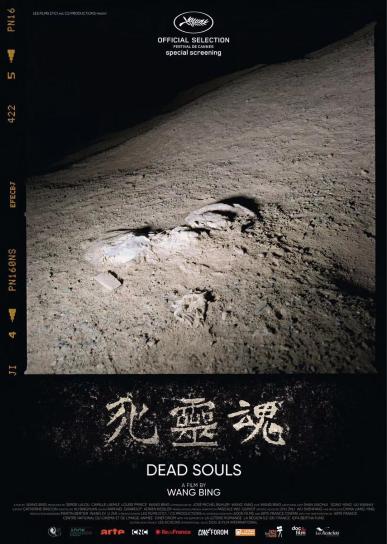
2b) Dead Souls, dir. Wang Bing, 495 mins.
Moments before Napalm lit up the screen, I received my next assignment.
In his prefatory comments to the film, one of the organizers of the Lanzmann event announced an upcoming screening of Wang Bing’s Dead Souls at UCLA. Although I had never heard of the director or the film, the mere mention that it was an eight-hour documentary based on oral testimony made it required viewing since Shoah has few comparable peers. In fact, the connection between Lanzmann and Dead Souls runs deeper than form alone.
Following the dramatic events in North Korea, Lanzmann and the French delegation continued on to China, visiting Shenyang, Beijing, and Shanghai in the midst of “Anti-Rightist” purges spearheaded by Mao and the Chinese Communist Party (CPC). In the years prior to Lanzmann’s arrival, a brief period of liberalization known as the Hundred Flowers Campaign encouraged intellectuals to criticize the CPC. The harvest of this campaign would eventually become the basis for deporting Party critics (generalized as “Rightists” regardless of political affiliation) to labor camps near the Gobi Desert for “reeducation,” where thousands perished from starvation. Lanzmann gained a distant, partial awareness of these events during his visit. In his memoir, he recalls the ubiquity of dàzìbàos (political posters) that emphasized Party loyalty over expertise and students excoriating their professors:
I remember sitting in the office of the head of the department of Romance Languages at the University of Beijing, a private office plastered with dàzìbàos and posters criticizing him by students he could not prevent coming in even while I was sitting there, to jeer at him with a violence that terrified me…When I asked the head of the department, in French, what they were criticizing him for, he burst out laughing, baring his teeth like the Northern Chinese he was, answering in a thin, reedy voice, ‘Oh, pride! Pride!’ A year later, this pride saw him dispatched to a remote, enforced retirement where he was to spend ten years, something that utterly broke his pride, his expertise and him.
Wang Bing’s Dead Souls directly takes up this repressed history from the perspective of the victims. The film is a marathon of testimony from survivors of the Jiabiangou and Mingshui labor camps in Gansu Province and their family members. Typically filmed in their homes and speaking directly to the camera, they relate wrenching accounts of social abandonment. Labor and education scarcely seem to have occurred at Jiabiangou and Mingshui; rather, their names signify abject battles against starvation.
Like Shoah, Wang’s film eschews archival footage in favor of “history from below” recalled in real time. The presentation of such testimony, however, differs considerably in each film. Lanzmann’s theme is the genocidal process that formed the basic reality of the Holocaust. Consequently, he edits the testimonies to build a larger framework, often with great subtlety. The meandering camerawork and use of eyewitness voiceover nudges the viewer to consider the relationship between place and memory as well as past and present. The brilliant structuring of Shoah renders each moment pregnant with meaning, absorbing the viewer into a suspended present that awaits further revelations from the past.
By contrast, Wang’s aim is to let the victims tell their stories on their own time. Wang’s stylistic interventions are generally minimal; each testimony runs thirty to forty minutes and one usually flows into the next without interlude. Wang’s rigid formalism underscores the individuality of each speaker but it also demands extraordinary patience from the viewer. Screened in three parts with two intermissions, Dead Souls is a triathlon of cinematic witnessing. Its rare moments of “reprieve” nod in the direction of Shoah. Wang returns to the sites of the camps, which the CPC has long-since dismantled, covered over, left unmarked, and resettled with farmers. The hardened faces of the local peasants recall the Polish bystanders of Chelmno and Treblinka in Lanzmann’s film. In its unforgettable final sequence, a shaky handheld camera frantically scans the parched, windblown grounds of a camp site to reveal unburied human remains. The crimes of the CPC are at once so obvious that they can be exposed like a schoolboy excitedly documenting backyard fossils with a camera phone. Yet they are so difficult to reveal under the heavy weight of silence imposed by that party and its continued rule. The haunting voices of Dead Souls begin to unbury the past and dissolve such oblivion.
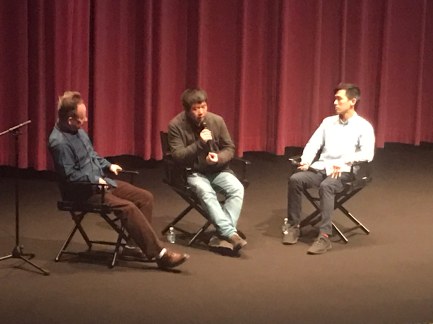 Director Wang Bing (center) at the Billy Wilder Theater with Peter Sellars (left) and a UCLA student translator (right).
Wang Bing was on hand for the November 11th screening of Dead Souls at the Billy Wilder Theater at UCLA’s Hammer Museum. Peter Sellars, an acclaimed theater director and professor at UCLA, interviewed Wang at the end of the evening with simultaneous translation between English and Mandarin provided by a UCLA student. In fielding questions from the audience, Wang briefly mentioned his contact with Lanzmann, who appeared to be a personal mentor. Most questions came from Mandarin-speakers deeply moved by the repressed history on screen. Indeed, at this particular historical juncture, public memory of the “Anti-Rightist Campaign” only seems possible in diasporic communities—it’s both a possibility and a challenge for reckoning with this difficult history.


Dr. MacMillan is on a remarkable and deeply moving journey to shine a light on the heroic efforts to present the powerful voices of victims of our historical darkness. It is my hope that these works, the most important films of the century, become required viewing for young people around the world. I believe these writings will go a long way towards that goal.
LikeLike